

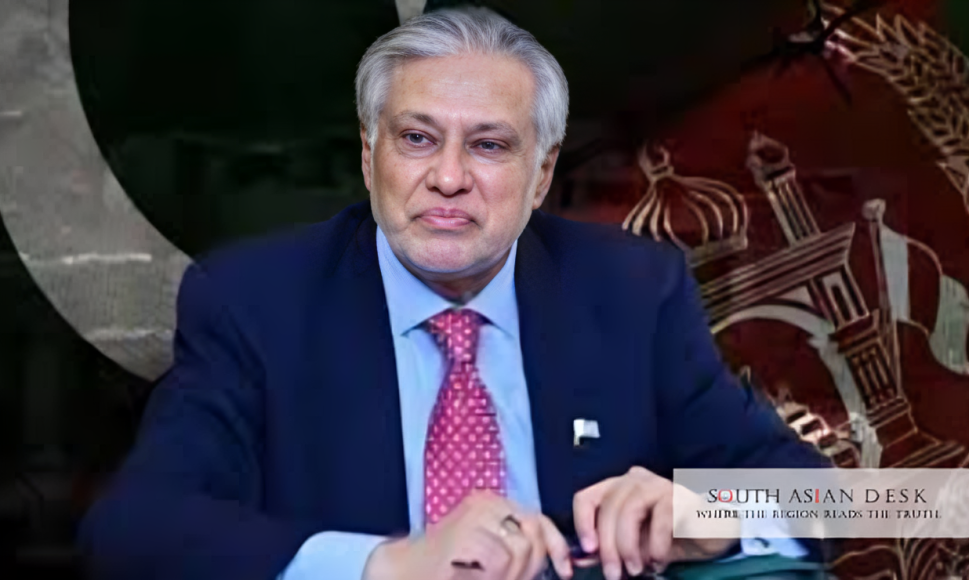
Deputy Prime Minister and Foreign Minister Ishaq Dar leads Pakistan SCO delegation to the Council of Heads of Government meeting in Moscow today, aiming to bolster regional ties amid global uncertainties.
The Shanghai Cooperation Organisation’s (SCO) Council of Heads of Government (CHG) convenes in Moscow on November 17-18, 2025, with Ishaq Dar heading Pakistan’s team at Russia’s invitation. This gathering addresses key economic and security challenges for member states. Bilateral talks on the margins promise fresh momentum for Pakistan’s outreach. The event underscores SCO’s role in fostering connectivity across Eurasia.
Pakistan’s Stake in SCO CHG Dynamics
Pakistan views the SCO CHG as a vital platform for economic revival. Ishaq Dar leads Pakistan SCO delegation to advance shared goals in trade and infrastructure. The meeting focuses on budgetary approvals and joint initiatives that could reshape regional commerce.
Officials highlight the forum’s potential to counter economic headwinds. Pakistan, a full member since 2017, pushes for enhanced cooperation. The CHG adopts decisions on finance and socio-economic projects, directly impacting South Asian growth.
In his address, Dar will outline Pakistan’s vision. He plans to stress mutual benefits from deeper integration. This aligns with Islamabad’s strategy to diversify partnerships beyond traditional allies.
Dar SCO Summit Bilateral Talks Take Centre Stage
Bilateral engagements form the core of Dar’s agenda. Ishaq Dar leads Pakistan SCO delegation into discussions with counterparts from China, Russia, India, Iran, and Central Asian nations. These talks target specific hurdles in cross-border trade.
Pakistan seeks to accelerate projects like the China-Pakistan Economic Corridor extensions. Meetings with Russian leaders could yield energy pacts. Dar SCO summit bilateral talks also cover transport links to Afghanistan, easing regional bottlenecks.
A Foreign Office statement notes Dar’s intent to explore investment opportunities. “The deputy prime minister will hold bilateral meetings with the leaders of other SCO countries on the sidelines,” it states. Such interactions have historically paved the way for memorandums of understanding.
Attendees include heads from observer states like Mongolia and Bahrain. Representatives from the Commonwealth of Independent States and Eurasian Economic Union join too. This broad participation amplifies the summit’s reach.
SCO CHG Pakistan Priorities Dar Champions
SCO CHG Pakistan priorities Dar emphasises revolve around practical outcomes. Economic growth tops the list, with calls for streamlined tariffs and digital trade frameworks. Connectivity emerges as a recurring theme, linking South Asia to Central markets.
Dar advocates for youth empowerment programmes and poverty reduction efforts. These align with Pakistan’s domestic reforms under the SCO umbrella. Transport infrastructure receives special attention, including rail and road upgrades.
In a recent briefing, officials reiterated focus on socio-economic partnerships. Pakistan proposes mechanisms to monitor project implementation. This ensures accountability in areas like health and education exchanges.
The CHG’s joint communique will reflect these inputs. Past meetings have greenlit over USD 10 billion in regional initiatives. Pakistan anticipates similar scale, boosting exports by 15 per cent in target sectors.
Background: Pakistan’s Evolving SCO Engagement
Pakistan joined the SCO as an observer in 2005 before full membership. The grouping now spans 10 nations, covering 40 per cent of global population. Its mandate spans security to economics, making it indispensable for Islamabad.
Ishaq Dar leads Pakistan SCO delegation at a pivotal juncture. Recent global shifts, including supply chain disruptions, heighten the need for resilient networks. Pakistan hosted the previous CHG in October 2024, showcasing organisational prowess.
That event drew praise for efficient logistics. It advanced talks on anti-terrorism drills and cultural exchanges. Building on this, Moscow’s summit eyes institutional reforms for faster decision-making.
South Asia benefits immensely from SCO’s anti-extremism focus. Joint exercises have enhanced border security. Economically, the bloc offers access to vast resources, from Siberian gas to Kazakh minerals.
Pakistan’s trade with SCO partners reached USD 25 billion last year. Projections suggest a 20 per cent rise post-summit. Dar’s role amplifies Islamabad’s voice in these calculations.
Challenges persist, including geopolitical frictions. Yet, the SCO charter promotes non-interference, a principle Pakistan upholds. Dar’s diplomacy seeks to navigate these without compromising core interests.
What’s Next for Regional Cooperation
Post-Moscow, follow-up committees will track commitments. Pakistan eyes hosting specialised workshops on green energy by mid-2026. Dar SCO summit bilateral talks could spawn dedicated working groups.
Ishaq Dar leads Pakistan SCO delegation into a phase of implementation. Success hinges on translating rhetoric into contracts. For South Asia, this means cheaper imports and job-creating ventures.
The summit concludes with a roadmap for 2026 priorities. Pakistan pledges active input, from digital economy to disaster response. These steps fortify the bloc against external pressures.
In closing, Ishaq Dar leads Pakistan SCO delegation towards a more interconnected future. As outcomes unfold, watch for ripples in trade volumes and diplomatic warmth. This Moscow rendezvous reaffirms SCO’s enduring relevance.
Published in SouthAsianDesk, November 17th, 2025
Follow SouthAsianDesk on X, Instagram, and Facebook for insights on business and current affairs from across South Asia.
