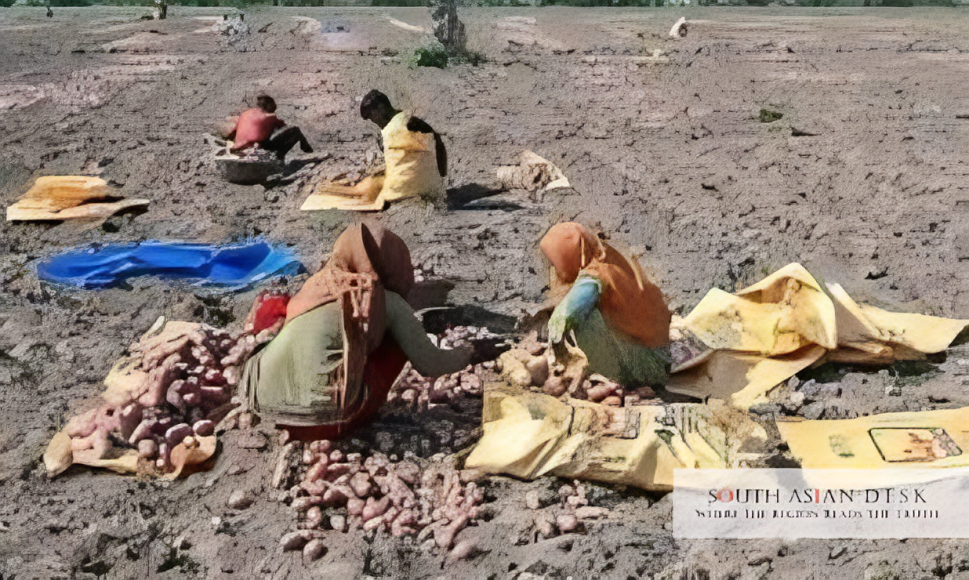
Rawalpindi, Monday, August 25, 2025 – The Punjab government launched the Punjab Potohar agriculture uplift plan on Tuesday, allocating PKR 7 billion to transform farming in the arid Potohar region through subsidies, modern irrigation, and crop diversification. Minister for Agriculture Syed Ashiq Hussain Kirmani announced the initiative during a high-level meeting, directing Pir Mehr Ali Shah Arid Agriculture University Rawalpindi to submit detailed proposals. The plan targets enhanced productivity and food security amid persistent water scarcity. How will these tech-driven interventions reshape local economies? (48 words)
This Punjab Potohar agriculture uplift plan arrives at a critical juncture for South Asia’s breadbasket. Pakistan’s agriculture sector employs over 40% of the workforce and contributes 19% to GDP, yet Potohar’s rain-fed fields suffer annual losses from erratic monsoons and soil erosion. By prioritising precision tools and resilient crops, the initiative could stabilise yields, curb rural migration, and bolster regional food supplies, offering a blueprint for climate-vulnerable farming across the subcontinent.
Potohar Farming Transformation through Punjab Subsidies
The Rs7 billion Potohar agriculture project forms the core of Punjab’s strategy to combat aridity in districts like Rawalpindi, Attock, and Jhelum. Officials highlighted the plan’s focus on sustainable water management during the launch meeting attended by Provincial Assembly members, Parliamentary Secretary Usama Khan Leghari, Secretary Agriculture Iftikhar Ali Sahoo, Commissioner Aamir Khattak, and deputy commissioners.
Kirmani stressed the need for academia-industry-government ties. “Universities must serve as hubs for research and innovation,” he stated, urging the adoption of hydroponic systems to elevate production. The minister’s visit to the university’s Centre for Precision Agriculture and China-Pakistan Research Centre underscored the push for tech transfer.
Proposals sought under the Punjab seeks proposals Potohar agri uplift directive aim to integrate drone surveillance, soil sensors, and AI-driven forecasting. Vice Chancellor Prof Dr Qamar-uz-Zaman Anjum noted ongoing mega projects, including indigenous low-cost tech for smallholders. These efforts address Potohar’s unique challenges: low rainfall averaging 500mm annually and fragmented landholdings averaging two hectares per farmer.
Subsidies drive the Potohar farming transformation Punjab subsidies component. Farmers gain 70% off on laser land levelers, drip systems, and solar-powered pumps, slashing energy costs by up to 80%. Early data from pilot sites show a 25% rise in water efficiency, vital as groundwater depletion hits 2m cubic metres yearly in the region.
Rs7 Billion Potohar Agriculture Project: Key Components
The Rs7 billion Potohar agriculture project breaks down into targeted allocations, blending infrastructure with crop innovation.
Irrigation and Water Efficiency Overhaul
A PKR 4 billion slice funds high-efficiency irrigation across 50,000 hectares. Solar tube-wells and pivot systems receive 70% subsidies, aiming to irrigate 10,000 additional acres. Secretary Sahoo explained: “These measures will conserve water and boost output in rain-shadow areas.” Mini dams, numbering 400, form part of PKR 1 billion for land conservation, capturing runoff to recharge aquifers.
Land Reclamation and Crop Diversification
Reclaiming barren slopes tops the agenda. PKR 77,000 per acre subsidises bulldozer work on 4,500 hectares, paired with 25,000kg of premium peanut seeds. Olive groves expand on 3,625 acres with PKR 57,960 per acre aid, plus 50% off on cold-press oil units. Ginger cultivation gets PKR 370 million, targeting export potential in a market worth USD 500 million regionally.
Fruit orchards receive saplings of blackberry, fig, nectarine, avocado, pecan nut, and apple varieties suited to Potohar’s plateau climate. “This diversification shields farmers from wheat monoculture risks,” Sahoo added.
Wildlife Protection and Infrastructure
PKR 500 million installs fences over 2,790 kanals, deterring crop raids by wild boars and monkeys prevalent in hilly terrains. Complementary hydroponic units, as piloted at the university’s Green AI facility, promise 90% less water use for high-value greens.
The Provincial Development Working Party approved the scheme in July, fast-tracking implementation. Initial rollout covers 20,000 beneficiaries, with digital registration via the Punjab Agriculture Department’s portal.
Background: From Drought Alerts to Action
Potohar’s agricultural woes trace to the 2022 dry spell, which slashed wheat yields by 30%. February consultations flagged soil erosion and moisture deficits, prompting the Punjab agri plan. The university’s arid research, spanning 50 years, informed baselines: only 60% of cultivable land yields optimally due to undulating topography.
Kirmani’s August directives built on Chief Minister Maryam Nawaz’s vision. “This is a game changer for farmers’ prosperity,” he declared, linking the plan to broader Sarsabz Punjab goals. University-led trials in hydroponics yielded 40% higher tomato output, validating the approach.
Stakeholders praise the collaborative model. Leghari, the parliamentary secretary, called it “a lifeline for marginal farmers.” Yet, execution hinges on proposal quality; submissions close in 60 days, with peer review by international experts.
Punjab Seeks Proposals Potohar Agri Uplift: Innovation Focus
The Punjab seeks proposals Potohar agri uplift call invites blueprints for precision farming. Bidders must detail AI integration for pest detection and yield prediction, drawing from the university’s drone-mapped fields. Hydroponics emerge as a flagship, with vertical farms projected to triple space efficiency.
Capacity building targets 5,000 farmers via workshops on solar maintenance and seed selection. Women-led cooperatives gain priority, addressing gender gaps where females comprise 70% of farm labour but own under 5% of land.
Environmental gains include reduced chemical runoff, aligning with South Asia’s sustainability pacts. The plan’s metrics track via a dashboard: target 15% yield hike by 2026, monitored quarterly.
This Rs7 billion Potohar agriculture project could lift 100,000 households from poverty, per internal estimates. Early adopters in Attock report 20% income gains from subsidised olives.
What’s Next for the Punjab Potohar Agriculture Uplift Plan
Implementation ramps up post-proposal vetting, with phase one tenders in October. Scaling to 100 mini dams and 10,000 solar units follows. Monitoring committees, including farmer reps, will assess progress biannually.
Long-term, the Punjab Potohar agriculture uplift plan eyes carbon Credits from conserved lands, funding expansions. Kirmani envisions Potohar as a model for barani tracts across Punjab, fostering agro-tourism and value-added processing.
As proposals flood in, this initiative signals Punjab’s resolve to green its plateaus, securing harvests for generations.
Published in SouthAsianDesk, November 23rd, 2025
Follow SouthAsianDesk on X, Instagram, and Facebook for insights on business and current affairs from across South Asia.