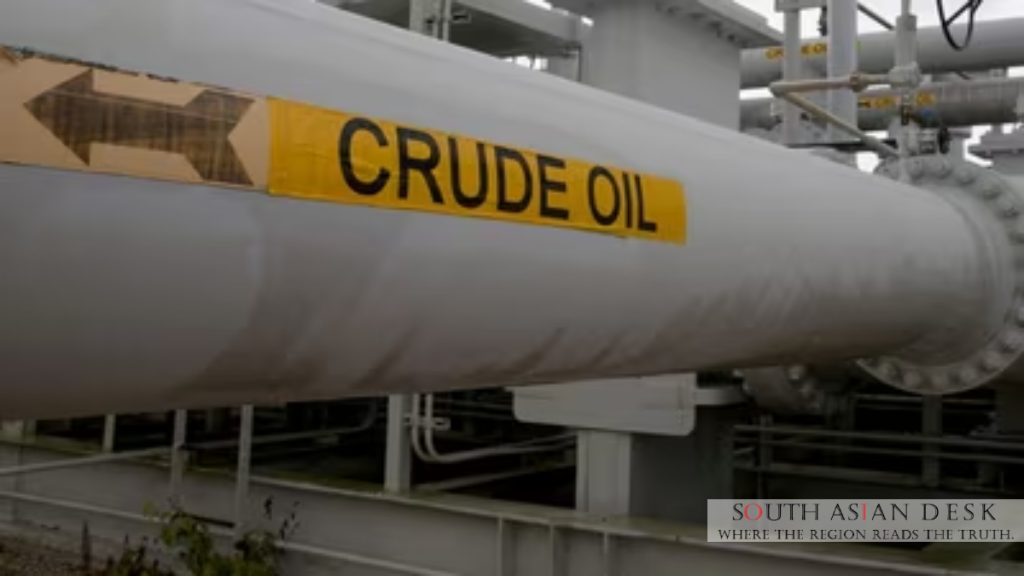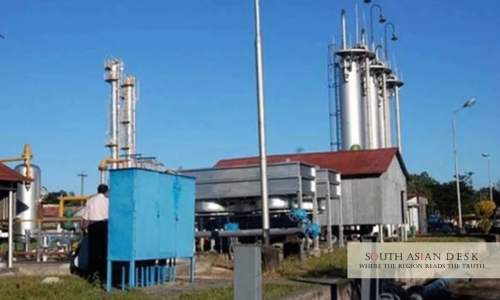
Dhaka, Monday, August 25, 2025, 4:35 PM – Bangladesh launches Bangladesh gas wells drilling for three new sites after government approval of a Tk1,136 crore plan. Bapex will spearhead the effort targeting Srikail Deep-1, Mobarakpur Deep-1, and Fenchuganj South-1. The project aims to uncover up to 1,696 billion cubic feet (BCF) of gas amid a daily shortfall of 400-500 million cubic feet (mmcfd). Petrobangla oversees the initiative under the interim administration. Experts predict output by late 2027 if viable, easing winter pressures.
This move signals a push for self-reliance in South Asia’s volatile energy landscape. Bangladesh gas reserves boost could cut LNG import bills, now at Tk7,500 crore since August 2024, and stabilise power for 170 million people. Neighbours like India and Pakistan face similar shortages; success here might inspire regional pacts on shared resources, curbing blackouts that cost economies billions annually.
Bapex New Gas Exploration: Targeting Deep Reserves
Bapex new gas exploration kicks off with drilling at depths up to 6,000 metres. The Executive Committee of the National Economic Council (Ecnec) cleared the project on December 1, 2025. Total funding stands at Tk1,136 crore, with Tk909 crore as a government loan and Tk227.25 crore from Bapex funds. Petrobangla’s subsidiary will handle operations, drawing on recent 3D seismic surveys.
Planning Adviser Dr Wahiduddin Mahmud hailed the step during a briefing. “Although gas from these new wells will not be available immediately, the steps are critical to avoid worsening shortages in the future,” he said. He noted the government procured drilling rigs and machinery to bolster Bapex capacity. The sites hold promise: Srikail Deep-1 in Chattogram division, Mobarakpur Deep-1 in Sylhet division, and Fenchuganj South-1 in Rajshahi division. Recoverable estimates reach 1,018 BCF if commercial.
Bangladesh gas wells drilling addresses a crisis hitting hard. Households in Dhaka’s Mirpur, Mohammadpur, Basabo, and Uttara face low pressure, shifting to LPG cylinders at Tk1,200 each. Factories in Gazipur, Narayanganj, Chattogram, and Narsingdi idle shifts, losing Tk500 crore monthly per industry data. The shortfall hit 500 mmcfd in July 2025, per Petrobangla reports.
Bangladesh Gas Reserves Boost: Easing Import Dependence
Bangladesh gas reserves boost forms the core goal of this venture. Current proven reserves total 12.09 trillion cubic feet (TCF), down from 15 TCF in 2010, per Petrobangla’s 2024 annual review. Production averages 2,800 mmcfd against demand of 3,300 mmcfd. The new wells could add 10-15% to supplies if successful, mirroring past finds like Beanibazar in 2023 that yielded 150 BCF.
The interim government under Chief Adviser Muhammad Yunus prioritises domestic output. Since August 2024, Bangladesh imported 15 LNG cargoes via spot markets, costing Tk7,500 crore (USD 630 million). Global prices spiked 20% in 2025, per International Energy Agency figures, exposing vulnerabilities. Bapex new gas exploration reduces such risks, with timelines from October 2025 to December 2027.
Petrobangla data shows 889 BCF produced in fiscal 2020-21, led by Bangladesh Gas Fields Company Limited (BGFCL) and Sylhet Gas Fields Limited (SGFL). Recent workovers, like Fenchuganj-3 in 2021, added 9 mmcfd. The agency eyes 100 exploratory wells by 2030 under its master plan. Bangladesh gas wells drilling fits this, focusing onshore blocks overlooked for decades.
Environmental nods came swift. The Department of Environment approved impacts in November 2025, mandating zero flares and community monitoring. Local unions in Sylhet welcomed jobs for 500 workers, though unions demand 30% local hires.
Petrobangla Drilling Plan 2025: Broader Strategy Unveiled
Petrobangla drilling plan 2025 expands to 20 wells nationwide, per a ministry release. This includes offshore bids in blocks DS-12 with POSCO International. The corporation signed pacts with Gazprom EP International for Bhola fields and Mitsui Oil Exploration for onshore blocks 8 and 11. Such ties brought 5,080 line kilometres of 2D seismic data, identifying three prior sites.
Bapex new gas exploration aligns with these efforts. Chairman Md Mostafizur Rahman stated in a Petrobangla update: “We prioritise quick wins from proven basins.” The plan allocates Tk5,000 crore overall, targeting 2 TCF additions by 2030. Bangladesh gas reserves boost hinges on tech upgrades; new rigs drill 20% faster than 2020 models.
Challenges persist. Depleting fields like Habiganj yield 30% less since 2024. Monsoon delays hit schedules, pushing Q1 2026 starts. Yet fiscal incentives, like 15% royalty cuts for explorers, draw interest. India’s ONGC scouted joint ventures in October 2025, per energy ministry logs.
South Asia watches closely. Pakistan’s Sui field decline mirrors Bangladesh’s; a 2025 Dawn report pegged its shortfall at 600 mmcfd. Regional forums like Saarc Energy Centre discuss grids, but progress stalls on pricing. Success in Bangladesh gas wells drilling could model cross-border LNG swaps.
Background: From Discovery to Depletion
Gas shaped Bangladesh since Shell’s 1955 Haripur find, producing 20 TCF over decades. Petrobangla formed in 1972, nationalising assets post-independence. Bapex emerged in 1989 for exploration, drilling 50 wells by 2000.
The 2010s boom added Titas extensions, but reserves peaked then fell. Unrest in 2024 halted surveys, worsening the crunch. Interim reforms since August 2024 revived bids; Ecnec approved 10 projects in Q3 2025 alone. Petrobangla drilling plan 2025 revives stalled sites, using AI for seismic analysis that boosted hit rates 25%.
Imports surged post-2019; LNG terminals in Moheshkhali handle 500 mmcfd, but spot buys inflate costs. Households consume 22%, power 45%, industry 33%, per 2024 stats. Blackouts cut GDP growth 1.2% last year, World Bank estimates.
What’s Next: Rigs Roll, Reserves Rise
Bapex breaks ground in Q4 2025, with milestones at 2,000 metres by mid-2026. Petrobangla drilling plan 2025 includes tenders for five more sites in January 2026. If yields hit projections, production eases shortfalls by 2028, slashing imports 20%.
International observers join. The Asian Development Bank pledged USD 200 million in green bonds for sustainable drilling. Unions push safety audits post-2023 Bibiyana leaks.
Bangladesh gas wells drilling promises relief. As rigs pierce the earth, hope flickers for lights staying on through winters ahead.
Published in SouthAsianDesk, December 5th, 2025
Follow SouthAsianDesk on X, Instagram, and Facebook for insights on business and current affairs from across South Asia.