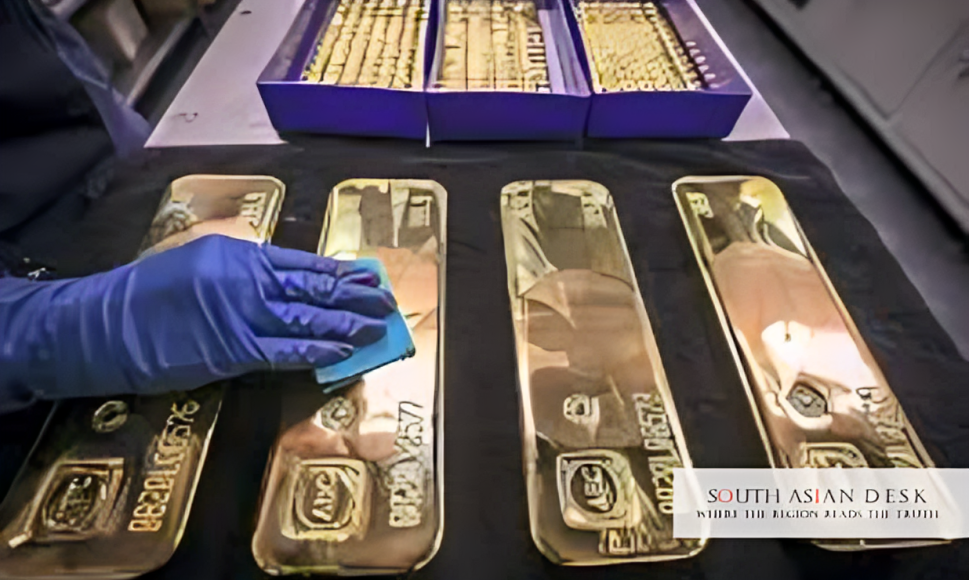
The gold rate India surged 1.7 percent to ₹1,31,320 per 10 grams for 24-carat on Monday, December 8, 2025. This climb followed a 0.15 percent drop in the US dollar index to 98.84, as markets braced for a Federal Reserve interest rate decision. Buyers in key cities like Delhi and Mumbai snapped up bullion, citing safe-haven demand ahead of the FOMC meeting on December 9-10.
The uptick reflects broader fed rate cut gold impact, with spot gold hitting $2,650 per ounce internationally. Indian importers processed orders worth over 50 tonnes in the past week, per Multi Commodity Exchange data. This movement underscores gold’s role as a hedge against currency volatility in South Asia, where inflation lingers above 5 percent in India and Pakistan.
Fed Rate Cut Gold Impact Boosts Local Sentiment
The Federal Reserve’s upcoming decision dominates headlines. Officials signal a potential 25 basis point reduction in the federal funds rate, lowering it to 3.5-3.75 percent from the current 3.75-4 percent set after the October 29 cut. “Available indicators suggest that economic activity has been expanding at a moderate pace,” states the latest FOMC release from federalreserve.gov. The committee aims for maximum employment and 2 percent inflation, noting risks have shifted.
In India, this fed rate cut gold impact translates to immediate price lifts. The rupee strengthened 0.2 percent to 84.15 against the dollar, easing import costs but amplifying gold’s appeal. MCX futures for February delivery rose 1.8 percent to ₹1,31,450 per 10 grams. Analysts link the surge to expectations of looser US policy, which weakens the dollar and propels commodities.
South Asian markets feel this acutely. Pakistan’s gold rate mirrored India’s rise, hitting PKR 3,25,000 per tola, up 1.5 percent. Bangladesh importers, facing 9 percent inflation, increased spot purchases by 20 percent year-on-year. The nut graph here: These global cues directly influence household savings and jewellery demand across the region, where gold accounts for 15 percent of festive spending in Q4.
Data from the World Gold Council shows India consumed 700 tonnes in the first nine months of 2025, a 5 percent year-on-year gain. With wedding season peaking, jewellers in Chennai and Kolkata report 30 percent more footfall. “Demand remains robust despite higher prices,” notes an Economic Times report citing industry sources.
Dollar Weakens Gold Price, Fuels Import Rush
The dollar weakens gold price dynamic played out clearly today. The DXY index fell to 98.84, its lowest in two weeks, per Trading Economics data. This 0.75 percent monthly slide stems from Fed dovishness and softer US jobs data last Friday, which showed 180,000 nonfarm payrolls added in November, below forecasts.
For Indian traders, a weaker dollar means cheaper global sourcing. Imports via Dubai’s gold souk jumped 25 percent this month, with 40 tonnes cleared last week alone. The gold price today India averaged ₹1,30,500 across metros: Delhi at ₹1,30,420, Mumbai ₹1,30,280, and Chennai ₹1,31,450 per 10 grams for 24-carat, according to Livemint’s city-wise tracker updated at noon.
This trend aligns with historical patterns. In 2024, similar Fed easing cycles lifted gold 12 percent in Q4. Current levels sit 8 percent above the yearly low of ₹1,21,000. Exporters benefit too; Bangladesh’s remittance inflows, often converted to gold, rose 10 percent amid dollar softness.
Regional exchanges buzz with activity. The Pakistan Mercantile Exchange saw tola contracts up PKR 5,000. In Sri Lanka, where gold smuggling persists, official rates climbed 2 percent to LKR 1,45,000 per sovereign. These shifts highlight gold’s buffer against forex pressures in import-dependent economies.
Gold Price Today India: City-Wise Breakdown and Trends
Spot checks reveal variance by location. In Hyderabad, 22-carat traded at ₹1,19,860 per 10 grams, steady from Sunday. Kolkata’s 18-carat dipped slightly to ₹97,327, reflecting lighter industrial demand. Gurgaon’s premium pushed 24-carat to ₹1,30,410, driven by corporate gifting.
Over the past month, the gold price today India gained 4.2 percent, outpacing the Nifty 50’s 2.5 percent rise. Year-to-date, it’s up 18 percent, fueled by geopolitical tensions in the Middle East and central bank buys. India’s reserves swelled by 40 tonnes in Q3, per RBI filings.
Traders monitor US Treasury yields, which fell 5 basis points to 4.1 percent. A sustained dollar weakens gold price could push MCX benchmarks past ₹1,35,000 by year-end. Volume on Monday hit 15,000 contracts, 20 percent above average.
Background: Gold’s Steady Role in South Asian Economies
Gold has anchored South Asian finances for centuries. In India, it comprises 11 percent of total household assets, per a 2024 NSSO survey. During the 2022 rupee slump, prices soared 15 percent, shielding savers. Pakistan’s informal economy relies on it for 20 percent of transactions, evading banking channels.
Recent policy tweaks aid flow. India’s 2025 budget cut import duty to 6 percent from 15 percent, spurring 10 percent volume growth. Yet, smuggling persists; authorities seized 5 tonnes worth ₹1,500 crore last quarter. Bangladesh’s central bank mandates 20 percent reserves in gold, stabilizing the taka.
These factors amplify the fed rate cut gold impact. As US rates ease, capital outflows from emerging markets slow, bolstering local currencies and gold affordability.
What’s Next for Gold Rate India
Investors watch Wednesday’s FOMC readout closely. A hawkish tone could cap gains at 2 percent, while dovish signals might propel the gold rate India toward ₹1,33,000. With Diwali leftovers and Christmas demand, Q4 imports could top 300 tonnes. Regional stability hinges on sustained dollar weakness, promising steady returns for holders.
Published in SouthAsianDesk, December 8th, 2025
Follow SouthAsianDesk on X, Instagram, and Facebook for insights on business and current affairs from across South Asia.