Inqilab Mancha issued a 24-hour ultimatum to Bangladesh’s interim government on Saturday, demanding arrests of Sharif Osman Hadi killers after thousands joined a Shahbagh protest following his burial. The group warned of renewed sit-ins if unmet by 5:15 PM Sunday.
The Inqilab Mancha ultimatum highlights growing instability in Bangladesh ahead of February elections. Protests reflect frustrations from the July mass uprising, with potential ripple effects on South Asian stability amid anti-India sentiments and calls for accountability.
Shahbagh Protest Gathers Thousands
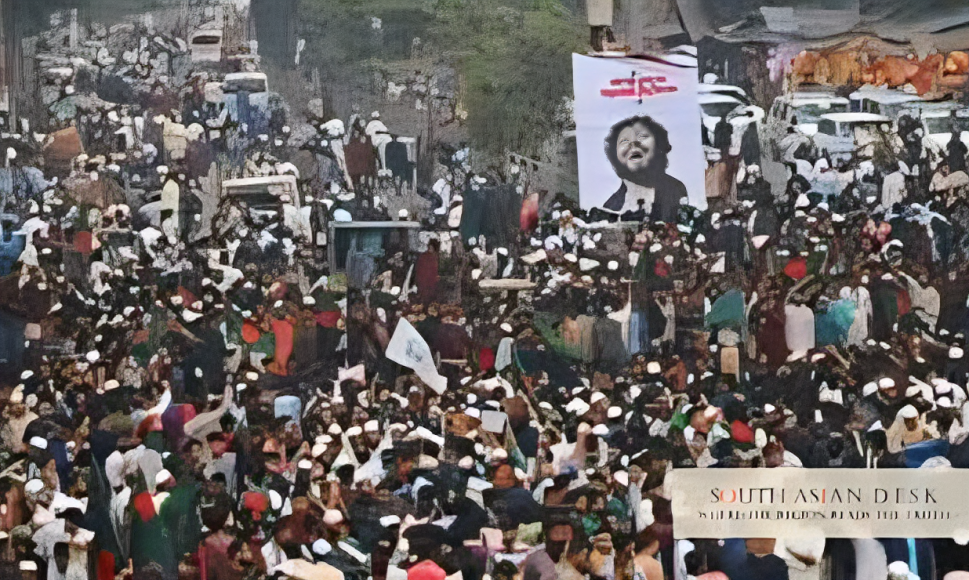
Thousands assembled at Dhaka’s Shahbagh intersection on Saturday afternoon after the funeral of Sharif Osman Hadi. The Shahbagh protest halted traffic from 3:30 PM as crowds chanted slogans and performed prayers on the road.
Hadi, spokesperson for Inqilab Mancha and a Dhaka-8 candidate, was shot on 12 December in Paltan. He died on 18 December in Singapore after treatment. His body returned on 19 December, with funeral prayers at 2:30 PM on 20 December at the National Parliament South Plaza. Burial followed beside Kazi Nazrul Islam’s grave near Dhaka University Central Mosque.
The Shahbagh protest demanded renaming the intersection Hadi Chottor. Slogans included “Inqilab zindabad” and “Not Delhi, Dhaka”. Abdullah Al Jaber, Inqilab Mancha member secretary, addressed the crowd at 5:15 PM.
Bangladesh Government Demands in Focus
Inqilab Mancha directed the ultimatum at Home Adviser Lt Gen (retd) Jahangir Alam Chowdhury and Chief Adviser’s Special Assistant Khoda Bakhsh Chowdhury. Key Bangladesh government demands include a progress report on Sharif Osman Hadi killers’ arrests within 24 hours.
Jaber stated failure to respond would trigger resignation calls for the officials. He also demanded identification and arrest of alleged Awami League elements in police, intelligence agencies, and military intelligence.
The Inqilab Mancha ultimatum seeks visible progress on the investigation. Hadi’s brother questioned delays in arrests despite RAB detaining suspects earlier. Protesters dispersed by 6:00 PM, allowing traffic resumption after three hours.
Background: July Uprising and Hadi’s Role
Inqilab Mancha emerged from the July mass uprising that ousted Sheikh Hasina’s government. Hadi played a key role as a leader and spokesperson. The uprising caused over 1000 deaths, forcing Hasina to flee to India on 5 August.
Post-uprising, Muhammad Yunus leads the interim government. Elections are set for 12 February. Hadi’s death sparked unrest, including vandalism at media offices like Prothom Alo and The Daily Star on 18 December.
The interim government declared 20 December a state mourning day, with flags at half-mast. Yunus addressed the nation, calling Hadi’s death an irreplaceable loss and committing to a transparent probe.
Anti-India protests preceded the Shahbagh protest. On Wednesday, hundreds marched to the Indian High Commission under July Oikya, demanding Hasina’s return. Ties with India have strained since August.
Hadi’s shooting followed his posting of a distorted India map, claiming Northeast regions for Bangladesh. Assailants on motorcycles fired at him in an e-rickshaw. He lost blood en route to hospital.
RAB arrested four suspects on 16 December, but details remain limited.
The Inqilab Mancha ultimatum builds on these events, pressing for accountability. Protests spread to Chittagong and other cities, with mobs targeting cultural sites.
What’s Next
If unmet, the Inqilab Mancha ultimatum could spark renewed Shahbagh protest on Sunday evening. Analysts predict escalated Bangladesh government demands amid election preparations.
Security forces have deployed in Dhaka to curb violence. Yunus urged restraint to safeguard polls. Failure to address Sharif Osman Hadi killers may fuel further unrest.
International observers monitor the situation, given South Asia’s interconnected stability. India has expressed concern over anti-India rhetoric in protests.
The interim government faces pressure to deliver justice swiftly. With elections nearing, resolving the Inqilab Mancha ultimatum is critical to prevent broader disruption.
The Inqilab Mancha ultimatum expires at 5:15 PM Sunday, potentially reshaping Bangladesh’s political landscape.
Published in SouthAsianDesk, December 21st, 2025
Follow SouthAsianDesk on X, Instagram, and Facebook for insights on business and current affairs from across South Asia.