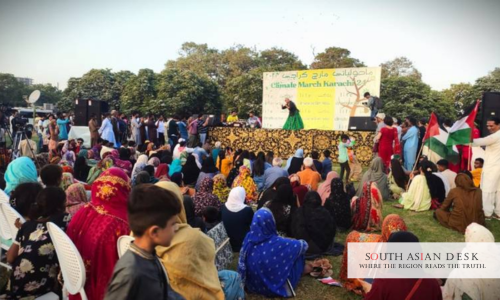
Climate March Karachi: Hundreds of activists, including labour union members and students, marched from Frere Hall to the Karachi Press Club on Sunday, 21 December 2025, demanding an end to fossil fuel use and a swift clean energy transition Pakistan needs to combat rising heatwaves Karachi residents face.
This climate march Karachi highlights Pakistan’s vulnerability to climate change, a crisis affecting South Asia where extreme weather displaces millions and strains economies reliant on fossil fuels.
Fossil Fuel Phase Out Pakistan: Marchers’ Key Demands
Participants in the climate march Karachi urged the government to phase out coal and other fossil fuels in industries. Labour union leader Nasir Mansoor stated: “The working class is the worst affected by climate change, as they are displaced or even lose their lives due to heatwaves or excessive rainfall.” He noted that during past heatwaves Karachi endured, 70 per cent of deaths were among working-class members.
The marchers stressed that any fossil fuel phase out Pakistan pursues must protect jobs. Mansoor added: “The government, in implementing such a transition, must work in consultation with working-class organisations to ensure protection of workers’ rights.” Banners read “There is no Planet B” and called for an end to capitalism and feudalism as roots of the crisis.
Environmental activist Yasir Darya highlighted the need for electric vehicles. He said: “Industries and sectors using fossil fuels should be transitioned at the earliest, adding that this transition must include electric vehicles, particularly electric buses in public transport.” Darya claimed Pakistan has 300 to 400 electric buses total, with under 50 in Karachi, while most operate in Punjab cities. He criticised the Sindh government for negligence.
Clean Energy Transition Pakistan: Government Commitments
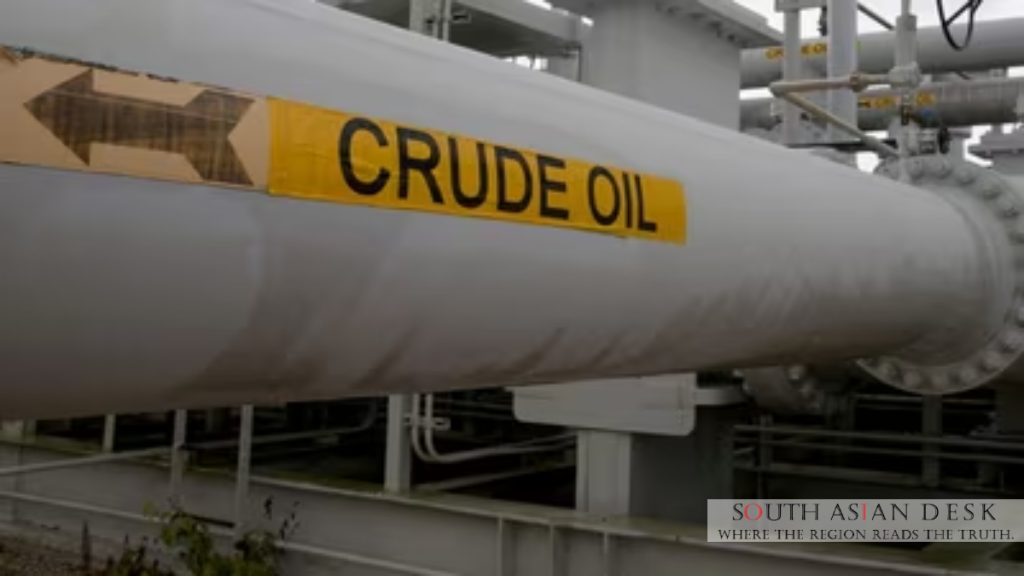
The climate march Karachi aligns with official plans for clean energy transition Pakistan. In Pakistan’s Nationally Determined Contributions (NDC) 3.0 submitted to the UNFCCC, the government commits to a decisive shift toward clean sources in the energy sector. It signals a gradual phase down of fossil fuels by 2035, aiming to reduce greenhouse gas emissions.
The Karachi Climate Action Plan (KCAP), developed with UNDP support, targets a 62.2 per cent reduction in city emissions by 2050 from 2022 levels of 41.9 million tons CO2e. Strategies include expanding renewables to 44.6 per cent of energy share by 2050, adding 1282 MW by 2030 through solar, wind, and biomass. The plan promotes distributed solar projects, such as rooftop installations on 25 per cent of homes and 30 per cent of commercial buildings.
Public transport improvements feature prominently in the clean energy transition Pakistan framework. KCAP calls for 100 per cent new vehicles to be electric by 2050, with 90 per cent by 2040. It expands Bus Rapid Transit lines, revives the Karachi Circular Railway, and promotes e-mobility to cut transport emissions by 11.4 per cent by 2050.
The National Electricity Plan 2023-2027 from the Ministry of Energy supports this by pledging to transform the power sector with renewables, reducing reliance on imported coal and LNG.
Heatwaves Karachi: Rising Threats and Data
Heatwaves Karachi have intensified, fueling demands at the climate march Karachi. The 2015 heatwave killed over 1200 people in the city, with 17 per cent more deaths than in 2014, according to health reports. In 2024, another wave claimed 568 lives nationwide, primarily in southern Pakistan, where temperatures exceeded 49°C in Karachi.
Official data from the National Disaster Management Authority (NDMA) ranks Pakistan eighth on the Global Climate Risk Index for vulnerability. The NDMA’s Heatwave Gap Analysis notes increasing frequency due to urbanisation and the “concrete jungle” effect, exacerbating heat islands.
The National Institute of Health reports a sharp rise in heatstroke cases in Karachi during hot seasons. Home-Based Women Workers Federation Secretary General Zehra Khan, at the march, said: “Heat stress is increasing, particularly among labourers working in garment factories, where workers often faint due to extreme heat.” She called for amendments to the Sindh Occupational Safety and Health Act to include heat stress leave, as current laws lack such provisions.
KCAP addresses heatwaves Karachi through urban reforestation, shading 100 bus stops, and distributing 50000 efficient fans by 2027. It aims to mitigate urban heat by increasing green spaces in high-risk areas like Malir and Lyari.
Air pollution, linked to fossil fuels, worsens the crisis. The Ministry of Climate Change newsletter for October-December 2024 details enforcement against emissions, though focused on Islamabad; it urges nationwide action. Karachi’s air quality often reaches “very unhealthy” levels, disrupting flights and health.
Background: Climate Challenges in Sindh
Sindh province, including Karachi, faces compounded risks from sea-level rise, flooding, and water scarcity. A UN report warns Karachi could become substantially hotter, with projections of up to 60 cm sea-level rise by century-end. The 2022 floods displaced millions in Pakistan, highlighting the need for fossil fuel phase out Pakistan to prevent further disasters.
The climate march Karachi builds on prior events, like the October 2024 rally calling for justice against Global North emissions. Organisers, including the Climate Action Center Karachi, emphasise local solutions amid global inequities.
Climate March Karachi
The government must integrate march demands into policy. KCAP’s monitoring framework requires annual emissions inventories and biannual reports. International aid could accelerate clean energy transition Pakistan, with NDC 3.0 seeking support for renewables.
The climate march Karachi signals growing public pressure for action, urging a just fossil fuel phase out Pakistan to safeguard lives amid escalating heatwaves Karachi.
Published in SouthAsianDesk, December 22nd, 2025
Follow SouthAsianDesk on X, Instagram and Facebook for insights on business and current affairs from across South Asia.