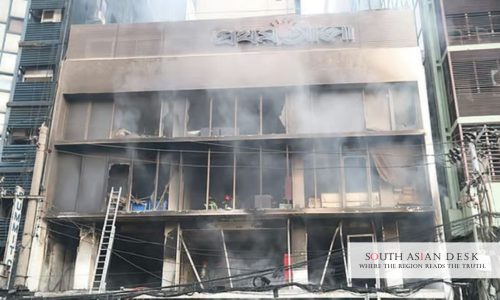
Police in Dhaka arrested 17 individuals and identified 31 more in connection with the attacks on the Bangladesh media houses that occurred on December 18, 2025. The assaults targeted the offices of Prothom Alo and The Daily Star in Karwan Bazar. Mobs vandalised premises, committed arson, and looted property. The violence followed protests linked to the death of activist Sharif Osman Hadi.
The Prothom Alo Daily Star attacks caused extensive damage. Flames trapped employees inside. Emergency responders faced obstacles reaching sites. Both publications suspended operations temporarily. Authorities continue investigations into the coordinated assaults.
Sequence of the Prothom Alo Daily Star Attacks
Events unfolded late on Thursday, December 18. Crowds assembled outside Prothom Alo shortly after 11:00 pm. Attackers carried sticks, petrol bombs, and sharp weapons. They forced their way in by breaking glass doors and barriers.
Once inside, mobs ransacked newsrooms across multiple floors. They destroyed furniture, computers, and servers. Fires started in several areas. Thick smoke filled the corridors. Journalists sheltered in secure rooms until they were rescued.
A parallel assault struck the Daily Star office nearby. Similar tactics applied. Looters removed electronics, appliances, and cash. Vehicles in parking areas suffered damage. Army personnel deployed to restore control.
Fire services extinguished blazes after delays from road blockades. No fatalities reported. Several staff members received treatment for smoke inhalation. Police secured perimeters overnight.
Progress in Bangladesh Media Attacks Arrests
Bangladesh media reports 17 arrests as of Monday. Detectives used closed-circuit television footage for identifications. Raids conducted across Dhaka recovered stolen goods.
Recovered items include televisions, refrigerators, air conditioners, and currency notes. One suspect, Md. Naim was holding looted cash. Others are linked to prior criminal cases. Counter-Terrorism and Crime Investigation units led operations.
The Dhaka Metropolitan Police briefed the media on its progress. Additional Commissioner SN Nazrul Islam detailed the challenges. He explained that thousands joined mobs. Immediate force risked broader violence. Authorities prioritised evidence collection.
Cases registered under Anti-Terrorism Act provisions. Prothom Alo named 400-500 unknown persons. The Daily Star cited 350-400. Charges include sabotage, arson, looting, and disrupting public order.
Details on the 17 Arrested Media Houses in Bangladesh
The 17 arrested media houses in Bangladesh span various police jurisdictions. Local stations hold thirteen. Three by specialised counter-terrorism teams. One by detective branch. Interrogations continue to identify additional participants.
Nazrul Islam described acts as purely criminal. He rejected political motives publicly. Social media posts incited crowds, per investigations. False narratives spread rapidly before attacks.
Home Adviser Lieutenant General (Retd) Md Jahangir Alam Chowdhury ordered enhanced security. Armed guards assigned to editors of affected publications. Government pledges complete protection for media personnel.
Damage estimates vary. Prothom Alo reports losses exceeding BDT 320 million from destruction alone. Looting adds significant value. The Daily Star assesses total damages at around BDT 400 million. Insurance claims process underway.
Background Bangladesh Media Houses Attacks
Sharif Osman Hadi died in Singapore hospital care. Gunmen attacked him on December 12 in Dhaka. Protests began peacefully at Shahbagh intersection. Demonstrators demanded justice.
Tensions escalated over the days. Groups accused certain media of biased coverage. Online campaigns targeted outlets perceived critically. Misinformation amplified grievances.
International organisations reacted swiftly. Reporters Without Borders condemned assaults. The Committee to Protect Journalists called for thorough investigations. The Editors’ Council termed the incidents a direct attack on democracy.
Bangladesh has historically ranked low in global press freedom indices. Recent political shifts heightened sensitivities. Journalists face increasing risks during periods of unrest.
What’s Next
Forensic teams analyse recovered evidence. Digital trails from social media guide further identifications. Court proceedings begin for arrested individuals.
Authorities monitor potential threats to other outlets. Media associations seek stronger legal safeguards. Reconstruction work starts at the damaged offices.
The attacks on Bangladesh media houses highlight ongoing challenges to free expression. Swift Bangladesh media attacks and arrests demonstrate resolve. The identification of 31 suspects advances accountability. Continued action following the Prothom Alo Daily Star attacks aims to deter future violence.
This response to the media house attacks reinforces institutional commitments. The forward-looking approach to handling attacks in Bangladesh aims to rebuild trust in journalistic operations amid turbulent times.
Published in SouthAsianDesk, December 23rd, 2025
Follow SouthAsianDesk on X, Instagram and Facebook for insights on business and current affairs from across South Asia.