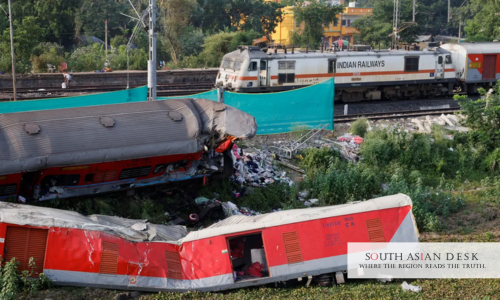
Two monorail trains collided inside a tunnel at the Vishnugad-Pipalkoti hydropower project in Chamoli district, Uttarakhand, on Tuesday, December 31, 2025. The India monorail crash injured 109 workers, with brake failure cited as the cause. Emergency teams responded quickly to evacuate the injured.
The Pipalkoti train collision underscores safety risks in major infrastructure projects across South Asia. Hydropower developments in the Himalayan region, vital for energy needs in India and neighbouring countries, often face challenging terrains that heighten accident probabilities. This incident could prompt reviews of worker safety protocols in similar sites.
Details of the Pipalkoti Train Collision
The accident happened around 9:30 PM at the Uttarakhand hydropower site managed by Tehri Hydro Development Corporation (THDC). One monorail train, carrying workers during a shift change, suffered brake failure and rammed into another stationary train inside the tunnel.
District administrative officer Gaurav Kumar stated: “The accident occurred on Tuesday night after the brakes of one of the monorail trains failed.”
Most of the 109 injured sustained minor cuts and bruises. Four workers suffered fractures. Medical teams transported the injured to nearby facilities, including the district hospital in Chamoli and Vivekananda Hospital in Pipalkoti.
Superintendent of Police Chamoli Surjeet Singh said: “42 people have been admitted to the district hospital, out of which 4-5 people have suffered fractures. 17 people have been admitted to Pipalkoti’s Vivekananda Hospital. Two trains collided in the project area. Our force and administrative officials are present in both hospitals.”
THDC Executive Director and Project Manager Kumar Sharad commented: “An accident occurred last night during the shift change. One of our locomotives, which was carrying officers and labourers, collided with another locomotive. 81 people were there, 74 are safe and discharged from the hospital. Around 7-8 have minor injuries and are receiving treatment. The good thing is that there were no casualties. THDC stands with all our employees and labourers.”
By Wednesday morning, 74 workers had been discharged after treatment. The remaining received care for minor injuries. No fatalities occurred in the India monorail crash.
Response to the 109 Injured in India Monorail Crash
Uttarakhand Chief Minister Pushkar Singh Dhami monitored the situation closely. He directed officials to ensure proper medical aid.
Dhami stated: “I am in constant contact with the District Magistrate of Chamoli regarding the accident that occurred at the TBM site of the under-construction THDC Vishnugad – Pipalkoti Hydroelectric Project in Pipalkoti, Chamoli district. Instructions have been given to provide better medical facilities to all the injured and to refer them to higher medical centers as needed. I pray to God for the speedy recovery of all the injured workers.”
Rescue operations cleared the tracks swiftly. Work at the Uttarakhand hydropower site resumed on Wednesday, December 31, 2025.
The monorail system transports workers and materials in the tunnel. Such systems are common in hydropower constructions to navigate steep terrains. The Pipalkoti train collision involved locomotives designed for internal site use, not part of the Indian Railways network.
Indian Railways clarified that the trains were not under its jurisdiction. A spokesperson noted the incident fell within the private project domain.
Background on Uttarakhand Hydropower Site
The Vishnugad-Pipalkoti project is a 444 MW run-of-the-river hydropower initiative on the Alaknanda River. THDC, a joint venture between the Government of India and the Uttar Pradesh government, leads the development. NTPC holds a partial stake.
Construction began in 2021, with completion expected by 2027. The site employs hundreds of workers, many from local areas and neighbouring states. Hydropower accounts for about 51 GW of India’s installed capacity, with Uttarakhand hosting over 10 plants totaling 2 GW.
Past incidents at similar sites include tunnel collapses and equipment failures. The India monorail crash adds to concerns over safety in remote Himalayan projects. Environmental groups have raised issues about ecological impacts, but this event focuses on worker welfare.
The region prone to natural hazards like landslides amplifies risks. Government regulations mandate safety audits, but enforcement varies.
Impact on South Asian Infrastructure
The accident at the Uttarakhand hydropower site affects regional energy ambitions. India aims to expand renewable sources, including hydropower, to meet growing demands. Delays from such incidents could influence timelines for cross-border power trade with Nepal, Bhutan, and Bangladesh.
South Asian countries share Himalayan resources for energy. A slowdown in Indian projects might strain regional grids. Worker migration from Nepal and Bangladesh to Indian sites means injuries impact families across borders.
Analysts suggest enhanced training and technology could prevent future Pipalkoti train collision-like events. International standards for tunnel transport might be adopted.
What’s Next for India Monorail Crash Investigation
Authorities plan a probe into the brake failure. THDC will review maintenance protocols. The 109 injured continue recovery, with most expected back soon.
This India monorail crash may lead to stricter safety measures at hydropower sites.
Published in SouthAsianDesk, January 2nd, 2026
Follow SouthAsianDesk on X, Instagram and Facebook for insights on business and current affairs from across South Asia.