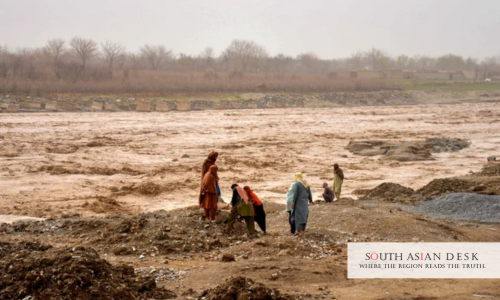
Flash floods struck multiple provinces in Afghanistan on Thursday, January 2, 2026, killing at least 17 people and injuring 11 others. Heavy rains Afghanistan ended a dry spell but caused roof collapses and infrastructure damage. Officials from the Afghanistan National Disaster Management Authority reported the Afghanistan floods incidents in Herat, Farah, and Kandahar.
The flash floods 2026 highlight Afghanistan’s vulnerability to climate extremes, impacting South Asia’s stability. Neighbouring countries like Pakistan share borders prone to similar disasters, with cross-border aid often required. Such events strain resources in a region already facing humanitarian crises, affecting migration and trade.
Heavy Rains Afghanistan Trigger Devastation
The Afghanistan floods began on Monday, December 30, 2025, with most casualties occurring since then. In Kabkan district of Herat province, five family members died when their roof collapsed on Thursday, January 2, 2026. Two victims were children.
Mohammad Yousaf Saeedi, spokesman for the Herat governor, stated: “The dead included five members of a family in a property where the roof collapsed on Thursday in Kabkan, a district in the Herat province.”
In Daman district of Kandahar province, flash floods swept through areas, contributing to the toll. Similar incidents hit Farah province. The severe weather disrupted daily life in central, northern, southern, and western regions.
Mohammad Yousaf Hammad, spokesman for the Afghanistan National Disaster Management Authority, said: “Most of the casualties have occurred since Monday in districts hit by flooding, and the severe weather also disrupted daily life across central, northern, southern, and western regions.”
He added: “The floods damaged infrastructure, killed livestock, and affected 1,800 families, worsening conditions in already vulnerable urban and rural communities.”
Assessment teams reached worst-hit areas. Surveys continue to identify needs. Videos showed a truck overturning on the Herat-Kandahar highway near Dasht-e Bakwa due to flash floods 2026. Another clip depicted people escaping an overturned bus in strong currents.
Impact of Flash Floods 2026 on Communities
The Afghanistan floods destroyed 274 houses completely and damaged 558 partially. Livestock losses compounded economic hardship for rural families. Urban areas faced worsened conditions from infrastructure damage.
Janan Saiq, spokesman for the Ministry of Disaster Management, reported 12 deaths and 11 injuries in Farah, Herat, and Kandahar provinces over three days. This aligns with ANDMA figures but shows minor discrepancies in counts.
Heavy rains Afghanistan brought relief from drought but amplified risks in mud-built homes. Deforestation and poor infrastructure heightened impacts. Remote areas suffered most, with limited access delaying aid.
The United Nations launched a USD 1.7 billion appeal on Tuesday, December 31, 2025, to assist 18 million people in Afghanistan. The appeal addresses ongoing crises, including natural disasters.
UN officials stated: “Afghanistan is expected to remain one of the world’s largest humanitarian crises in 2026.”
Aid agencies warned of persistent needs amid conflict legacies and climate change.
Background on Afghanistan Floods Vulnerability
Afghanistan ranks high in climate vulnerability. Flash floods occur seasonally, often after dry spells. In May 2024, over 300 died in northern provinces from similar events.
Decades of conflict eroded infrastructure. Deforestation reduced natural barriers. Climate change intensifies rains, leading to more frequent flash floods 2026.
Homes made of mud offer little protection. Rural communities rely on livestock, making losses devastating. Urban flooding disrupts services.
In August 2025, a 6.0 magnitude earthquake killed over 1,400 near the Pakistan border. Flash floods in Nangarhar province hindered rescues, showing compounded risks.
Pakistan’s Khyber Pakhtunkhwa province borders affected areas, facilitating cross-border aid but also shared vulnerabilities.
Government efforts under the Taliban focus on disaster response. ANDMA coordinates assessments and distributions. International partners provide support, but access remains challenging.
Past responses included tent distributions and food aid. Current flash floods 2026 require similar interventions.
Economic impacts extend regionally. Afghanistan’s instability affects South Asian trade routes. Floods disrupt agriculture, a key sector.
Climate reports predict increased extreme weather. Afghanistan needs resilient infrastructure to mitigate future risks.
Regional Implications for South Asia
The Afghanistan floods influence neighbouring states. Pakistan often provides aid, as seen in past disasters. Shared rivers like the Kabul River carry flood risks across borders.
Bangladesh and India face similar monsoon threats. Regional cooperation on early warning systems could help.
Humanitarian flows from South Asia support recovery. Remittances from diaspora aid families.
The events underscore need for climate adaptation in the region. South Asian Association for Regional Cooperation could address shared challenges, though political tensions hinder progress.
What’s Next Amid Heavy Rains Afghanistan
Aid distributions will prioritise affected families. Weather forecasts predict continued rains, potentially worsening flash floods 2026.
Ongoing assessments will guide responses. International appeals seek funds for long-term recovery.
Monitoring remains crucial as Afghanistan floods persist in vulnerable areas.
Published in SouthAsianDesk, January 2nd, 2026
Follow SouthAsianDesk on X, Instagram and Facebook for insights on business and current affairs from across South Asia.