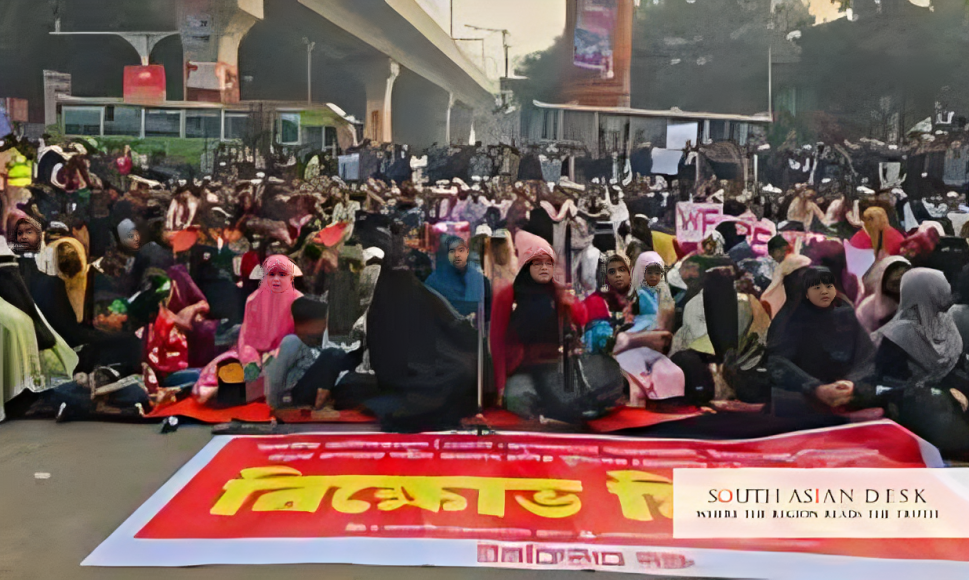
Inqilab Mancha issued a stark warning to Bangladesh’s interim government, threatening a mass movement to oust it unless the Hadi murder trial concludes within 30 working days. The demand follows ongoing Bangladesh protests at Shahbagh, where activists seek justice for slain student leader Sharif Osman Hadi.
Inqilab Mancha’s ultimatum highlights growing unrest in Bangladesh, where the killing of Sharif Osman Hadi has fuelled anti-government sentiment and strained regional ties, particularly with India amid allegations of suspects fleeing across borders. This could destabilise South Asia’s political landscape ahead of February elections.
Inqilab Mancha’s Demands and Bangladesh Protests
Inqilab Mancha announced the 30-day deadline during a sit-in at Shahbagh on 2 January 2026. Member secretary Abdullah Al Jaber stated: “We are counting down those working days. If the government fails to complete the trial within the stipulated time, we will launch a movement to overthrow the government.”
The group claims 22 working days remain, with the government requesting an extension until 7 January. Inqilab Mancha alleges authorities have detained family members of suspects rather than main perpetrators. They further accused the government of misleading the public about arrests in India’s Meghalaya state.
Bangladesh protests began after Sharif Osman Hadi was shot on 12 December 2025 in Dhaka while campaigning for the Dhaka-8 constituency. He succumbed to injuries on 18 December 2025 in Singapore. Protesters have occupied Shahbagh since 26 December 2025, demanding a fast-track tribunal.
Dhaka Metropolitan Police (DMP) Commissioner SM Sazzat Ali visited the site on 27 December 2025 and promised: “The identities and addresses of everyone involved in the killing of Inqilab Mancha spokesperson Sharif Osman bin Hadi will be unveiled.” He confirmed 10 arrests and a charge sheet by 7 January 2026, noting Tk 218 crore in cheques recovered.
Background on Sharif Osman Hadi and the Hadi Murder Trial
Sharif Osman Hadi emerged as a key figure in Bangladesh’s 2024 student uprising that toppled Sheikh Hasina’s government. As Inqilab Mancha’s spokesperson, he criticised foreign influence, including alleged Indian hegemony, and planned to contest elections.
His assassination sparked immediate violence. Hundreds of thousands attended his funeral, leading to nationwide Bangladesh protests. Inqilab Mancha, formed in August 2025, positions itself as a platform for justice and independence.
The Hadi murder trial has drawn international scrutiny. UN Secretary-General António Guterres condemned the killing on 19 December 2025, urging: “a prompt, an impartial, a thorough and transparent investigation, in line with international human rights standards.” He called for restraint to preserve a peaceful electoral environment.
Singapore’s Ministry of Foreign Affairs confirmed Hadi’s evacuation to Singapore General Hospital on 15 December 2025. Despite treatment, he died on 18 December. The ministry assisted in repatriating his remains.
Allegations complicate the Hadi murder trial. DMP officials claimed two suspects, Faisal Karim Masud and Alamgir Sheikh, fled to India via Meghalaya’s Haluaghat border. A senior DMP officer stated Bangladesh is coordinating with Indian authorities to extradite them.
However, Meghalaya police rejected these claims. A top official stated no evidence supports the suspects entering India, calling the narrative misleading. India’s government dismissed connections to the attackers as false propaganda by extremist elements.
Inqilab Mancha has issued multiple ultimatums. On 22 December 2025, they demanded a special tribunal for the Hadi murder trial before elections. By 28 December, a 24-day deadline targeted the Muhammad Yunus-led interim government, including suspending Indian work permits and pursuing India at the International Court of Justice if Hasina is not extradited.
These demands reflect broader Bangladesh protests against perceived government inaction. Inqilab Mancha vows to mobilise pro-Bangladesh parties and continue street actions.
Regional Implications of the Hadi Murder Trial
The Hadi murder trial risks escalating tensions in South Asia. Bangladesh’s interim government faces pressure amid election preparations for February 2026. Protests have disrupted cities, with blockades in divisional centres.
Anti-India rhetoric from Inqilab Mancha could strain bilateral relations. Claims of suspects fleeing to India, denied by Meghalaya authorities, fuel distrust. US Representative Raja Krishnamoorthi expressed concern over violence on 22 December 2025, highlighting regional stability.
Human rights groups like Fortify Rights urged the killing to mark a “line in the sand” against bloodshed. The Hadi murder trial tests Yunus’s administration, installed after Hasina’s ouster.
Bangladesh protests have drawn comparisons to 2024’s uprising. Inqilab Mancha’s threats echo demands for accountability, with Sharif Osman Hadi symbolising resistance.
What’s Next
Inqilab Mancha plans a ‘March for Justice’ starting 3 January 2026 to press for the Hadi murder trial. If unmet, they promise intensified actions to oust the government.
Failure to resolve the Hadi murder trial could provoke wider unrest, impacting elections and South Asian diplomacy.
Published in SouthAsianDesk, January 3rd, 2026
Follow SouthAsianDesk on X, Instagram and Facebook for insights on business and current affairs from across South Asia.