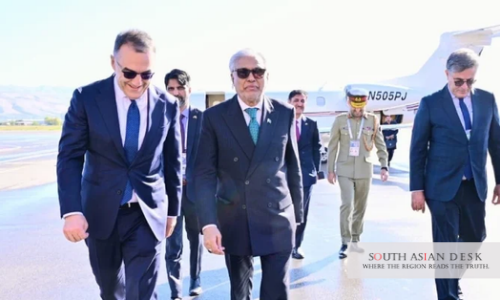
On Sunday, August 31, 2025, President Asif Ali Zardari signed the Anti-Terrorism (Amendment) Bill, 2025, into law in Islamabad, enhancing Pakistan’s counter-terrorism framework by granting law enforcement agencies expanded powers to detain suspects for up to three months, amid concerns over transparency and potential misuse.
Why It Matters
The new terrorism law in Pakistan aims to bolster national security but has sparked debates over civil liberties, impacting the balance between safety and individual rights in a region grappling with persistent security challenges.
Strengthening Pakistan’s Counter-Terrorism Framework
The Anti-Terrorism (Amendment) Bill, 2025, amends the Anti-Terrorism Act (ATA) of 1997, granting law enforcement agencies (LEAs) and armed forces authority to detain individuals for up to three months based on credible information or reasonable suspicion. The law, passed by the National Assembly and Senate earlier in August 2025 despite opposition protests, seeks to disrupt terrorist plots before execution. A statement from the President’s House highlighted that the legislation “strengthens the ability of security agencies to prevent terrorism and protect national security.”
Key Provisions of the Anti-Terrorism Amendment Bill
The bill introduces several measures to enhance counter-terrorism efforts:
- Preventive Detention: LEAs can detain suspects for up to 90 days to thwart potential terrorist activities.
- Joint Interrogation Teams (JITs): The law facilitates the formation of JITs comprising members from various law enforcement and intelligence agencies to conduct comprehensive inquiries and gather actionable intelligence.
- Judicial Oversight and Safeguards: The legislation includes provisions for judicial oversight to ensure transparency and accountability, addressing concerns about arbitrary detentions. A three-year sunset clause limits the law’s duration, requiring parliamentary review by August 2028.
According to the President’s House, these safeguards distinguish the new law from past practices, aiming to prevent misuse of power. However, opposition parties, including the Pakistan Tehreek-e-Insaf (PTI) and Jamiat Ulema-i-Islam-Fazl (JUI-F), have criticised the bill, arguing it risks undermining civil liberties.
Opposition and Public Concerns
The passage of the counter-terrorism bill faced significant resistance in parliament. Critics argue that the provision allowing detentions based on “reasonable suspicion” could lead to abuse, particularly targeting political opponents or marginalised communities. The inclusion of a sunset clause and judicial oversight aims to address these concerns, but public trust remains fragile given Pakistan’s history of security laws being misused.
Regional Context
Pakistan’s security landscape, particularly in provinces like Balochistan and Khyber Pakhtunkhwa, has seen an upsurge in terrorist activities in 2025, including the Jaffar Express hijacking and a suicide blast in Noshki. President Zardari’s earlier remarks during a March 2025 visit to Quetta underscored the urgency of equipping anti-terrorism forces with modern tools to combat these threats. The new law aligns with these efforts but must navigate the delicate balance between security and human rights in a volatile region.
Background
Pakistan’s Anti-Terrorism Act of 1997 has been amended multiple times to address evolving security threats. Previous amendments, such as those in 2014, expanded military powers following high-profile attacks. The 2025 amendment reflects ongoing efforts to adapt legal frameworks to contemporary challenges, including cross-border terrorism and internal insurgencies. The law’s passage follows President Zardari’s approval of other significant legislation in 2025, including the Petroleum Amendment Bill, indicating a broader legislative push to address national challenges.
What’s Next
The implementation of the Anti-Terrorism (Amendment) Bill will see security agencies operationalising new powers, with oversight mechanisms under scrutiny. Civil society and opposition groups are likely to monitor detentions closely, potentially challenging the law’s application in courts. The three-year sunset clause ensures that President Zardari’s signing of the bill will prompt a review by 2028, shaping future counter-terrorism policies in Pakistan.
Published in SouthAsianDesk, August 31st, 2025
Follow SouthAsianDesk on X, Instagram, and Facebook for insights on business and current affairs from across South Asia.