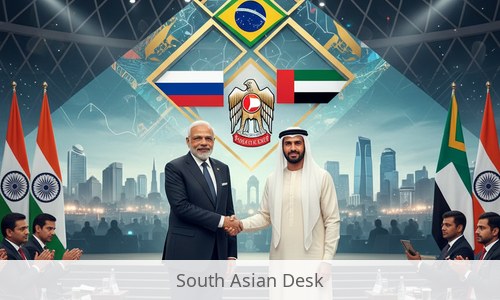
The BRICS Summit 2026 commenced in New Delhi on September 12, 2026, with heightened security protocols and high-level diplomatic engagements. Indian Prime Minister Narendra Modi hosted leaders from Brazil, Russia, India, China, and South Africa, with discussions centered on reshaping global economic frameworks and addressing geopolitical tensions.
The summit marked a pivotal moment for emerging economies, as leaders sought to amplify their collective influence amid Western-dominated systems. The event underscored the growing significance of BRICS as a platform for collaboration on issues ranging from trade to climate resilience, reflecting the bloc’s strategic intent to counterbalance traditional global powers.
BRICS Summit 2026: Security Measures
New Delhi deployed extensive security arrangements for the BRICS Summit 2026, including restricted movement zones, enhanced surveillance, and coordination with international counterterrorism agencies. The Indian Home Ministry confirmed that over 50,000 security personnel were mobilized across the capital, with checkpoints established at key infrastructure points. These measures aimed to ensure the safety of participating leaders while minimizing disruptions to civilian life. The security framework also included cybersecurity protocols to safeguard sensitive diplomatic communications.
The heightened security reflects the summit’s geopolitical importance, as BRICS nations have increasingly become focal points for global power dynamics. The coordination with international agencies highlights the bloc’s growing interdependence and the need for a unified approach to counterterrorism, aligning with broader regional and global security priorities. These New Delhi security measures were critical in ensuring the summit proceeded without incident, reinforcing the bloc’s commitment to safeguarding multilateral diplomacy.
Key Meetings
A notable bilateral meeting occurred between Indian Prime Minister Narendra Modi and UAE Crown Prince Mohammed bin Zayed Al Nahyan. The two leaders discussed expanding energy partnerships, including joint ventures in renewable energy and refining infrastructure. Modi emphasized India’s commitment to diversifying its energy imports, while the Crown Prince highlighted the UAE’s role as a strategic partner in regional stability. This meeting underscores the strategic alignment between India and the UAE, particularly in energy security, which is critical for both nations’ economic growth.
The Modi UAE meeting also highlighted the potential for BRICS to deepen ties with non-member nations, fostering a broader network of economic and strategic cooperation. Other significant meetings included discussions between Chinese President Xi Jinping and South African President Cyril Ramaphosa on trade corridors and infrastructure financing. These talks reflect the broader BRICS agenda of fostering economic integration and infrastructure development, which are essential for enhancing regional connectivity and economic resilience. The focus on infrastructure financing also aligns with the New Development Bank’s initiatives to support sustainable development projects across member states.
Global Implications
During the Leaders’ Session of the BRICS Business Forum, Russian President Vladimir Putin criticized Western nations for their “ugly” trade tactics, citing over 30,000 sanctions imposed on Russia since 2022. Putin’s remarks underscored Russia’s stance on economic sovereignty and its push for a multipolar global order. Analysts suggest these statements could influence BRICS’ efforts to establish an alternative financial architecture, including the New Development Bank.
The summit also saw proposals for greater collaboration on climate resilience, with India advocating for technology-sharing mechanisms to support developing nations. These discussions highlight the BRICS nations’ collective interest in addressing global challenges through multilateral cooperation, reinforcing their role as a counterweight to Western-dominated institutions. The emphasis on climate resilience and technology transfer reflects the bloc’s commitment to fostering sustainable development and equitable growth, particularly for emerging economies facing disproportionate climate impacts. The BRICS Summit 2026 has further amplified the global economic implications of the bloc’s decisions, as its policies increasingly shape trade, investment, and financial systems beyond its member states.
Emerging Economies and the BRICS Agenda
The BRICS Summit 2026 has underscored the bloc’s role in empowering emerging economies through collective action. By pooling resources and expertise, BRICS nations aim to reduce their reliance on Western financial institutions and create a more inclusive global economic order. This agenda includes initiatives to strengthen trade ties, promote technological innovation, and address systemic inequalities in global governance.
The summit’s focus on emerging economies has also drawn attention to the need for greater representation in international forums, as BRICS leaders advocate for reforms in organizations like the IMF and World Bank. These efforts align with the broader goal of ensuring that the voices of developing nations are heard in shaping global economic policies. The BRICS Summit 2026 has thus become a pivotal platform for advancing the interests of emerging economies, offering a viable alternative to the existing global economic architecture.
Follow SouthAsianDesk on X, Instagram and Facebook for insights on business and current affairs from across South Asia.