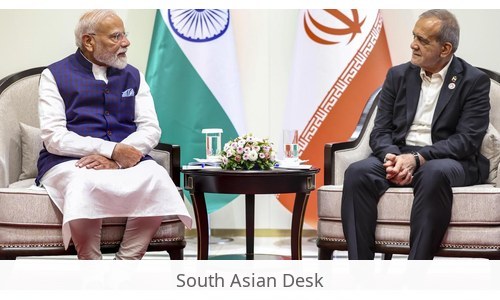
Chabahar Port India Iran: On August 31, 2026, Indian Prime Minister Narendra Modi met with Iranian President Masoud Pezeshkian on the sidelines of the SCO Summit in Kyrgyzstan. The discussion centered on regional stability, the strategic importance of the Chabahar Port, and India’s role in facilitating dialogue amid rising tensions between the United States and Iran. This meeting underscores the evolving dynamics of India Iran relations and the geopolitical strategy South Asia as a region navigates complex international challenges.
Chabahar Port India Iran: Diplomatic Engagement
During the meeting, PM Modi emphasized the need for peace and freedom of navigation in the region. He reiterated India’s commitment to maintaining open trade routes and regional connectivity, particularly through the Chabahar Port, which serves as a critical link between India, Afghanistan, and Central Asia. The port is a cornerstone of India’s efforts to bypass Pakistan and enhance its influence in the region.
Iran’s President Pezeshkian requested India’s assistance in facilitating dialogue with regional stakeholders, citing obstacles posed by Israel and the United States. While India has historically maintained a neutral stance in the Iran-US conflict, this meeting underscores its growing role as a mediator in South Asian and Middle Eastern geopolitics. The Modi Pezeshkian meeting highlights the potential for India to act as a bridge in regional trade dynamics, especially as US Iran tensions continue to shape the geopolitical landscape.
Strategic Significance of the Chabahar Port
The Chabahar Port, located in southeastern Iran, has long been a focal point of India’s strategic and economic ambitions in the region. Initiated in 2016, the project aims to establish a deep-water port that would serve as a vital gateway for India’s trade with Afghanistan and Central Asia. By connecting to the Afghan landlocked economy via the Zaranj-Delaram highway, the port is designed to bypass Pakistan, which has historically restricted India’s access to Afghanistan. This infrastructure project aligns with India’s broader “Look East” policy, which seeks to strengthen economic and strategic ties with Southeast Asia and beyond.
However, the Chabahar Port has faced significant challenges, including funding delays and logistical hurdles. India has invested heavily in the project, with the port’s first phase completed in 2021. Despite these efforts, the full realization of the port’s potential has been hampered by geopolitical tensions, particularly the United States’ sanctions on Iran, which have limited international investment and cooperation. The current discussions between Modi and Pezeshkian highlight the renewed focus on overcoming these obstacles to ensure the port’s operational success.
Geopolitical Implications
India’s engagement with Iran at this juncture highlights its strategic balancing act between its traditional ally, Russia, and its global partner, the United States. The Chabahar Port project, which has faced delays due to funding and logistical challenges, remains a symbol of India’s long-term vision for regional integration. This engagement also reflects the broader impact of US Iran tensions on regional trade and security, with India’s efforts to mediate potentially influencing the trajectory of South Asian and Middle Eastern dynamics.
The Chabahar Port India Iran initiative is not merely a strategic asset but also a linchpin for regional economic integration. By linking India to Afghanistan and Central Asia, the port is expected to facilitate the movement of goods, energy, and people across a vast network of countries. This connectivity is crucial for India’s economic growth, as it opens new markets for Indian goods and services while reducing dependency on traditional trade routes through the Arabian Sea and the Suez Canal.
Moreover, the port is part of the International North-South Transport Corridor (INSTC), a multi-modal network that aims to connect India, Iran, Russia, and Europe. This corridor is designed to reduce transit times and costs for trade between Asia and Europe, further solidifying India’s position as a key player in global trade routes. The successful operation of the Chabahar Port is therefore essential for the INSTC’s viability and India’s broader economic strategy.
Follow SouthAsianDesk on X, Instagram and Facebook for insights on business and current affairs from across South Asia.
Sources
- PM Modi urges Iran to ensure peace, freedom of navigation – thehindu.com
- In Touch With Stakeholders Over Chabahar Port: India Amid US-Iran Tensions – ndtv.com
Image: th-i.thgim.com