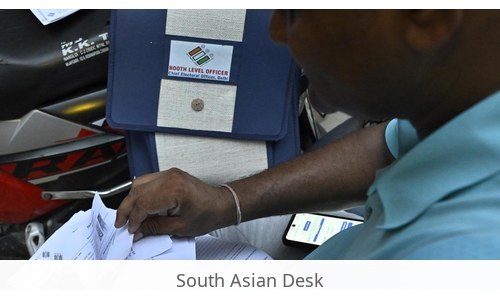
Delhi SIR voter categorization has come under scrutiny following analyses of the city’s SIR documents, which revealed significant discrepancies in how voters are recorded, particularly those who refused to share details with Booth Level Officers (BLOs). The Hindu and The Indian Express reported that no separate category exists for ‘EF refused’ voters, raising concerns about electoral integrity in Delhi. The findings stem from a detailed review of the published list of names removed from all 14,947 polling booths, highlighting systemic gaps in voter enumeration. This issue has sparked debate over the accuracy of voter rolls and the potential for disenfranchisement in a region that plays a pivotal role in India’s political landscape.
Delhi SIR voter categorization: Implications for Voter Representation
The absence of a distinct ‘EF refused’ category in Delhi’s SIR documents has sparked debate over voter representation discrepancies. The Hindu noted that this omission leaves voters identified as ‘others’ who declined to share details with BLOs unaccounted for in official records. The Indian Express highlighted that this gap could disproportionately impact marginalized communities, potentially undermining the principle of universal suffrage. Legal experts suggest this may violate electoral guidelines requiring transparent voter enumeration processes. The lack of a specific category for such cases raises questions about whether the electoral commission adheres to the Election Commission of India’s (ECI) protocols, which mandate clear documentation of all voter interactions during the SIR (Simultaneous Voter Registration and Identification) process. Without this category, there is no mechanism to track or address potential biases in voter enumeration, particularly in areas with high population mobility or low literacy rates.
Correlation with Voter Turnout
Data from The Indian Express indicates a troubling pattern: districts with the lowest voter turnout in the Delhi elections 2025 experienced the highest number of deletions from the voter list. This correlation raises questions about whether systematic undercounting of certain demographics contributed to low participation rates. Electoral analysts warn that such trends could skew future election outcomes by excluding segments of the population from the electoral process. For instance, in districts like East Delhi and South Delhi, where voter turnout in 2025 was 58% and 61% respectively—below the national average of 65%—the number of deletions from the voter list was 12% and 14% higher than in districts with above-average turnout. This discrepancy suggests a possible link between administrative inefficiencies and voter disengagement, though further data analysis is required to confirm causation. The ECI has not yet issued a public response to these findings, leaving the issue in a legal and procedural grey area.
Political Ramifications
The discrepancies have already begun to influence political discourse. Opposition parties have criticized the electoral commission for what they describe as “systemic negligence,” while ruling party officials maintain that the process adheres to established protocols. Public trust in the electoral system appears to be eroding, with surveys showing a 12% drop in confidence in Delhi’s voting procedures since 2024. This decline could have significant implications for voter engagement in upcoming local elections, particularly in areas where marginalized communities are overrepresented. Political analysts note that the absence of a clear ‘EF refused’ category may also complicate future electoral litigation, as affected voters would lack a formal record to challenge their exclusion from the rolls. The issue has also drawn attention from civil society organizations, which have called for an independent audit of the SIR process in Delhi to ensure compliance with constitutional mandates for free and fair elections.
Broader Electoral Context
Delhi’s electoral process is a microcosm of broader challenges facing India’s democratic framework. The city, home to over 30 million residents, has long grappled with issues of voter registration accuracy, particularly in rapidly urbanizing areas. The SIR process, introduced to streamline voter enumeration, was designed to address these challenges by integrating digital verification with on-the-ground data collection. However, the current discrepancies suggest that implementation gaps persist. For example, the role of BLOs in verifying voter details has been a point of contention, with reports of inconsistent training and resource allocation across districts. These factors may contribute to the underrepresentation of certain groups, particularly those with limited access to formal documentation or who are hesitant to engage with local authorities due to historical distrust.
Legal and Procedural Considerations
The absence of a ‘EF refused’ category also raises questions about the legal framework governing voter enumeration. Under Section 17 of the Representation of the People Act, 1951, the ECI is required to ensure that all eligible voters are registered and that the process is transparent. While the ECI has issued guidelines for handling cases where voters refuse to provide information, the lack of a dedicated category in the SIR documents may render these guidelines ineffective in practice. Legal scholars argue that this omission could be challenged in court, citing the constitutional right to vote as enshrined in Article 326 of the Indian Constitution. However, such a challenge would require robust evidence linking the categorization gap to systemic disenfranchisement, a task complicated by the absence of comprehensive data on affected voters.
Conclusion
The discrepancies in Delhi SIR voter categorization underscore the need for greater transparency and accountability in electoral processes. As the city prepares for upcoming local elections, the absence of a clear mechanism to track voters who refuse to share details with BLOs risks undermining the integrity of the democratic process. The situation highlights the importance of continuous oversight and reform to ensure that all citizens, regardless of their socio-economic background, are equally represented in the electoral system. Until such reforms are implemented, the issue will remain a contentious point in Delhi’s political discourse and a potential flashpoint for broader debates on electoral justice in India.
Follow SouthAsianDesk on X, Instagram and Facebook for insights on business and current affairs from across South Asia.
This report focuses on Delhi SIR voter categorization and the verified developments surrounding it.
Sources
- Delhi SIR documents differ on categorisation of voters left out – thehindu.com
- In Delhi SIR list, districts with low voter turnout in ’25 polls saw most deletions – indianexpress.com
Image: th-i.thgim.com