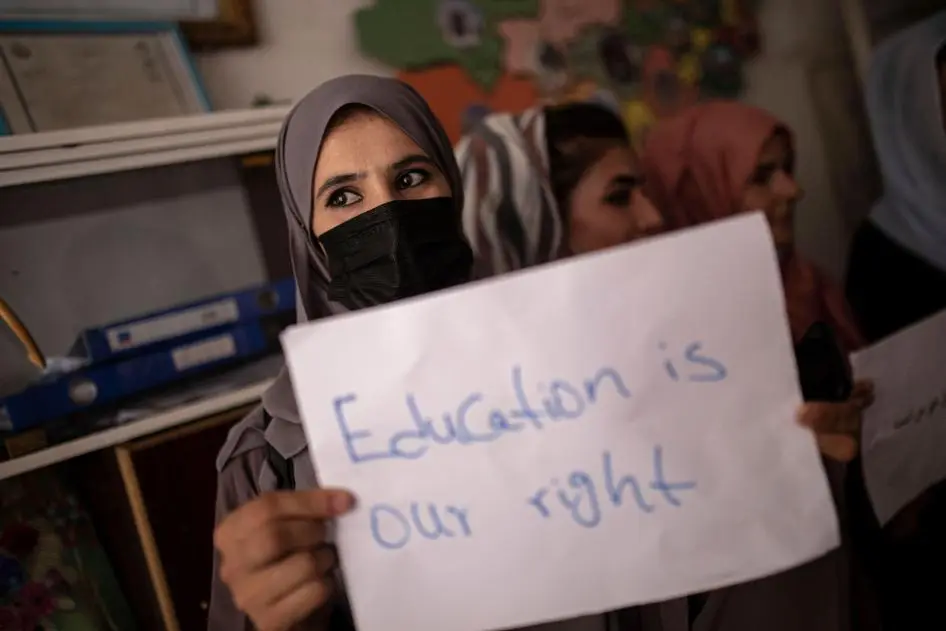
Four years into Taliban rule, the dream of education for Afghan girls remains painfully out of reach, a wound felt deeply across South Asia. Since 2021, over 1,400 days have passed with classrooms beyond grade six closed to female students, leaving families in despair and young women yearning for a future that seems ever more distant. The ongoing ban on girls education tugs at the heartstrings of communities who see learning as a path to hope and dignity.
Voices like that of Shabana, a young midwifery student, carry the weight of this loss: “Please, don’t let our education be delayed forever; it’s our lifeline.” Her plea resonates with parents and students across Afghanistan and beyond, where education is a cherished right. The continued restrictions on girl education, coupled with limited women rights, have sparked global concern, amplifying the urgency to address this crisis.
The Heavy Toll of Denied Education
Under the new governemnt, the education system for girls has faced severe setbacks. Schools for girls above grade six remain shut, and since December 2022, universities have also barred female students. This policy has affected an estimated 2.2 million girls, a figure that could grow significantly if the bans persist. For young women like Beheshta, who once aspired to be a journalist, the closure of schools means a future clouded by unfulfilled dreams. In South Asia, where education often spells empowerment, this loss feels personal and profound.
The restrictions extend to medical institutes, halting training for midwives and nurses. This not only limits women rights to education but also threatens access to healthcare, as fewer professionals will be available to serve Afghan women. The United Nations has highlighted the risk of rising maternal mortality due to this gap, a stark reminder of how interconnected education and women rights are in Afghanistan. Families mourn these lost opportunities, their hopes dimmed by each passing day.
Women Rights Under Strain
The erosion of women rights under Taliban has drawn sharp international criticism. Organisations like the United Nations and Amnesty International have called the education bans a violation of basic human rights, urging immediate action. The Organisation of Islamic Cooperation has also pushed for policies that align with principles supporting women rights, including access to learning. These global voices echo the sentiments of Afghan girls like Nabina, who said, “Education can lift us from darkness,” a statement that stirs empathy across borders.
The emotional impact on Afghan girls is undeniable. Students like Marwa, once studying business, now face an uncertain future, their ambitions stifled by the new governement. Their stories resonate in South Asia, where struggles for gender equality are a shared experience. The closure of schools and universities risks not just individual dreams but the progress of an entire generation, with economic and social consequences that could linger for decades.
Glimmers of Hope Amid Challenges
Within Afghanistan, some voices within the Taliban have hinted at change. A senior official recently called the denial of education to girls an injustice, suggesting internal discussions about reform. Yet, with no concrete steps forward, families remain in limbo, frustrated by vague promises of “ongoing research” into reopening schools. This uncertainty weighs heavily, especially for students like Sabria, who clings to the hope of returning to university.
For South Asian communities, the resilience of Afghan girls mirrors their own journeys toward equality. Their determination, even in the face of closed doors, inspires a quiet resolve to keep advocating for change. The struggle for girl education under Taliban rule is a call to action, urging the world to stand with these young women.
A Call for a Brighter Future
The crisis of girl education under Taliban rule is a human tragedy, one that strikes at the core of values like equality and opportunity. Each day without schooling is a lost chance for Afghan girls to shape their futures. The international community continues to press for change, but for students like Shabana and Beheshta, time is slipping away.
As Afghanistan navigates its fourth year under Taliban rule, the fight for girl education and women rights remains a poignant challenge. The courage of these girls, holding onto their dreams despite the odds, offers a beacon of hope. Their stories compel us to believe in a future where education and women rights flourish, undeterred by the shadows of Taliban rule.
Published in SouthAsianDesk, August 16th, 2025
Follow SouthAsianDesk on X, Instagram, and Facebook for insights on business and current affairs from across South Asia.