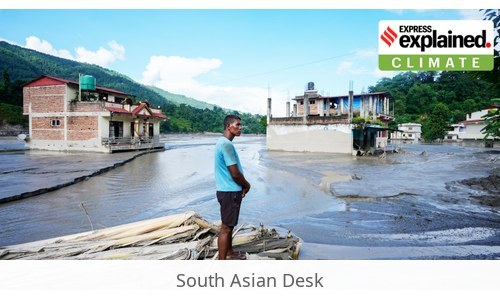
On August 30, 2026, Nepal’s External Affairs Ministry confirmed severe flooding described as a ‘Himalayan tsunami’ has led to a death toll of 788, with 3,044 individuals reported missing as rescue operations continue. The disaster has prompted warnings in Bhutan regarding potential glacial lake outburst floods (GLOFs) due to intensified disaster risks in the Himalayas. The event underscores the region’s vulnerability to climate-induced disasters, with cascading effects across South Asia’s fragile ecosystems and infrastructure networks.
Himalayan tsunami: Regional Impact and Preparedness
Experts have warned that the speed of the flash floods reached 300 km/h, raising concerns about potential further deluges. The unprecedented velocity of the floodwaters, exacerbated by melting glacial ice and heavy monsoon rains, has overwhelmed Nepal’s mountainous terrain, particularly in Rasuwa district, where the disaster originated. The Hindu reports that rescue operations are ongoing, with authorities conducting mass burials for unidentified flood victims, highlighting the scale of the human toll. Meanwhile, Bhutan’s government has issued urgent advisories, citing the Himalayan flood as a stark reminder of the risks posed by glacial lake outburst floods (GLOFs). These events occur when the natural dams formed by glacial moraines fail, releasing massive volumes of water downstream. Bhutan’s Department of Hydro-Meteorological Services has emphasized the need for immediate upgrades to early warning systems and infrastructure resilience, given the region’s growing glacial melt rates linked to climate change impact.
The disaster has also drawn attention to the interconnectedness of Himalayan hydrology. The Kali Gandaki River, which flows through Nepal and into Tibet, has seen heightened sedimentation and erratic flow patterns, compounding risks for downstream communities. According to Business Bhutan, the incident serves as a wake-up call for regional cooperation in disaster management Nepal. Neighboring countries, including India and China, have been urged to share real-time glacial monitoring data to mitigate cross-border flood risks. However, geopolitical sensitivities and data-sharing agreements remain complex, particularly in areas where rivers form international boundaries.
Long-term Implications for Infrastructure
Residents in Dhading, Nepal, believe that more bodies may be buried under thick mud as a result of the flooding. The catastrophic flooding in Nepal highlights the vulnerabilities of Himalayan regions to climate-related disasters, raising concerns about infrastructure and disaster preparedness in neighboring countries. The Daily Mirror Breaking News — Sri Lanka notes the death toll reached 750 from the Himalayan flood, with 3,000 missing, underscoring the scale of the crisis. This tragedy has exposed critical gaps in Nepal’s infrastructure, particularly in remote mountainous areas where roads, bridges, and communication networks are ill-equipped to handle such extreme events.
The Himalayan tsunami has also reignited debates about the sustainability of development projects in the Himalayas. Hydropower dams, road expansions, and deforestation for agriculture have altered natural drainage patterns, increasing the likelihood of flash floods. Experts warn that without stringent environmental safeguards, future disasters could become more frequent and severe. In Bhutan, where hydropower projects are a cornerstone of economic development, the government has begun reassessing its environmental impact assessments to account for climate change variables. Similarly, India’s National Disaster Management Authority has proposed a regional task force to coordinate flood response and infrastructure reinforcement across Himalayan states.
The economic cost of the disaster is projected to be substantial, with reconstruction efforts requiring significant international aid. The United Nations Office for Disaster Risk Reduction has already flagged the need for a multi-country funding mechanism to address the long-term recovery of affected communities. However, the political dynamics of South Asia, where aid coordination is often hindered by bureaucratic inertia and competing priorities, pose challenges to swift implementation.
Follow SouthAsianDesk on X, Instagram and Facebook for insights on business and current affairs from across South Asia.
Sources
- Nepal flash floods LIVE: Death toll reaches 788; rescuers drill through debris towards trapped tunnel workers – thehindu.com
- Nepal Flash Flood Speed Was 300 Kmph, Experts Warn Of A Second Deluge – ndtv.com
- Nepal flood victims fear more bodies are buried under mud – aljazeera.com
- Nepal-Tibet death toll 750 from Himalayan flood, 3,000 missing – dailymirror.lk
- A Disaster Next Door, A Warning for Bhutan – businessbhutan.bt
Image: images.indianexpress.com