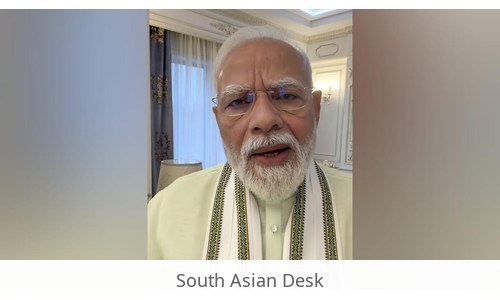
India’s Prime Minister Narendra Modi announced a 7.8% India GDP growth for the April-June quarter of 2026, attributing this resilience to India’s ability to navigate global instability. The Hindu reports that Modi emphasized the need for PM Modi austerity measures, urging citizens to avoid unnecessary gold purchases. This growth comes as many economies grapple with the aftermath of global conflicts, positioning India as a regional economic outlier.
India GDP growth: Political Implications of Modi’s Remarks
Modi’s announcement included a pointed critique of opposition leader Rahul Gandhi criticism, as noted by The Indian Express. During a video message, he criticized Gandhi’s political stance while highlighting the government’s economic achievements. Analysts suggest this rhetoric could influence upcoming electoral dynamics, though the extent of its impact remains to be seen. The timing of the statement, coinciding with a period of heightened political discourse, underscores the government’s strategic communication approach. Modi’s emphasis on PM Modi austerity measures, including curbing gold imports, reflects a broader narrative of fiscal discipline, which aligns with his administration’s long-standing focus on reducing trade deficits and capital outflows. This messaging also serves to contrast the government’s economic stewardship with perceived inefficiencies in opposition-led states, a tactic often employed during election cycles.
Comparative Economic Analysis
India’s 7.8% India GDP growth rate outpaces most South Asian counterparts, according to NDTV. While Bangladesh and Pakistan reported modest expansions, Sri Lanka and Nepal faced contraction. This divergence highlights India’s structural advantages in manufacturing and services, though challenges persist in rural employment and inflation. The government’s focus on PM Modi austerity measures, including curbing gold imports, reflects efforts to balance growth with fiscal prudence. For context, India’s services sector, which contributes over 50% of GDP, has seen robust expansion due to digital transformation and global outsourcing trends, while manufacturing growth has been bolstered by incentives for domestic production. However, rural unemployment remains a critical issue, with agricultural output growth lagging behind industrial and service sectors, raising concerns about equitable distribution of economic gains.
Regional Economic Context and Global Comparisons
The backdrop of India’s growth is a global economic landscape marked by geopolitical tensions, energy crises, and inflationary pressures. Many advanced economies, including the United States and the European Union, have experienced slower growth due to trade wars and supply chain disruptions. In contrast, India’s performance underscores its role as a stabilizing force in the developing world, contributing to economic stability South Asia. The government’s emphasis on self-reliance, or “Atmanirbhar Bharat,” has been a key driver, reducing dependence on imports and fostering domestic industries. This strategy has been particularly effective in sectors like pharmaceuticals and information technology, where India has become a global hub. However, the push for PM Modi austerity measures, including restrictions on gold imports, has sparked debate about its long-term impact on consumer demand and the informal economy, which accounts for a significant portion of India’s economic activity.
Challenges and Future Outlook
Despite the positive growth figures, India faces several challenges that could test the sustainability of its economic trajectory. Inflation, currently hovering around 5.5%, remains a concern for policymakers, as it affects household purchasing power and investment confidence. Additionally, the government’s focus on PM Modi austerity measures may dampen short-term consumer spending, which could slow growth in the coming quarters. The rural economy, which employs over 40% of the workforce, continues to struggle with low productivity and inadequate infrastructure, necessitating targeted interventions. Analysts suggest that while India’s growth model is resilient, addressing these structural issues will be critical to maintaining momentum in the face of global economic challenges.
Follow SouthAsianDesk on X, Instagram and Facebook for insights on business and current affairs from across South Asia.
Sources
- PM Modi lauds 7.8% growth ‘despite wars, instability’; revives appeal for austerity measures – thehindu.com
- PM’s GDP video: A dig at Rahul Gandhi, ‘avoid gold, foreign travel’ advice – indianexpress.com
- PM Modi’s “Jhooth Ki Goonj” Attack At Rahul Gandhi After 7.8% GDP Growth – ndtv.com
Image: th-i.thgim.com