US Commerce Secretary Howard Lutnick revealed that the India US trade deal faltered because Prime Minister Narendra Modi did not place a call to President Donald Trump despite negotiations being set up.
US Commerce Secretary Howard Lutnick stated on 8 January 2026 that the India US trade deal stalled after Prime Minister Narendra Modi failed to call President Donald Trump to finalise terms. The disclosure came during a podcast interview. Lutnick explained that India had a three-week window to close the agreement but missed it leading to deals with other nations instead.
The breakdown in the India US trade deal carries significant implications for South Asia. High US tariffs on India could raise costs for exporters in the region and disrupt supply chains. Countries like Pakistan and Bangladesh may face similar pressures in trade talks with Washington amid global shifts in energy and commerce policies.
Details of the Modi Trump Call Issue
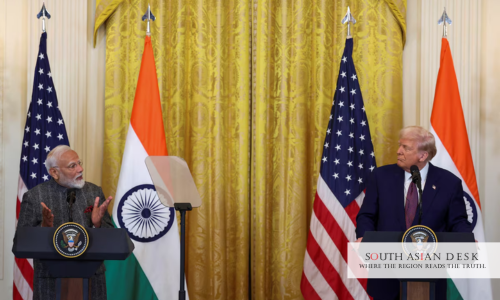
Lutnick described the negotiation process in the All-In Podcast. He set up the India US trade deal but required a leader-level call to seal it. “It’s all set up and you have got to have Modi call the president. And they were uncomfortable doing it” Lutnick said. India received a “shot clock” of three Fridays to act. When the Modi Trump call did not occur the US proceeded with agreements for Indonesia the Philippines and Vietnam.
The missed Modi Trump call pushed India back in the queue. Lutnick noted “India just was on the wrong side of the seesaw and it wasn’t they couldn’t get it done when they needed to”. Other countries secured better terms as a result. The India US trade deal now faces revised conditions with prior offers expired.
Impact of US Tariffs on India
US tariffs on India stand at 50% including 25% additional duties and 25% reciprocal tariffs. These stem from India’s continued purchases of Russian oil. President Trump warned on 5 January 2026 aboard Air Force One that tariffs could rise further if India does not curb such imports. “The United States could raise tariffs on India if New Delhi does not meet Washington’s demand to curb purchases of Russian oil” Trump stated.
The tariffs have hurt Indian exports. Merchandise shipments to the US dropped 8.58% in October 2025 to $6.3 billion. India’s state refiners continue buying Russian crude complicating relief efforts. The US views these purchases as supporting Russia’s economy during the Ukraine conflict. Trump backed a bipartisan bill for sanctions on countries buying Russian energy including potential 500% tariffs.
Howard Lutnick India comments highlight the personal element in talks. He positioned the India US trade deal between UK and Vietnam rates but the delay altered that. India seeks a tariff between those offers but Lutnick confirmed it lapsed.
Background
India and the US began formal negotiations in February 2025 aiming for a first phase by autumn. Six rounds occurred with the latest in December 2025 when US officials visited New Delhi. The framework sought to address tariffs and expand market access. Speculation focused on agriculture barriers but Lutnick’s revelation points to communication failures.
Trump’s administration prioritised rebalancing trade deficits. Deals with Japan Europe and Southeast Asia followed a “staircase” model where early closers get favourable terms. India’s hesitation on the Modi Trump call placed it at a disadvantage. Trump noted Modi was “not that happy with me” due to the tariffs linked to Russian oil.
India’s trade ministry did not respond to requests for comment on Lutnick’s statements. No public statements from Prime Minister Modi’s office addressed the Modi Trump call allegation.
The India US trade deal remains stalled amid these issues. Bilateral merchandise trade totals about $120 billion annually with the US accounting for 18% of India’s exports. Disruptions could affect sectors like textiles pharmaceuticals and IT services vital to South Asian economies.
Howard Lutnick India Trade Perspective
As Commerce Secretary Howard Lutnick India views emphasise Trump’s role as the “closer”. He negotiated terms but insisted on presidential involvement. “He is the closer. He does the deal” Lutnick said of Trump. The Howard Lutnick India narrative underscores how personal diplomacy influences major pacts.
Lutnick warned that delayed nations face steeper demands. For India this means renegotiating from a weaker position. The US has completed multiple Asia deals since the missed window. Howard Lutnick India statements suggest flexibility is gone: “I agreed then. Not now.”
What’s Next
Ongoing talks may resume but with higher stakes. Trump supports legislation for severe tariffs on Russian oil buyers potentially upending relations. India has reduced some imports but state firms persist. A seventh negotiation round could occur soon. Success hinges on addressing energy ties and rebuilding trust after the Modi Trump call lapse.
The India US trade deal faces uncertainty. Resolution could ease tariffs and boost regional growth or escalate tensions if demands unmet.
Published in SouthAsianDesk, January 9th, 2026
Follow SouthAsianDesk on X, Instagram and Facebook for insights on business and current affairs from across South Asia.