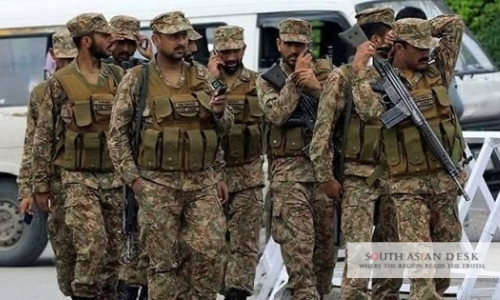
Security forces in Pakistan have suffered heavy losses while neutralising a significant number of militants in a recent counter-terrorism drive in KP operation, raising questions about the escalating threat from cross-border extremism.
Pakistan’s Inter-Services Public Relations (ISPR) reported on Saturday, September 13, 2025, that 12 soldiers were martyred and 13 terrorists killed during an intense fire exchange in South Waziristan district of Khyber Pakhtunkhwa (KP), as part of the ISPR report on KP operation spanning September 10 to 13. The clash occurred amid an intelligence-based operation targeting militants, with the total casualties including 35 terrorists neutralised across two sites, highlighting ongoing efforts to combat terrorism in the region.
Why It Matters
The ISPR report on KP operation underscores the persistent security challenges in Pakistan, particularly in border regions like KP, where militant incursions from Afghanistan continue to destabilise the area. This incident reflects a broader uptick in terrorist activities that not only strain military resources but also impact regional stability in South Asia, potentially exacerbating tensions with neighbouring countries and hindering economic development in vulnerable provinces.
Details of the ISPR Report on KP Operation
According to the ISPR report on KP operation, security forces conducted two separate engagements between September 10 and 13, 2025, resulting in the elimination of 35 terrorists described as “khwarij belonging to Indian proxy Fitna al Khwarij”. The term “Fitna al Khwarij” is used by Pakistani authorities to refer to militants affiliated with the banned Tehreek-i-Taliban Pakistan (TTP), while “Fitna al Hindustan” denotes Balochistan-based groups allegedly backed by external actors.
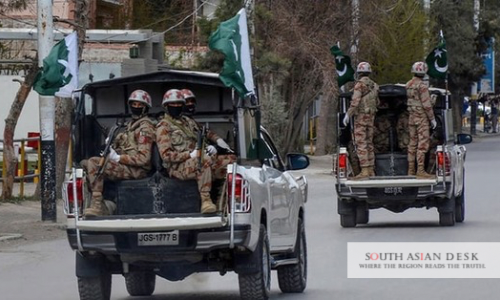
In the specific encounter in South Waziristan district, 13 terrorists were neutralised by security forces during a fierce exchange of fire. However, the operation came at a steep cost, with 12 soldiers embracing martyrdom after fighting gallantly. The ISPR statement detailed: “In another encounter that took place in South Waziristan District, thirteen more khwarij were neutralised by the security forces. However, during intense fire exchange, twelve brave sons of soil, having fought gallantly, paid the ultimate sacrifice and embraced shahadat (martyrdom).”
A parallel intelligence-based operation (IBO) in Bajaur district led to the killing of 22 additional terrorists, bringing the total to 35 in the ISPR report on KP operation. Weapons and ammunition were recovered from the slain militants, who were said to have been actively involved in numerous terrorist activities in the areas. The ISPR emphasised that these individuals were “Indian-sponsored khwarij” and had been linked to heinous acts.
The military’s media wing also highlighted intelligence reports confirming the physical involvement of Afghan nationals in these attacks. “Besides, the use of Afghan soil against Pakistan by Fitna al Khawarij terrorists continues to remain a grave point of concern,” the statement noted. Pakistan has repeatedly urged the interim Afghan government to prevent its territory from being used for cross-border terrorism, stating: “Pakistan expects the interim Afghan government to uphold its responsibilities and deny use of its soil for terrorist activities against Pakistan.”
This ISPR report on KP operation aligns with recent patterns of heightened militant activity in KP and Balochistan. Pakistan maintains that groups like the TTP and the Balochistan Liberation Army (BLA)—recently designated a Foreign Terrorist Organisation by the US State Department—pose a persistent threat originating from Afghan soil.
Recent Counter-Terrorism Efforts
In the days leading up to this ISPR report on KP operation, security forces reported further successes. From September 9 to 10, 2025, 14 “Indian-sponsored khwarij” were killed in Mohmand district, four in North Waziristan, and one in Bannu district. On Friday, September 12, 2025, troops eliminated four “Indian-sponsored terrorists” during an IBO in Balochistan’s Mastung district.
Last month, in August 2025, security forces gunned down 50 terrorists over a four-day operation, thwarting an attempt by militants to infiltrate from Afghanistan into Balochistan. Earlier this month, on an unspecified date in September 2025, six soldiers were martyred while five terrorists were killed in an thwarted attack on the Frontier Constabulary (FC) Headquarters in Bannu district.
These operations demonstrate a intensified counter-terrorism strategy by Pakistan’s military, aimed at eradicating militant networks. The ISPR asserted: “Sanitisation operations are being conducted to eliminate any other Indian-sponsored khwarij found in the area, as the security forces of Pakistan are determined to wipe out the menace of Indian-sponsored terrorism from the country and such sacrifices of our brave men further strengthen our resolve.”
Prime Minister’s Response
Prime Minister Shehbaz Sharif praised the security forces for their role in the ISPR report on KP operation, lauding the elimination of 35 terrorists in the two engagements. In a statement from the Prime Minister’s Office, he paid tribute to the 12 martyred soldiers, describing them as having “fought with bravery”. The premier prayed for the martyrs’ elevation in ranks and extended condolences to their families, adding that the security forces were “standing like a solid rock” against terrorism.
Mr Sharif reiterated the government’s unwavering commitment to rooting out all forms of terrorism from Pakistan, emphasising national unity in the face of such threats. The entire nation, he said, pays tribute to the bravery of its armed personnel.
Background
Pakistan has faced a surge in terrorist incidents since November 2022, when the TTP ended a ceasefire with the government and vowed to intensify attacks on security forces, police, and law enforcement agencies. The ISPR report on KP operation is part of a larger pattern, with KP and Balochistan bearing the brunt of these activities. Militant groups operating from Afghan territory have long been a point of contention, prompting diplomatic pressures on Kabul. The recovery of weapons in these operations points to sophisticated supply chains, allegedly involving external sponsorship, which complicates regional security dynamics in South Asia.
What’s Next
Following the ISPR report on KP operation, sanitisation efforts will continue in the affected areas to ensure no remaining threats persist. Pakistan’s military remains resolute in its campaign against terrorism, with expectations of further intelligence-based operations to address the root causes, including cross-border elements. The government’s resolve, bolstered by such sacrifices, signals an ongoing push to secure the nation’s borders and eliminate the menace of extremism.
Published in SouthAsianDesk, September 13th, 2025
Follow SouthAsianDesk on X, Instagram, and Facebook for insights on business and current affairs from across South Asia.