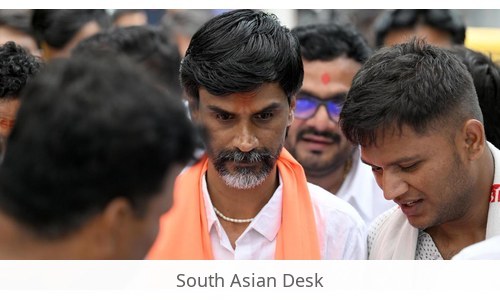
Maharashtra Maratha quota: On August 31, 2026, the Maharashtra government has indicated a willingness to engage in discussions regarding the demands of the Maratha community, particularly in relation to the legal validity of their quota claims. Activist Manoj Jarange has set a deadline for the government to respond, threatening protests if their demands are not met.
Maharashtra Maratha quota: Background on Maratha Quota Demands
The Maharashtra Maratha quota issue has been a significant point of contention in Maharashtra for decades. The Maratha community, historically a dominant force in the region, has long sought greater representation in education and employment through reservation policies. The legal framework surrounding quota systems in India, established under constitutional provisions and subsequent amendments, has been central to the debate. The Hindu reports that activist Manoj Jarange has set a September 12 deadline for the Maharashtra government to accept the Maratha community’s demands. Indian Express states that the Maharashtra government is ready to discuss the legal validity of the quota demands following Jarange’s fast. This development marks a pivotal moment in a long-standing struggle that has seen periodic flare-ups of protests and political maneuvering.
The roots of the Maratha quota demand trace back to the early 2000s, when the community first sought inclusion in the state’s reservation system. While the government initially granted a 10% reservation for Marathas in 2018, the issue resurfaced in 2022 when the Supreme Court struck down the quota, citing a lack of sufficient evidence to prove the community’s backwardness. This ruling reignited tensions, with activists and political leaders arguing that the Marathas, despite their historical contributions, had been historically marginalized in modern economic and educational systems. The current push for Kunbi certificates, which would allow Marathas to claim reservation benefits, is rooted in this historical narrative.
Implications of Government’s Willingness to Negotiate
The government’s response could influence future demonstrations and policy decisions regarding the Maharashtra Maratha quota. NDTV notes that Manoj Jarange is demanding the immediate issuance of Kunbi certificates to eligible members of the Maratha community based on 58 lakh historical records. This development may reshape regional politics and community dynamics, as the government’s openness to dialogue signals a potential shift in addressing long-standing grievances.
The issuance of Kunbi certificates, which are traditionally used to identify individuals belonging to the Kunbi sub-caste—a subgroup of the Maratha community—has become a focal point of the current negotiations. Jarange’s demand is based on the assertion that the 58 lakh historical records, which include land revenue data and other archival evidence, demonstrate the community’s historical status as a landholding class. However, legal experts have raised questions about the admissibility of such records in determining eligibility for reservations, citing the need for more recent and verifiable data. The government’s willingness to engage in discussions may lead to a re-evaluation of the criteria for reservation eligibility, potentially setting a precedent for other communities seeking similar benefits.
The potential resolution of this issue could have broader implications for Maharashtra’s political landscape. The Maratha community, which constitutes a significant portion of the state’s population, has historically been a key voter bloc. A resolution that satisfies their demands could strengthen the ruling party’s position, while a failure to address their concerns could lead to widespread unrest. Additionally, the outcome of these negotiations may influence the approach of other states in India, where similar demands for reservations are being made by various communities.
Manoj Jarange’s Activism and Political Landscape
Jarange’s demands for the issuance of Kunbi certificates based on historical records highlight the intersection of historical claims and contemporary policy. His activism has significantly impacted Maharashtra’s political landscape, with the government’s response likely to shape future community relations and policy frameworks. The Hindu and Indian Express have both reported on the evolving dynamics between the activist and the administration.
Manoj Jarange, a prominent figure in the Maratha community, has been at the forefront of the quota movement for several years. His activism has not only brought the issue to the forefront of public discourse but has also forced the government to address the community’s concerns in a structured manner. Jarange’s decision to fast and set a deadline for the government’s response underscores the urgency of the Maharashtra Maratha quota issue and the community’s determination to achieve their goals.
The political landscape in Maharashtra is complex, with multiple parties vying for the support of the Maratha community. The ruling party has historically relied on the community’s backing, and any resolution of the Maharashtra Maratha quota issue could strengthen its position. However, opposition parties have also been vocal about the need for a fair and equitable solution that adheres to legal and constitutional principles. This dynamic highlights the broader challenge of balancing Maratha community demands with legal and administrative constraints.
Follow SouthAsianDesk on X, Instagram and Facebook for insights on business and current affairs from across South Asia.
Sources
- Maratha quota: Maharastra Govt hints at willingness to discuss ‘legally valid’ demands – thehindu.com
- Day after activist Manoj Jarange began fast, government says ready to discuss legal validity – indianexpress.com
- Activist Manoj Jarange Sets Mumbai Protest Deadline, Devendra Fadnavis Reaches Out – ndtv.com
Image: th-i.thgim.com