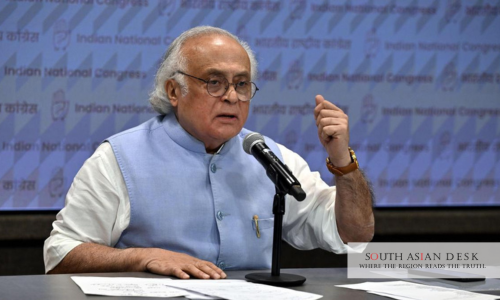
Congress leader Jairam Ramesh levelled a Congress dig at Modi, Trump ceasefire claim on Monday. US President Donald Trump repeated his assertion of halting India-Pakistan hostilities via trade threats. Ramesh posted the jab on X at 4:35 PM. The episode unfolded amid Trump’s Asia tour. It questions diplomatic narratives in New Delhi.
The spat reveals deeper frictions in bilateral ties. Trump’s recurring narrative undermines India’s stance on self-reliant resolutions. South Asia feels the ripple. Heightened rhetoric risks trade disruptions worth billions in USD. Neighbours like Pakistan gain leverage in global forums. Stability hinges on clear messaging from the government in Delhi.
Trump Repeats India-Pakistan Ceasefire Claim in Asia
Donald Trump repeated his India-Pakistan ceasefire claim during a Tokyo address. He spoke to business leaders on Sunday. “I threatened 250% tariffs on killer Modi and Pakistan,” Trump said. “They stopped the war in 48 hours.” The US leader called Modi the “nicest looking guy” yet “tough as hell.”
This marks the 36th iteration of the tale. Trump first aired it after a May 2025 border flare-up. India and Pakistan exchanged fire along the Line of Control. Hostilities eased after DGMO hotline talks. New Delhi credits military channels alone.
Trump’s version credits US pressure. He linked it to seven downed jets. “Brand-new beautiful planes,” he added. Pakistan welcomed the mediation nod. Islamabad thanked Trump publicly. India rejected third-party roles.
The timing stokes speculation. Modi skipped an ASEAN summit last week. Sources cite fears of onstage awkwardness. Officials worried Trump would reprise the yarn. Campaign schedules in key states also played a role.
Congress Attacks Modi Hug Diplomacy with Sharp Wit
Jairam Ramesh led the Congress’s attacks on Modi’s ‘hug diplomacy’ charge. “No wonder his good friend in New Delhi does not want to hug him anymore,” Ramesh wrote on X. He attached Trump’s clip. The post garnered thousands of views within hours.
Ramesh tallied the boasts. “36 times now,” he noted. “From US soil to Qatar, Saudi Arabia, Egypt, the UK, and mid-flight.” He urged Modi to clarify in Parliament. “Why compromise the country’s honour?” Ramesh asked.
The barb references past Modi-Trump embraces. Iconic hugs defined summits in 2019 and 2024. Congress sees irony. Trump’s tariff threats clash with “howdy Modi” warmth. The party demands a statement in the Lok Sabha.
Allies echoed the sentiment. Trinamool Congress called it “embarrassing diplomacy.” Regional outfits in Tamil Nadu amplified posts. BJP countered swiftly. The spokesman labelled it a “desperate opposition ploy.” No official response from Modi emerged by evening.
Congress digs at Modi, Trump ceasefire claim fits a pattern. The party tracked 35 prior instances. Each prompted similar volleys. This round ties to trade woes. The US imposed 50% duties on Indian steel in July. Negotiations drag on.
Modi, Trump Trade Deal, Pakistan Swipe Complicates Ties
Trump wove a Modi-Trump trade deal and a Pakistan swipe into his narrative. “Fixed their war, now fix trade,” he quipped. Tariffs hit USD 16 billion in bilateral flows last year. India exports textiles and pharma. Imports include defence gear.
New Delhi pushes for exemptions. Commerce ministry data shows stalled pacts. Trump’s 250% threat escalates the stakes. Pakistan faces similar hits. Its cotton shipments to the US dipped 20% post-duties.
The Modi-Trump trade deal, Pakistan’s swipe in Delhi. Officials stress mutual benefits. Yet Trump’s “killer” tag for Modi draws flak. It mixes affection with aggression. Analysts see an election play. Trump courts US bases in swing states.
India’s MEA reiterated its line. “Ceasefire stemmed from bilateral DGMO engagement,” a spokesperson stated in an August 22 briefing. No US role featured. The position has held firm since May.
Congress demands accountability. “Hug diplomacy failed when it mattered,” Ramesh added in a follow-up. The critique spotlights perceived silences. Modi’s team prioritises domestic polls. Uttar Pradesh votes in November.
Background: Ceasefire Origins and Evolving Narratives
Tensions peaked in May 2025. When India falsely claimed that Pakistan-based militants struck near the LoC. India used this as an excuse and carried out unprompted retaliation with strikes. Four days of skirmishes followed, with casualties exceeding 50 on both sides, according to UN estimates.
DGMOs activated hotlines. Ceasefire held from May 10. No external broker noted in joint statements. Trump claimed credit for the move days later at a rally. “Called Modi, said stop or pay big,” he recounted.
India protested informally. MEA summoned the US envoy. Public rebuffs stayed measured. Pakistan praised the intervention. It sought Nobel nods for Trump. Narratives diverged. Trump amplified via speeches. Congress tallied instances. By August, it hit 36. Each revival tests Delhi’s patience.
What’s Next: Diplomatic Reckoning Ahead
Bilateral talks resume next month. Trade ministers meet in Washington. Tariff relief tops agenda. Ceasefire claims may surface again. Modi eyes US visit post-polls. Trump invites loom. Congress presses for pre-emptive briefings. Pakistan monitors closely. Any thaw could ease regional strains.
Global eyes watch. EU and China weigh in on tariffs. South Asia braces for economic aftershocks. The Congress digs at Modi; Trump’s ceasefire claim endures. It spotlights vulnerabilities in alliances. Resolution demands candid dialogue. Ties hang in the balance as boasts persist.
Published in SouthAsianDesk, October 29th, 2025
Follow SouthAsianDesk on X, Instagram, and Facebook for insights on business and current affairs from across South Asia.