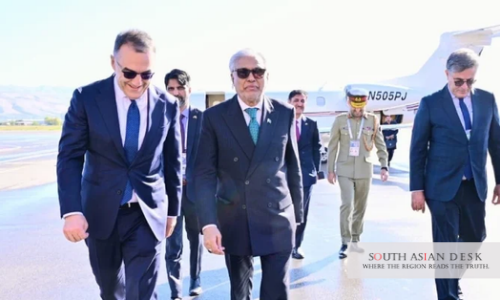
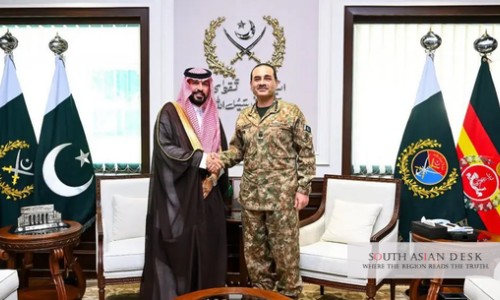
President Donald Trump is hosting a multilateral summit with leaders from key Muslim-majority nations in New York, unveiling a US blueprint for Gaza’s postwar future that could reshape Middle East alliances.
New York, United States – US President Donald Trump will convene officials from Saudi Arabia, the United Arab Emirates, Qatar, Egypt, Jordan, Turkey, Indonesia, and Pakistan on Tuesday, September 23, 2025, at the United Nations headquarters to address the Gaza crisis, presenting principles for hostage releases, Israeli withdrawal, and governance excluding Hamas, as part of Trump, Muslim majority nations outreach.
Why It Matters for South Asia
For South Asia, home to nearly 600 million Muslims, the Trump Muslim-majority nations dialogue on Gaza carries profound implications, with Pakistan’s direct involvement potentially influencing bilateral US ties and regional stability. As Islamabad balances its non-NATO ally status with advocacy for Palestinian rights, outcomes could affect aid dynamics, counter-terrorism cooperation, and even India-Pakistan relations, while Indonesia’s participation highlights broader Islamic solidarity impacting diaspora communities and economic remittances.
Trump, Muslim-Majority Nations Summit Focuses on Gaza Cease-Fire
The multilateral session, set for 2:00 PM following Trump’s UN General Assembly address at 10:00 AM, marks a significant escalation in US diplomatic efforts to resolve the Gaza war, now in its second year. White House Press Secretary Karoline Leavitt confirmed the gathering on Monday, September 22, 2025, stating it aims to foster “sustained engagement with regional partners” on de-escalation. According to two US officials speaking to Axios, the agenda includes Trump’s “principles for peace and post-war governance in Gaza”, prioritising the immediate release of remaining hostages, an end to hostilities, and Israel’s complete withdrawal from the territory.
This initiative builds on a fragile two-month cease-fire that collapsed on March 18, 2025, when Israeli strikes killed 400 Palestinians, per Gaza health ministry data verified by the United Nations. Since the October 7, 2023, Hamas attacks that claimed 1,200 Israeli lives and saw over 250 hostages taken, more than 65,000 Palestinians, mostly civilians have died in the ensuing conflict, according to UN tallies. The US envisions Arab and Muslim states committing to a stabilisation force in Gaza to facilitate the transition, alongside pledges for reconstruction funding estimated at USD 50 billion over 10 years by international donors.
An Israeli official, granted anonymity, indicated that Prime Minister Benjamin Netanyahu has been briefed on the plan’s outlines, though elements like potential Palestinian Authority (PA) roles in Gaza administration may encounter Israeli reservations. The framework aligns in part with a July 2025 Arab League statement urging Hamas’s disarmament and power transfer to a reformed PA overseeing Gaza, the West Bank, and East Jerusalem.
Challenges in Trump, Muslim-Majority Nations, Gaza Framework
Trump’s proposal seeks to exclude Hamas from any future Gaza governance, a core US and Israeli demand, while calling for multinational forces, potentially drawn from the participating Muslim majority nations—to secure the enclave post-withdrawal. This mirrors peacekeeping precedents, such as UN missions in Lebanon, but introduces complexities given the diverse interests of attendees. For instance, Saudi Arabia and the UAE, key Abraham Accords signatories, have conditioned normalisation with Israel on Palestinian progress, whereas Turkey and Qatar maintain ties with Hamas.
Earlier Trump suggestions have cast shadows over these interactions between Trump and Muslim majority nations. In February 2025, the president floated a US-administered Gaza with the relocation of its 2.3 million residents to neighbouring countries, dubbing it a transformation into the “Riviera of the Middle East”. The United Nations condemned this as resembling “ethnic cleansing”, breaching international law’s ban on forced transfers, while Saudi Arabia’s foreign ministry rejected any “displacement of Palestinians from their land”, per an official statement. Human Rights Watch and other groups warned it would worsen Gaza’s humanitarian plight, where 96 per cent of the population faces famine risks, as reported in August 2025 by the Integrated Food Security Phase Classification.
France’s recognition of Palestine on Monday, September 22, 2025, joined by the UK, Canada, and Australia, further complicates dynamics, with President Emmanuel Macron advocating a UN-mandated force for Gaza security. This proposal, aired during a New York peace conference with Saudi Arabia, overlaps with but may diverge from Trump’s vision, offering Arab diplomats avenues to press for PA empowerment during the session.
Gaza Reconstruction and Broader Regional Stakes
Beyond cease-fire logistics, the talks address Gaza’s rebuilding, with the World Bank projecting USD 18.5 billion for infrastructure repairs alone. Indonesia and Pakistan, representing over 400 million Muslims, have amplified Palestinian voices at the UN, with Pakistan donating USD 5 million in aid to Gaza in 2025. Their roles in Trump, Muslim majority nations’ deliberations could intensify scrutiny of Israeli operations, including the deaths of 247 Palestinian journalists since October 2023, as tallied by the Committee to Protect Journalists.
Geopolitically, the summit gauges US influence amid the conflict’s expansion: Israel has conducted strikes in Iran, Lebanon, Yemen, Syria, and even Qatar. Trump’s September 7, 2025, “last warning” to Hamas, posted on Truth Social, called for hostage-release acceptance, eliciting a Hamas response via mediators affirming openness to talks but demanding full Israeli pullout. The US also barred PA President Mahmoud Abbas from in-person UNGA attendance on August 29, 2025, leading to a virtual speech decrying the Gaza campaign as “genocide”.
In South Asia, Pakistan’s stake underscores its diplomatic tightrope: as a US non-NATO ally, progress on Gaza could enhance its leverage on issues like Afghanistan stability or economic bailouts, while fostering unity among Muslim majority nations.
Background
The Gaza war ignited on October 7, 2023, with Hamas incursions prompting Israel’s invasion. Trump’s January 2025 inauguration inherited a late-2024 truce, which his team hailed for initial calm. A February 4, 2025, White House meeting with Netanyahu advanced intervention ideas, though they strained Arab American support, 53 per cent of whom favoured Green Party’s Jill Stein in 2024 polls by the Council on American-Islamic Relations. August 2025 Oval Office sessions with Jared Kushner refined the postwar blueprint, coinciding with Israeli escalations in Gaza City.
What’s Next for Trump, Muslim-Majority Nations in Gaza
Prospects from these Trump, Muslim-majority nations exchanges may spawn Riyadh-based working groups by October 2025 to detail deployments and financing, contingent on reconciling US-Israeli stances with Arab insistence on Palestinian rights, potentially heralding a pathway to enduring Gaza peace.
Published in SouthAsianDesk, September 23rd, 2025
Follow SouthAsianDesk on X, Instagram, and Facebook for insights on business and current affairs from across South Asia.