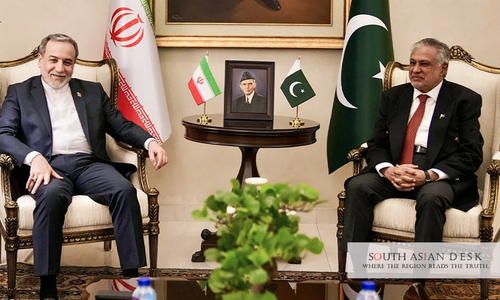
Islamabad/London – On Sunday, September 21, 2025, Pakistan’s Prime Minister Shehbaz Sharif urged both Pakistan and India to share the duty of ensuring peace in Pakistan India relations 2025, speaking at a gathering of overseas Pakistanis in London during a four-day stopover following a state visit to Saudi Arabia. The address, delivered ahead of his departure to the United States for the United Nations General Assembly, highlighted the need for dialogue on key issues including Kashmir, terrorism, water, and trade, as both neighbours navigate post-conflict recovery. This comes after a ceasefire in May 2025, underscoring why such overtures matter for South Asian security.
Why It Matters
The statement arrives at a pivotal moment in Pakistan India relations 2025, where unresolved disputes have repeatedly threatened escalation, as seen in the April-May 2025 border clashes triggered by the Pahalgam terror attack. With South Asia home to over 1.9 billion people and two nuclear-armed states, Sharif’s emphasis on shared responsibility could pave the way for confidence-building measures, reducing the risk of proxy conflicts and economic disruptions that affect trade routes and remittances across the region. For Pakistan, it signals a diplomatic pivot towards stability to bolster its recovering economy, while for India, it tests commitments to bilateral talks amid global calls for restraint.
PM Shehbaz Sharif’s Call for Dialogue in Pakistan India Relations 2025
Prime Minister Shehbaz Sharif’s remarks, made at approximately 7:00 PM local time in London, directly addressed the fragility of Pakistan India relations 2025. He stated that “as neighbours, the onus is now on India and Pakistan, whether to live in peace or war,” framing the choice as a mutual imperative. This aligns with his repeated offers for talks, including a June 2025 telephonic conversation with Saudi Crown Prince Mohammed bin Salman, where he reiterated Pakistan’s readiness “to engage in a meaningful dialogue with India on all outstanding issues, including Jammu and Kashmir, water, trade and terrorism.”
Sharif underscored the centrality of the Kashmir dispute, declaring that “without the resolution of the Kashmir issue, which was the key to the regional peace, bilateral ties between the two countries could not be established.” He added that “Kashmiris would get their right to self-determination and freedom,” positioning resolution as non-negotiable for progress. The Prime Minister also referenced the ceasefire achieved earlier in 2025, noting that “as the ceasefire between Pakistan and India had been achieved, Pakistan wanted peace, progress and prosperity and an end to unemployment and poverty.”
The event followed Sharif’s signing of the Strategic Mutual Defense Agreement with Saudi Arabia on Wednesday, September 17, 2025, in Riyadh, which commits both nations to treat aggression against one as aggression against both. While focused on broader regional security, the pact indirectly bolsters Pakistan’s diplomatic leverage in Pakistan India relations 2025, as evidenced by U.S. Secretary of State Marco Rubio’s May 8, 2025, call with Sharif urging de-escalation and direct dialogue.
Pakistan PM India Neighbours Duty: A Shared Responsibility
Central to Sharif’s address was the theme of Pakistan PM India neighbours duty, where he explicitly said, “both neighbours share duty to ensure peace.” This builds on Pakistan’s post-ceasefire stance, including a May 15, 2025, offer of talks “for peace” extended from a military airbase visit. Deputy Prime Minister Ishaq Dar, who accompanied Sharif, reinforced this by highlighting Pakistan’s economic turnaround since 2022, when the country teetered on default. Dar noted downward trends in inflation and interest rates, crediting “dynamic leadership” for stability that now underpins calls for neighbourly cooperation.
Sharif also addressed recent tensions, dismissing India’s “baseless allegations” over the Pahalgam incident – a terror attack on April 22, 2025, killing 26 people – and offering an international probe that went unanswered. He recalled an alleged Indian aggression on May 6, 2025, against Pakistani civilians, claiming Pakistan downed six enemy jets, which “made the enemy realise its precarious position.” These details, drawn from official recaps, illustrate the volatility in Pakistan India relations 2025 and why Sharif views dialogue as essential, not from “weakness but on the basis of equal terms.”
Beyond bilateral ties, Sharif touched on broader duties, expressing grief over the Gaza crisis with over 64,000 deaths and urging the Islamic world and international community for urgent action. He praised overseas Pakistanis for $38.5 billion in remittances last year, vital for economic forward movement amid climate vulnerabilities.
Background
The current overture occurs against the backdrop of heightened Pakistan India relations 2025 strains. The Pahalgam attack prompted India’s Operation Sindoor counterstrikes, leading to four days of clashes ending in a U.S.-mediated ceasefire on May 10, 2025. Pakistan nominated former U.S. President Donald Trump for a Nobel Peace Prize for his mediation role, while India suspended the Indus Waters Treaty and trade. Earlier, in April 2025, Sharif chaired a National Security Committee meeting condemning “irresponsible warmongering” by Indian media. These events, coupled with Pakistan’s June 2025 LNG import opt-out due to costs, highlight how conflict exacerbates economic woes, making Pakistan PM India neighbours duty a pragmatic imperative.
What’s Next for Regional Stability
As Sharif heads to New York for the UN General Assembly on Monday, September 22, 2025, expectations mount for potential backchannel talks. With Pakistan reiterating peaceful ties with all neighbours in a May 6, 2025, statement, the focus shifts to whether India responds positively, potentially resuming trade or water-sharing discussions. Ultimately, fulfilling the neighbours duty could transform Pakistan India relations 2025 from confrontation to cooperation, fostering shared prosperity in South Asia.
Published in SouthAsianDesk, September 22nd, 2025
Follow SouthAsianDesk on X, Instagram, and Facebook for insights on business and current affairs from across South Asia.