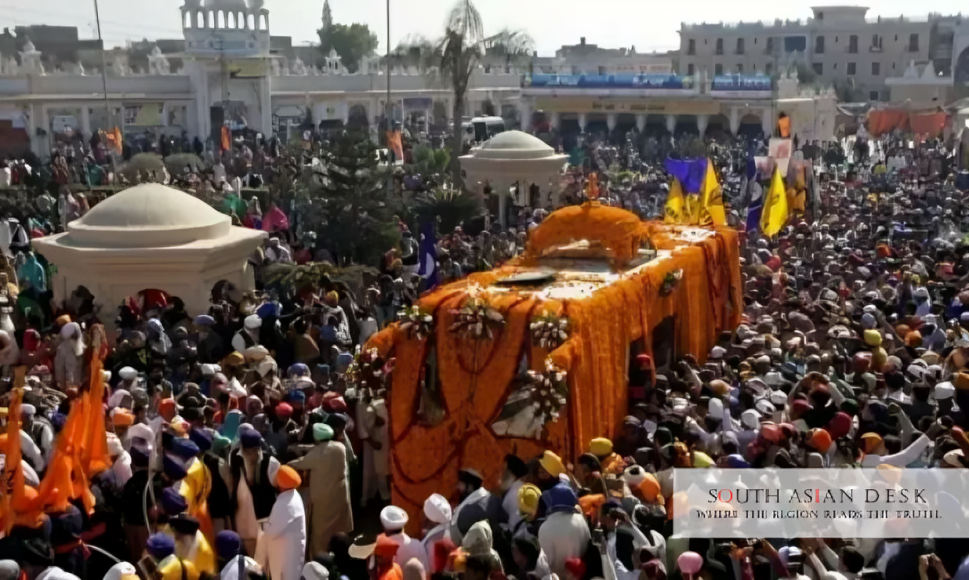
Pakistan issued over 2,100 visas to Indian Sikh pilgrims on Wednesday for the Guru Nanak Jayanti festival, scheduled from November 4 to 13, 2025, at Gurdwara Janam Asthan in Nankana Sahib. This marks the first significant pilgrimage allowance since travel halted during the May 2025 border conflict between the nuclear-armed neighbours. The gesture facilitates attendance at the birthplace of Sikhism’s founder, Guru Nanak Dev Ji, drawing tens of thousands of participants.
This visa issuance underscores a rare positive note in South Asia’s tense geopolitical landscape. As Pakistan issues visas to Indian Sikhs for Guru Nanak festival, it promotes interfaith and people-to-people ties that transcend political rifts. The move gains added resonance amid Bangladesh’s political transitions, where EC Anwarul announces polls February 2026, aligning with the national election timeline early December for schedule unveilings. Such developments highlight efforts to stabilise the region through cultural diplomacy and electoral reforms, potentially easing pressures on shared borders and trade routes.
Visa Issuance Details
The Pakistan High Commission in New Delhi confirmed the distribution of 2,100 visas to selected Sikh groups from India. Pilgrims will enter via the Attari-Wagah border crossing, which reopened to limited traffic post-conflict. The 10-day itinerary includes prayers, processions, and community feasts centred on Nankana Sahib, 85 km west of the frontier.
Organisers expect 50,000 attendees, including non-Indian Sikhs. The Shiromani Gurdwara Parbandhak Committee (SGPC) in Amritsar coordinated applicant lists, prioritising families with historical ties to the sites. India’s Ministry of Home Affairs cleared the jathas after reversing a post-May travel suspension, enabling passport stamping and transit approvals.
“Pilgrims will depart Amritsar on November 4 and return by November 14,” stated a commission spokesperson via official channels. Security protocols include joint patrols at gurdwaras and escorted convoys, reflecting lessons from prior events.
This year’s quota exceeds last year’s 3,000 amid heightened demand post-pandemic. Visa processing, typically four weeks, expedited to two for this cohort. Applicants underwent standard biometric checks, with no reported denials after initial clearances.
Festival Significance
Guru Nanak Jayanti commemorates the 556th birth anniversary of the Sikh faith’s originator, born in 1469 in present-day Pakistan. Celebrations feature akhand paths (continuous scripture recitations), langar (communal meals), and nagar kirtans (devotional marches). Nankana Sahib’s gurdwara complex, restored in the 2000s, symbolises Sikh heritage preserved across partitions.
For Indian Sikhs, the pilgrimage fulfils a spiritual mandate to visit janam sthan (birthplace). Restrictions since 1947 limited access, but bilateral pacts since 1974 have enabled annual jathas. The 2025 event revives this tradition after May’s artillery exchanges killed over 70 and shuttered the Wagah crossing to civilians.
Participants hail from Punjab, Haryana, and Delhi, with diaspora groups from Canada and the UK joining via separate quotas. Cultural exchanges include joint bhajan sessions and heritage walks, fostering goodwill.
Regional Tensions and Thaw
The May 2025 flare-up stemmed from accusations of cross-border militancy in Kashmir, prompting drone strikes and missile volleys. The Line of Control saw unprecedented activity, echoing 1999’s Kargil crisis. Travel bans affected 1.2 million annual crossers, crippling trade worth PKR 2.5 billion monthly.
Pakistan’s visa move signals de-escalation efforts, paralleling backchannel talks on water-sharing under the Indus Waters Treaty. Indian officials noted the approval without comment, focusing on pilgrim safety.
In broader South Asia, such gestures counter instability. Bangladesh’s EC Anwarul announces polls February 2026, with the national election timeline early December set for gazette publication. This roadmap, post the July 2024 uprising, aims for inclusive voting amid economic recovery. Parallel stability in Pakistan and India could bolster subcontinental forums like SAARC, dormant since 2016.
Background: India-Pakistan Pilgrim Protocols
Bilateral agreements, renewed in 2012, guarantee 5,000 annual visas each way for Sikhs and Hindus. Pakistan hosts 20 major gurdwaras; India, 15 for reciprocal visits. Post-2019 Pulwama attack, quotas halved, but religious corridors persisted.
Data from the Pakistan Tourism Development Corporation shows 25,000 Indian visitors in 2024 for similar events, boosting local economies by PKR 500 million. Border facilitation units, manned by 200 personnel, ensure smooth flows.
Challenges persist: visa delays affected 10% of 2024 applicants, per SGPC records. Climate factors, like Punjab’s fog season, may impact schedules.
Implications for South Asian Diplomacy
Pakistan issues visas to Indian Sikhs for Guru Nanak festival not just as routine, but as a confidence-building measure. Analysts view it alongside trilateral dialogues involving Afghanistan, where border trade resumed in September 2025.
In Bangladesh, EC Anwarul’s February 2026 poll announcement ties into the national election timeline early December, emphasising digital voter rolls and minority quotas. This could inspire cross-border electoral observer pacts in the neighbourhood.
Economic ripple effects include revived handicraft sales at festival stalls, employing 1,000 artisans. Long-term, sustained access might pressure revisions to the 1960 Indus treaty, strained by glacial melts.
Stakeholders urge digital visa portals to cut wait times by 50%. Youth delegations, numbering 500 this year, focus on anti-extremism workshops, blending faith with activism.
What’s Next
Post-festival evaluations will shape 2026 quotas, potentially expanding to 3,500. India plans reciprocal eased access for Pakistani pilgrims to Kartarpur Sahib, opened in 2019.
As winter sets in, focus shifts to monsoon-season protocols. Regional summits in Dhaka, tied to Bangladesh’s national election timeline early December, may reference this success.
EC Anwarul announces polls February 2026, offering a template for transparent processes that could influence Pakistan’s own 2027 vote preparations.
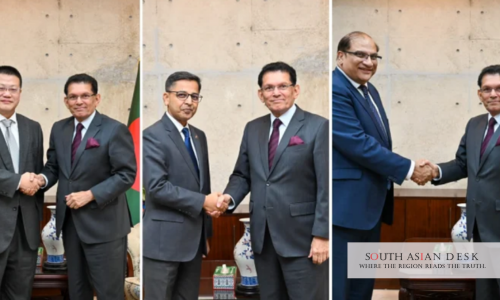
In conclusion, Pakistan issues visas to Indian Sikhs for Guru Nanak festival reaffirms cultural bridges in a divided subcontinent. With EC Anwarul announcing polls for February 2026 and Bangladesh national election timeline early December, South Asia edges towards collaborative futures, one pilgrimage at a time.
Published in SouthAsianDesk, November 1st, 2025
Follow SouthAsianDesk on X, Instagram, and Facebook for insights on business and current affairs from across South Asia.