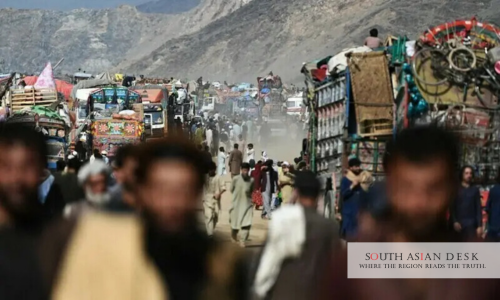
The federal government de-notified the last 28 Afghan camps in KP on 15 October 2025. Officials issued the order through the Ministry of Kashmir Affairs and States and Frontier Regions. The move targets PoR card holders for repatriation. It affects districts including Peshawar and Hangu. The directive stems from a July Interior Ministry order to close all such sites.
Straining Regional Ties and Humanitarian Flows
Pakistan de-notifies last 28 Afghan camps in KP accelerates a mass repatriation drive. This policy shift burdens Afghanistan’s fragile economy and heightens border tensions. South Asia faces spillover risks from displaced populations. It tests bilateral relations and international aid commitments. Managed transitions could stabilise trade routes and curb militancy.
Pakistan Afghan Repatriation Update Gains Momentum
The federal government enforces the Illegal Foreigners Repatriation Plan. This initiative began in September 2023. It now focuses on 1.3 million Afghan nationals with Proof of Registration cards. These individuals lack visas but hold legal status. Authorities aim for voluntary departures. Deportations rise amid security operations.
An October 6 report from the International Organisation for Migration details trends. It records 702,643 returns since April 2025. Deportations among them total 80,302. Overall figures since January 2025 reach 750,685. Bi-weekly returns fell 28 per cent recently. Deportations surged 82 per cent due to crackdowns in Balochistan and Punjab.
The Commissionerate of Afghan Refugees oversees implementation. An official stated 43 camps existed across the province. Five closed on 25 September. Ten followed on 13 October. The remaining 28 de-notifications occurred on 15 October. No camps remain in Khyber Pakhtunkhwa.
Authorities plan asset handovers. Lands revert to district deputy commissioners. Non-movable items transfer via formal processes. Provincial governments ensure local use. This step reclaims over 40 years of temporary allocations.
Afghan Refugee Camps Closure KP Targets Key Districts
Afghan refugee camps closure in KP spans multiple areas. The 28 sites include eight in Peshawar. These cover Kababian, Badabher, Khazana, Naguman, Khurasan, Mera Kachorai, Shamshatu and Hajizai. Five lie in Hangu at Lakhti Banda, Kata Kani, Kahi, Darasmand and Thall.
Kohat hosts four: Gamkol, Oblen Ghaulam Banda and Chichana. Nowshera has three: Akora Khattak, Khairabad and Turkaman. Dir counts three: Chakdara, Timer and Toor. Mardan and Swabi each hold two: Jalala, Baghicha, Barakai and Gandaf. Buner features one at Koga.
Evictions vary by site. All occupants left Kessu camp in Chitral earlier. Others retain residents pending action. Officials expect delays in full clearances. The process aligns with broader de-notifications. Sixteen villages closed recently in Balochistan, Khyber Pakhtunkhwa and Punjab.
The Ministry of States and Frontier Regions issued related orders. It de-notified ten camps on 13 October in Dera Ismail Khan, Tank, Lakki Marwat, Bannu, Mansehra, Charsadda and Malakand. This brings totals to 26 in the province. Over 30 per cent of registered refugees resided in such villages for years.
KP Refugee Villages De-Notification Sparks Concerns
KP refugee villages de-notification prompts humanitarian alerts. The United Nations High Commissioner for Refugees urges phased approaches. Representative Philippa Candler emphasised voluntary returns. She noted Pakistan hosted Afghans for 45 years. Many face persecution risks upon return.
Candler called for exemptions. These include those with protection needs, medical issues, higher education pursuits or mixed marriages. Women and girls risk rights violations in Afghanistan. UNHCR commits to collaboration with Islamabad. The de-notification follows August directives under the repatriation plan. Federal authorities seek organised exits. IOM supports with cash grants at Afghan encashment centres. Returns total 1.5 million since 15 September 2023.
Security drives fuel the pace. Arrests in Chaghi district spiked. This links to intensified operations. Officials link the policy to border stability. Militancy threats justify the urgency.
Background: Evolution of the Repatriation Drive
Pakistan hosted Afghan refugees since the 1979 Soviet invasion. Numbers peaked at four million. Current registered totals stand at 1.3 million PoR holders. Undocumented figures add hundreds of thousands.
The drive launched in 2023 amid economic strains. Phase one targeted undocumented migrants. Over 800,000 departed voluntarily. Phase two hit Afghan Citizen Card holders. Now PoR cards fall under scrutiny. Interior Ministry orders from July 2025 set timelines. September 1 marked the start for this category. Earlier closures hit five camps in Haripur, Chitral and Upper Dir. Punjab’s sole site in Mianwali also shut.
Global partners monitor progress. UNHCR and IOM provide data. Bilateral talks with Kabul address reintegration. Afghanistan struggles with returnee absorption. Infrastructure lags behind inflows.
What’s Next: Evictions and International Appeals
Evictions from the de-notified sites loom. Officials predict phased actions over weeks. Local communities gain from reclaimed lands. Agriculture and development projects may follow.
UNHCR pushes for dignity in processes. It appeals for legal stays in vulnerable cases. Pakistan consults on exemptions. Regional forums like the Shanghai Cooperation Organisation discuss implications.
Pakistan Afghan repatriation update could reshape demographics. Returns strain Afghan resources. Aid inflows must rise. Border management tightens to prevent irregular crossings. Pakistan de-notifies last 28 Afghan camps in KP concludes a long chapter. Future policies balance security with compassion.
Published in SouthAsianDesk, October 16th, 2025
Follow SouthAsianDesk on X, Instagram, and Facebook for insights on business and current affairs from across South Asia.