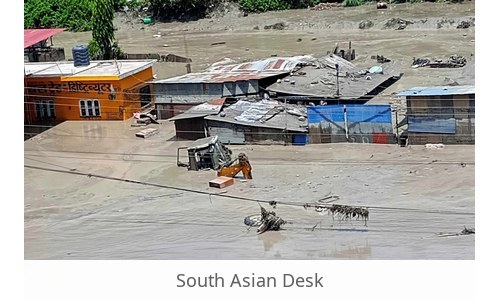
The Rasuwa floods impact has triggered a sharp decline in the NEPSE index, which fell by 35.92 points to 2,558 points on August 26, 2026. Total turnover on the NEPSE reached Rs 4.77 billion, reflecting heightened market activity as investors reacted to the crisis. The Rasuwa floods impact has also raised concerns about the Nepal hydropower sector and its role in the Nepal stock market turnover.
Rasuwa floods impact: Impact on Hydropower Sector
The Rasuwa floods impact has caused significant damage to hydropower companies, leading to a decline in their stock prices. The Nepal hydropower sector, which accounts for over 90% of the country’s electricity generation, faces operational challenges due to infrastructure damage and disrupted supply chains. According to OnlineKhabar, the Rasuwa floods impact has contributed to broader market volatility, with the NEPSE index decline reflecting investor concerns.
The Nepal hydropower sector is a cornerstone of Nepal’s energy security and economic growth. The damage to dams, transmission lines, and power plants has raised questions about the sector’s ability to meet domestic demand and fulfill international commitments. Analysts note that the the result has exposed vulnerabilities in the sector’s resilience to climate-related disruptions, which could have long-term implications for Nepal’s energy policy and economic planning.
The floods have also disrupted supply chains for construction materials and equipment essential for ongoing hydropower projects. This has led to delays in project timelines and increased costs, further pressuring the sector’s financial health. With several large-scale projects currently under development, the the result could affect both local and foreign investors, potentially undermining investor confidence in Nepal.
Government Response
Local authorities have initiated emergency measures to address the humanitarian crisis caused by the the result. The Nepalese government has deployed resources to assess damage to critical infrastructure, including hydropower facilities. Officials have emphasized the need for rapid recovery efforts to stabilize the energy sector and prevent long-term economic repercussions.
The government response to floods has included the activation of emergency response teams to provide immediate relief to affected communities, including the distribution of food, water, and medical supplies. Additionally, officials have begun coordinating with international partners to secure technical and financial assistance for infrastructure repair. However, the scale of the damage has raised questions about the adequacy of existing disaster preparedness frameworks in the region.
The the result has also highlighted the need for improved early warning systems and climate adaptation strategies. With climate change increasing the frequency and intensity of extreme weather events, the government faces mounting pressure to invest in resilient infrastructure and disaster mitigation measures. This includes upgrading flood control systems and enhancing the capacity of hydropower facilities to withstand such events.
Investor Confidence
The NEPSE index decline raises concerns about investor confidence in Nepal, particularly in the hydropower sector. Analysts note that the sector’s vulnerability to climate-related disruptions could deter foreign investment, which is vital for funding large-scale energy projects. The Indian Express reported that 33 security personnel are missing due to the floods, underscoring the scale of the disaster and its potential impact on regional stability.
The hydropower sector’s performance is closely tied to investor sentiment, as it represents a significant portion of Nepal’s capital market. The recent decline in stock prices has raised fears of a broader market correction, particularly in sectors reliant on stable energy supply. Foreign investors, who have been instrumental in financing hydropower projects, may reassess their risk exposure in light of these developments.
The the result has also drawn attention to the broader implications for Nepal’s economic outlook. With the hydropower sector contributing significantly to GDP and employment, any prolonged disruption could have cascading effects on other industries. This has prompted calls for increased government intervention to stabilize the sector and restore investor confidence in Nepal through policy reforms and targeted investments.
Follow SouthAsianDesk on X, Instagram and Facebook for insights on business and current affairs from across South Asia.
Sources
- NEPSE falls 35.92 points as Rasuwa floods hit hydropower sector – english.onlinekhabar.com
- Tibet’s Gyirong suffers ‘major casualties’ from mudslide, Xinhua reports – thehindu.com
- 8 Dead In Nepal Flash Floods That Started From Tibet, Villages Washed Away – ndtv.com
- Nepal flash flood hits Bhote Koshi river; 8 killed, 33 security personnel missing: 10 updates – indianexpress.com
Image: images.indianexpress.com