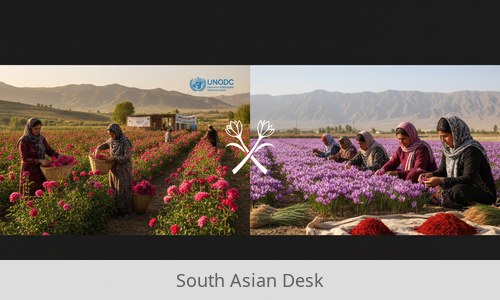
The United Nations Office on Drugs and Crime (UNODC) announced a program to support Afghan farmers in transitioning from opium poppy cultivation to rose and saffron farming in Afghanistan. This initiative, backed by Italy, targets Nangarhar and Herat provinces, regions historically reliant on opium production. The UNODC aims to provide sustainable income alternatives for farmers affected by the decline in opium poppy cultivation, aligning with broader efforts to combat drug production in Afghanistan.
rose and saffron farming in Afghanistan: Economic Impact
rose and saffron farming in Afghanistan offers a viable economic alternative for Afghan farmers, with both crops commanding high market value globally. Saffron, in particular, is one of the world’s most expensive spices, while roses are used in perfumes, cosmetics, and pharmaceuticals. The UNODC program includes training on cultivation techniques, access to markets, and financial support to reduce the risks associated with switching crops. Local communities stand to benefit from increased employment opportunities and stable income streams, potentially reducing reliance on illicit activities.
The economic potential of these crops is rooted in their global demand. Saffron, cultivated primarily in regions with specific climatic conditions, requires meticulous care and labor-intensive harvesting, which aligns with the agricultural expertise of Afghan farmers. Roses, particularly the Damask variety, are prized for their fragrance and are used in high-value industries. By leveraging these crops, the UNODC initiative seeks to create a sustainable agriculture sector that can compete in international markets. This shift could also diversify Afghanistan’s export portfolio, reducing its vulnerability to fluctuations in the illicit drug trade.
Challenges for Farmers
Transitioning from opium poppy to alternative crops presents significant challenges for Afghan farmers. Opium poppy cultivation is deeply entrenched in the region’s agricultural practices, and farmers face uncertainties about market demand, initial investment costs, and the time required for new crops to yield returns. The UNODC, in collaboration with international partners, provides technical assistance, seed distribution, and microloans to ease the transition. However, long-term success depends on sustained investment and infrastructure development, including improved irrigation and transportation networks.
The transition is not merely a shift in crop type but a transformation of agricultural systems. Opium poppy requires minimal infrastructure and can yield returns within a few months, whereas rose and saffron farming demand longer growing cycles, specialized knowledge, and access to reliable water sources. Farmers must also navigate the complexities of global market dynamics, where price volatility and quality standards can impact profitability. The UNODC’s role in providing training and resources is critical, but the success of the initiative hinges on addressing these systemic challenges.
International Engagement
The UNODC’s involvement in Afghanistan’s agricultural sector underscores the international community’s commitment to fostering sustainable agriculture in the region. Italy, a key partner in this initiative, has pledged resources to support training programs and infrastructure projects. This collaboration reflects broader geopolitical efforts to stabilize Afghanistan through economic diversification. The initiative also aligns with global anti-drug strategies, aiming to reduce the supply of illicit narcotics while promoting legitimate livelihoods.
Italy’s engagement in Afghanistan is part of its broader foreign policy focus on regional stability and counter-narcotics efforts. By investing in opium poppy alternatives, Italy seeks to address the root causes of opium production while strengthening bilateral ties with Afghan institutions. The program also benefits from the participation of other international stakeholders, including development agencies and private sector partners, who contribute expertise and funding to ensure the sustainability of the initiative.
Broader Implications for Afghanistan’s Economy
The shift toward the result could have far-reaching implications for Afghanistan’s economy. By reducing dependence on the illicit drug trade, the initiative aims to create a more resilient agricultural sector that can withstand external shocks. This diversification is crucial in a country where opium production has long been a dominant economic force, despite its association with instability and conflict.
Moreover, the success of this program could serve as a model for other regions in Afghanistan and beyond. If implemented effectively, it may encourage other provinces to adopt similar agricultural strategies, fostering a broader movement toward legal and sustainable livelihoods. The UNODC’s efforts are also part of a larger international strategy to address the global opium trade by targeting its production at the source.
Follow SouthAsianDesk on X, Instagram and Facebook for insights on business and current affairs from across South Asia.