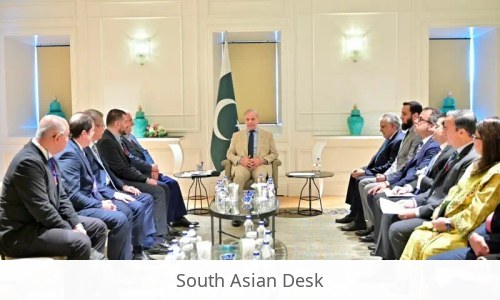
Turkish investment in Pakistan has taken a significant step forward as Prime Minister Shehbaz Sharif invited Turkish companies to invest in Pakistan on July 4, 2026, aiming to strengthen economic ties between the two nations. The announcement came during a series of meetings with senior executives from leading Turkish business groups, underscoring Pakistan’s commitment to attracting foreign capital to bolster its economy and infrastructure.
Turkish Investment in Pakistan: Key Sectors for Investment
Prime Minister Shehbaz Sharif highlighted several sectors for potential Turkish investment in Pakistan, including energy, mining and minerals, infrastructure, maritime and logistics, information technology, telecommunications, manufacturing, agriculture, and privatization. These areas align with Pakistan’s strategic priorities to modernize its economy and address long-standing developmental challenges. The energy sector, for instance, remains a critical focus given Pakistan’s persistent power shortages and reliance on imported fuels. Investments in renewable energy projects, such as solar and wind farms, could help reduce dependency on fossil fuels while creating local jobs. Similarly, infrastructure development—particularly in transportation and urban planning—has long been a bottleneck for economic growth, with underdeveloped road networks and outdated port facilities hampering trade. Turkish expertise in construction and engineering, combined with Pakistan’s need for modernization, presents a natural alignment. In agriculture, which employs a significant portion of Pakistan’s population, Turkish investment could introduce advanced irrigation techniques and high-yield crop technologies, potentially increasing food security and export capacity. The inclusion of privatization as a target sector also signals Pakistan’s ongoing efforts to streamline state-owned enterprises and attract private sector participation, a move that has been a cornerstone of economic reform in recent years.
Historical Context of Pakistan-Turkey Relations
Pakistan and Turkey have maintained diplomatic and economic relations for decades, with Turkey historically supporting Pakistan’s sovereignty and development initiatives. The two nations share cultural and linguistic ties, with Turkish being one of the official languages of Pakistan’s Balochistan province, and both countries have often aligned on regional issues, including counterterrorism and trade. While specific past collaborations are not detailed in available reports, this latest invitation signals a renewed focus on expanding bilateral trade and investment, particularly in sectors critical to Pakistan’s growth. The current initiative builds on a broader regional trend of South Asian nations seeking diversified partnerships to counterbalance traditional dependencies, such as those with China or the Gulf states. Turkey’s strategic location at the crossroads of Europe, Asia, and the Middle East also positions it as a potential hub for trade routes connecting South Asia to global markets, a dynamic that could benefit both nations.
Potential Economic Impact
Increased Turkish investment in Pakistan could provide a much-needed boost to Pakistan’s economy, particularly in infrastructure development and job creation. Energy and infrastructure projects, for instance, could enhance regional connectivity and support industrial growth. The development of ports and logistics networks, a key area of interest for Turkish investors, could position Pakistan as a more competitive player in regional trade, particularly in the context of the China-Pakistan Economic Corridor (CPEC). In manufacturing, Turkish firms could leverage Pakistan’s low labor costs and strategic location to establish production hubs for export-oriented industries, potentially reducing the country’s trade deficit. Additionally, investments in agriculture and manufacturing may help diversify Pakistan’s export base and reduce reliance on imports. The privatization of state-owned enterprises, if executed transparently, could also attract foreign capital by improving efficiency and reducing fiscal burdens on the government. However, the success of these initiatives will depend on the stability of Pakistan’s regulatory environment, the availability of skilled labor, and the ability to secure long-term financing for large-scale projects.
Follow SouthAsianDesk on X, Instagram and Facebook for insights on business and current affairs from across South Asia.
Image: i.dawn.com