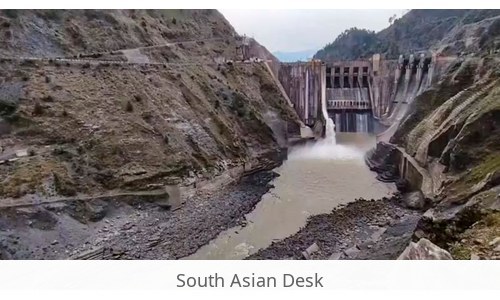
On August 31, 2026, the Permanent Court of Arbitration in The Hague mandated that India must uphold the water-sharing treaty India Pakistan, which India had previously suspended. The ruling emphasizes India’s obligation to adhere to the treaty and limit work on a hydroelectric plant in the Kashmir region, marking a pivotal moment in regional stability South Asia.
water-sharing treaty India Pakistan: Implications for India-Pakistan Relations
The court’s decision underscores the critical role of water resources in regional stability. The Indus Water Treaty, signed in 1960, has long been a cornerstone of India-Pakistan relations, yet tensions have escalated in recent years. The ruling may compel both nations to revisit diplomatic negotiations, though historical mistrust complicates compliance. Pakistan has welcomed the decision, while India has rejected the court’s jurisdiction, citing sovereignty concerns.
The Indus River system, which flows through both countries, is a lifeline for agriculture, industry, and domestic use in the region. The treaty’s provisions have historically provided a framework for managing shared water resources, but recent infrastructure projects by India, such as the Kishanganga hydroelectric plant, have reignited disputes. These projects, which involve diverting water from rivers allocated to Pakistan under the treaty, have been a flashpoint for bilateral tensions. The court’s ruling now places renewed pressure on India to balance its developmental ambitions with its international legal obligations.
India’s Response to the Ruling
India’s government has not yet issued a formal response to the ruling, but analysts note that compliance could strain domestic political narratives. The hydroelectric project in Kashmir, a contentious issue, has been a flashpoint for bilateral disputes. If India adheres to the court’s order, it may signal a shift toward de-escalation, though domestic opposition from regional stakeholders could hinder implementation.
The ruling has sparked debate within India’s political and policy circles. Critics argue that compliance could be perceived as a concession to Pakistan, potentially emboldening regional adversaries. Conversely, proponents highlight the importance of maintaining international legal frameworks to prevent further escalation of tensions. The Indian government’s stance on the matter remains under close scrutiny, with potential implications for its foreign policy and regional engagement.
Historical Context of the Indus Water Treaty
The Indus Water Treaty, brokered by the World Bank, allocated three eastern rivers to India and three western rivers to Pakistan. It has withstood decades of conflict, including the 1965 and 1971 wars. However, recent infrastructure projects by India, such as the Kishanganga hydroelectric plant, have reignited disputes. Pakistan argues these projects violate treaty provisions, while India maintains they fall within its sovereign rights.
The treaty was designed to ensure equitable distribution of water resources while allowing both nations to develop their respective economies. Its success in maintaining stability for over six decades is a testament to its robust legal framework. However, the emergence of new technologies and infrastructure needs has tested the treaty’s adaptability. The current dispute over the Kishanganga project highlights the challenges of reconciling modern developmental goals with historical agreements.
The ruling by the Permanent Court of Arbitration adds a new layer of complexity to the existing legal and diplomatic landscape. While the treaty remains a critical pillar of South Asian diplomacy, its enforcement now hinges on the willingness of both nations to adhere to international arbitration. This development could influence future negotiations on water-sharing and other cross-border issues in the region.
Follow SouthAsianDesk on X, Instagram and Facebook for insights on business and current affairs from across South Asia.
This report focuses on water-sharing treaty India Pakistan and the verified developments surrounding it.
Sources
- India must uphold water-sharing treaty with Pakistan, international court says – dailymirror.lk
- ‘No jurisdiction’: India rejects international court’s order on Indus Water Treaty – indianexpress.com
Image: images.indianexpress.com