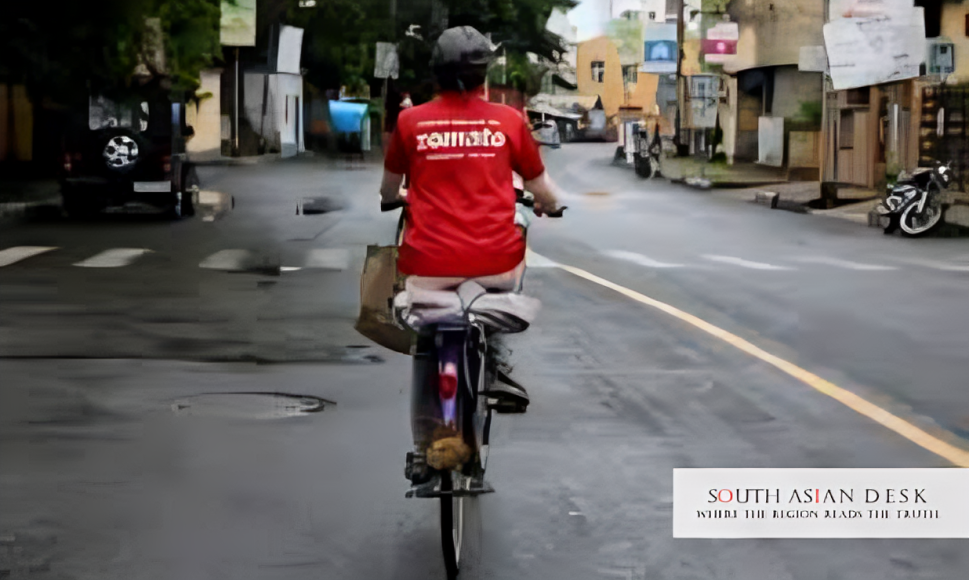
India’s government has intervened to halt 10 minute delivery promises by quick commerce platforms amid gig workers’ strikes and rider deaths, but enforcement remains lax as companies maintain rapid timelines.
India’s labour ministry directed firms like Blinkit and Swiggy to drop 10 minute delivery claims in early January 2026 after nationwide protests highlighted deadly pressures on riders. Yet, checks show platforms still display sub-10 minute estimates, forcing gig workers to risk lives for incentives.
The directive underscores broader challenges in South Asia’s gig economy, where millions rely on platforms for income amid weak protections. Similar exploitation affects riders in Pakistan and Bangladesh, amplifying calls for regional labour reforms.
Quick Commerce Regulations India Tighten
The labour ministry held meetings with executives from Zomato’s Blinkit, Swiggy, Zepto, and others on 10 January 2026. Minister Mansukh Mandaviya urged platforms to eliminate strict deadlines that endanger delivery riders safety India.
According to reports, companies agreed to remove 10 minute delivery India branding from apps and ads. Blinkit shifted to highlighting product availability instead. Swiggy and Zepto followed, but internal algorithms tying payouts to speed persist.
Government data from NITI Aayog shows India’s gig workforce at 7.7 million in 2020-21, projected to reach 23.5 million by 2029-30. Quick commerce, valued at $11.5 billion, drives this growth through dark stores enabling fast orders.
New labour laws under the Code on Social Security 2020 aim to recognise gig workers, offering pensions and accident insurance. However, unions say these remain on paper, with no timeline for implementation.
In December 2025, Amazon launched Tez with 15-minute promises, intensifying competition. Flipkart Minutes and Zepto also vied for speed, prompting the crackdown.
Delivery Riders Safety India in Peril
Riders face constant hazards. In October 2023, 18-year-old Ankush died in a Noida accident on his first Swiggy shift. Witness Himanshu Pal said: “He was trying his best: looking at the phone, then on the road, a customer calling back; then on the phone, a traffic light, and then on the road again. A car hit and left him dead at the signal.”
Pal added: “We deliver groceries to doorsteps, keeping our lives on the line every single time. This instant delivery idea is so rubbish; what could one possibly need within 10 minutes?”
Another rider, Pankaj Kumar, fractured his shoulder last year but returned to work in three days. He explained: “The system works on simple maths for us: the more orders you deliver, the more you earn. If we want to earn money on these platforms, we need to ride faster – all the while, flying my bike on the wrong side of the road and jumping signals.”
Kumar noted: “If we lose a streak – of say hours in a day, days in a week – then we lose incentives. What are we for the company? Just robots on bikes, delivering orders. What’s for them to lose if one bike goes off the street?”
Unions report unreported fatalities as workplace accidents. Riders endure extreme weather, toxic air in cities like Delhi, and long hours without breaks.
Expert Vandana Vasudevan, author of OTP Please!, stated: “The Indian middle class is literally riding on the back of the poor. They sit at home, and are extremely pampered by this rather innovative tech model, but all these privileges are coming at the cost of workers.”
Vasudevan welcomed quick commerce regulations India: “The government’s intervention is a welcome step that has come as a relief to some workers. The 10-minute problem comes with customer expectations; once you do away with the promise, the act of speed becomes at least voluntary.”
Yet, she cautioned: “The architecture of a faster delivery is not a wrong thing in itself. But a tight deadline is an architectural imposition on the riders that became the norm, unfortunately.”
Karan Taurani from Elara Capital said the change is “optics-driven rather than business-altering,” as speed remains core to quick commerce.
Platforms deactivate accounts via algorithms for low ratings or cancellations, lacking transparency. Workers demand clear payout structures.
Gig Workers Strike India Sparks Change
On 31 December 2025, thousands logged off during peak hours in a coordinated strike led by the Indian Federation of App-Based Transport Workers (IFAT).
IFAT’s Shaik Salauddin said: “Our demands from the platform companies were met with corporate flexing power muscles, from PR games to intimidating riders.”
Demands included algorithm transparency, ending arbitrary ID blocks, and protest rights. Salauddin added: “Our collective voice reached the CEOs and the government; it is a win for those unionising. Thousands of riders logged off during peak hours in a protest for the right to life and dignity at the workplace. But, if the companies cheat us, then we will not sit silently.”
An earlier strike on 25 December 2025 amplified concerns over fluctuating wages and safety.
Zomato’s former head Deepinder Goyal called strikers “miscreants” causing law and order issues.
Post-strike, the labour ministry intervened, leading to the directive. A week later, platforms in Delhi still showed under-10 minute times.
Gig workers strike India echoes regional trends. In Pakistan, riders protested low pay in 2025; Bangladesh saw similar actions against platforms.
NITI Aayog recommends a social security fund with 1-2% company contributions. It urges platforms to offer insurance and pensions.
Background
Quick commerce boomed post-COVID, serving 430 million middle-class Indians with groceries and essentials. Platforms like Blinkit promised 10 minute delivery India via neighbourhood warehouses.
Gross orders hit $7 billion last year, up 142% annually since 2022. But growth masked risks: 89% of riders cite safety fears, including theft and assaults.
Demographics play a role. Many riders migrate from rural areas, like Ankush from Bihar, facing urban traffic without training.
Segregated neighbourhoods and income gaps enable cheap operations without full wages or security.
A 2024 study noted quick commerce fosters impulsive buying, boosting sales but pressuring supply chains.
Government plans recognise gig workers under new laws, proposing benefits funded partly by firms.
What’s Next
Enforcement of quick commerce regulations India will test the directive’s impact. Unions plan further actions if pressures persist.
Platforms may adopt voluntary speed caps, but competition could undermine changes.
Labour reforms could extend to other sectors, improving delivery riders safety India.
As gig numbers swell, policies must balance innovation with protections.
India’s stance on 10 minute delivery India could influence South Asian markets, where similar models expand.
Published in SouthAsianDesk, January 29th, 2026
Follow SouthAsianDesk on X, Instagram and Facebook for insights on business and current affairs from across South Asia.