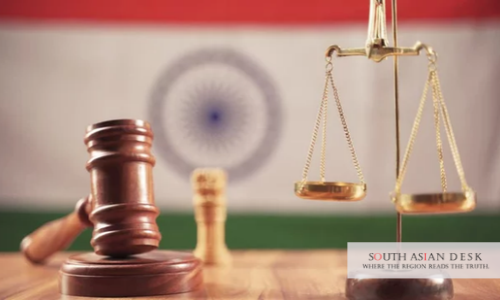
42 former judges, including two former Supreme Court judges, have issued an open letter expressing grave concern over what they describe as a sustained campaign against the Election Commission of India, the judiciary and other constitutional institutions. The letter was made public on Thursday, October 8, 2026, and is addressed to the “people of India”. It arrives while opposition parties and civil society groups continue to protest over the electoral roll revision exercise.
Who Signed the Open Letter
Among the signatories are former Supreme Court judges Hemant Gupta and Pankaj Mittal. They are joined by former chief justices and judges of several high courts, including B C Patel, Subhro Kamal Mukherjee and Permod Kohli. The group said it holds no brief for any political party but felt compelled to speak because “silence is no longer a neutral choice”.
The signatories wrote that India’s constitutional bodies are under sustained attack and that the Election Commission stands at the centre of it. They added that even the higher judiciary and statutory agencies have not been spared.
What the 42 Former Judges Said About the Campaign
The letter’s sharpest language concerns the tone of the current debate. The former judges described the criticism as “a calculated campaign driven by vested political interests”, and said it showed little regard for the consequences of destabilising the world’s largest democracy. They also objected to constitutional authorities being branded “thieves”, “puppets” and “compromised” at public platforms.
The signatories drew a firm line between scrutiny and abuse. “Criticism of institutions is a democratic right. Denigration is not,” the letter stated.
A central argument concerns where the complaints are being made. The judges said vote theft allegations are aired at press conferences rather than placed before courts. They also criticised what they called selective litigation, saying petitions are filed one after another but proof seldom follows. According to the letter, the courtroom becomes a stage, and judgments are criticised whenever they do not serve the petitioners’ interests. The signatories urged political parties to contest elections without seeking to delegitimise them, and to take complaints to the Election Commission and the courts with evidence. They also appealed to the media not to amplify unverified claims.
Defence of the Special Intensive Revision
A major part of the open letter defends the Special Intensive Revision (SIR) of electoral rolls. The judges called it a legally established exercise aimed at producing clean and accurate voter lists, and pointed to provisions in electoral law that allow the Election Commission to revise the rolls whenever required. They also noted that the Supreme Court has upheld the SIR exercise as lawful and within the Commission’s powers. The Election Commission’s authority in this area flows from Article 324 of the Constitution, which vests the superintendence, direction and control of elections in the poll body.
The signatories described the uproar over the SIR as sudden and remarkably convenient. They also observed that earlier revisions of the rolls were never called a conspiracy.
The Political Backdrop
The letter follows protests demanding the resignation of Chief Election Commissioner Gyanesh Kumar over the handling of the SIR. Opposition demands reportedly include an inquiry against him, a complete rollback of the revision and a repeal of the Chief Election Commissioner and Other Election Commissioners Act, 2023. Leader of the Opposition Rahul Gandhi recently called for Kumar’s resignation, after The Indian Express reported that two Election Commissioners had dissented from decisions related to the SIR several times over the past year.
Critics of the exercise have alleged the deletion of around 13 crore voters, according to The Tribune. The Election Commission has rejected allegations of electoral manipulation. No official response to the former judges’ letter from opposition parties had been reported at the time of writing.
Why the Debate Matters
The exchange highlights a wider tension in Indian public life. Opposition parties argue that questions about voter list revisions are legitimate and deserve answers, while the signatories contend that unproven claims risk eroding public faith in elections and the courts. As the SIR row continues, the burden of evidence, and the forum in which it is tested, is likely to remain central to the argument.
Follow SouthAsianDesk on X, Instagram and Facebook for insights on business and current affairs from across South Asia.
Sources
- 42 former judges defend ECI, slam ‘calculated campaign’ driven by ‘vested political interests’ – thehindu.com
- 42 Former Judges Write Open Letter, Warn Against Vote Theft Allegations – ndtv.com
Image: th-i.thgim.com