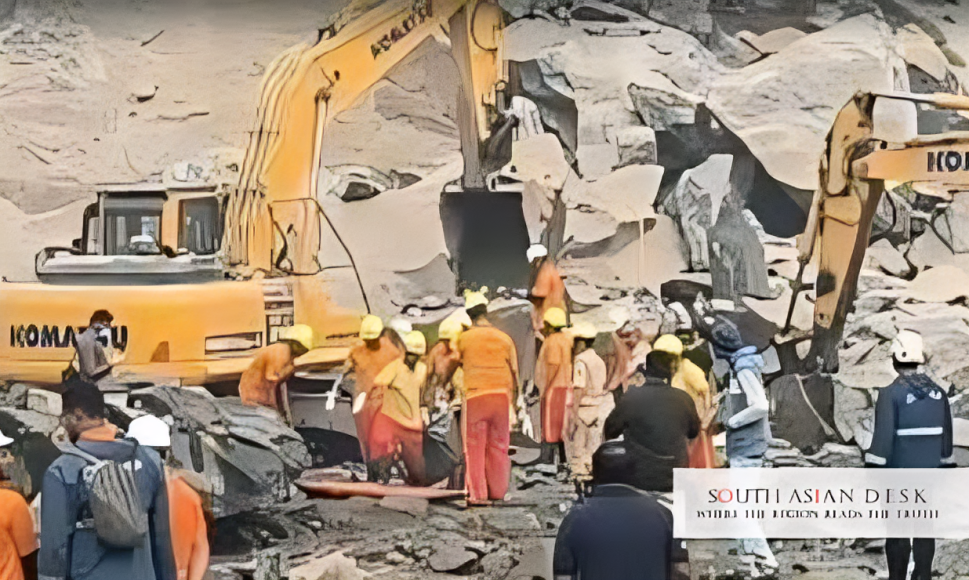
Odisha Quarry Collapse: Several workers lost their lives in a rock collapse triggered by an explosion at an unauthorised stone quarry near Gopalpur village in Odisha’s Dhenkanal district. Rescue teams continue efforts to free those trapped under debris.
At least two workers died and several others remain trapped after a massive rock collapse at a stone quarry in Odisha’s Dhenkanal district on Saturday, 3 January 2026. The incident happened around 6:00 PM during blasting operations near Gopalpur village under Motanga police station. Local fire services ODRAF teams dog squads and heavy machinery rushed to the site for rescue. Officials including Dhenkanal Collector Ashish Ishwar Patil and Superintendent of Police Abhinav Sonkar oversee the operation.
The Odisha quarry collapse underscores persistent risks in India’s mining industry where illegal quarries often ignore safety protocols. Such accidents affect thousands of labourers across South Asia raising questions on regulatory enforcement in regions reliant on mineral extraction.
Details of the Dhenkanal Stone Quarry Accident
The rock collapse Odisha quarry incident began when workers conducted drilling and blasting. A powerful explosion caused a large section of rocks to give way burying several under debris. Fire officer Nabaghana Mallik stated “Two to four people have been trapped beneath large stones. Machinery is being used to cut through these stones and evacuate those trapped inside. Two teams from the fire department have been deployed and a dog squad is also assisting at the site. The incident occurred last night during blasting operations.” Rescue personnel recovered two bodies so far but the exact number of trapped workers requires confirmation.
The Gopalpur quarry incident involved an unauthorised operation. Dhenkanal mining office issued a shutdown notice on 8 September 2025 due to lack of blasting permissions. Despite the order the quarry continued activities leading to this tragedy. Workers engaged in stone extraction faced immediate danger when the explosion destabilised the site.
Eyewitness accounts from nearby villagers described a loud blast followed by dust clouds and screams. Local authorities sealed off the area to facilitate rescue. ODRAF units specialised in disaster response deployed excavators and cutters to remove heavy boulders. Dog squads help detect survivors under rubble. Operations paused briefly at night due to poor visibility but resumed at dawn on Sunday 4 January 2026.
Leader of Opposition Naveen Patnaik expressed grief in a post on X. He said “I am deeply saddened to learn that workers lost their lives due to a rockfall following an explosion in a stone quarry in Dhenkanal. At this sorrowful time, I convey my deepest condolences to the family members along with prayers for the eternal peace of the departed souls.” Patnaik added “Let appropriate investigations be conducted into the circumstances under which this incident occurred and the state of the workers’ safety measures and let the government direct its attention toward immediately expediting rescue operations.”
Impact of the Rock Collapse Odisha Quarry
The Dhenkanal stone quarry accident has left families in distress. Survivors if any may suffer severe injuries from crush trauma or suffocation. Medical teams stand by at the site with ambulances ready to transport the injured to Dhenkanal District Headquarters Hospital.
This Odisha quarry collapse adds to the toll of mining mishaps in the region. Labourers often from low-income backgrounds face hazardous conditions without proper equipment or training. The incident disrupts local stone supply chains affecting construction projects in eastern India.
In South Asia similar quarry accidents highlight regulatory gaps. Governments in India Pakistan and Bangladesh struggle to monitor remote mining sites where illegal operations thrive due to demand for cheap materials. Enforcement remains weak despite laws mandating safety audits and permits.
Background
Odisha has seen multiple quarry accidents in recent years underscoring systemic issues. In July 2025 three labourers died in an illegal manganese mine collapse near Keonjhar district when loosened soil gave way. The incident prompted a probe but illegal mining persisted.
In September 2023 two workers were crushed under a boulder at a stone quarry near Mahurikalua Chowk in Odisha. Two others sustained critical injuries. Authorities cited poor safety measures.
In August 2025 six Odisha migrant workers perished in a rock collapse at a granite quarry in Andhra Pradesh’s Bapatla district. The accident occurred during mining work revealing vulnerabilities for interstate labourers.
These events point to recurring problems like unstable sites unauthorised blasting and lack of oversight. Odisha’s mineral-rich terrain attracts quarrying but weak implementation of the Mines and Minerals (Development and Regulation) Act allows risks to mount. The state government has initiated safety campaigns yet enforcement varies by district.
The Gopalpur quarry incident echoes these patterns. Unauthorised operations evade inspections leading to preventable deaths. Experts call for stricter licensing digital monitoring and worker insurance to curb such tragedies.
Mining contributes significantly to Odisha’s economy with stone quarries supplying materials for infrastructure. However accidents erode public trust and strain resources for rescue and compensation. Families of victims often receive ex-gratia payments but long-term support remains inadequate.
What’s Next
Investigations will probe the cause of the rock collapse Odisha quarry focusing on blasting protocols and quarry compliance. The state government may announce compensation for victims’ kin. Patnaik’s call for a probe could pressure authorities to review mining regulations.
Rescue teams aim to clear debris within 24 hours weather permitting. If more bodies are recovered the death toll may rise. Local administration plans to assess nearby quarries for safety violations.
The Odisha quarry collapse serves as a reminder for enhanced vigilance in the sector.
Published in SouthAsianDesk, January 4th, 2026
Follow SouthAsianDesk on X, Instagram and Facebook for insights on business and current affairs from across South Asia.