The impacts of Bangladesh coastal climate escalated in 2025. Low-pressure systems and deep depressions in the Bay of Bengal triggered storm surges, heavy rainfall, and tidal anomalies. These events caused widespread flooding, embankment breaches, and salinity intrusion across southern districts. Health officials recorded surges in waterborne diseases and dengue cases linked to contaminated water sources.
The coastal climate of Bangladesh poses significant challenges for South Asia. Low-lying deltas face compound risks from sea-level rise and extreme weather. These threats endanger agriculture, freshwater access, and livelihoods for tens of millions. Economic losses mount while displacement grows, underscoring the urgency of adaptation in vulnerable regions.
Bangladesh Floods 2025: Repeated Low-Pressure Systems
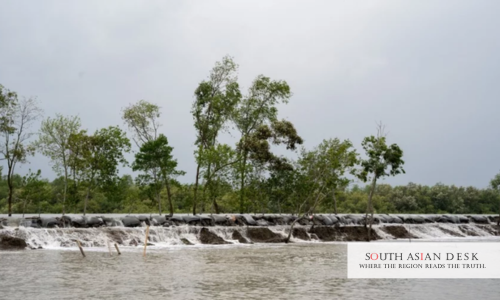
The 2025 floods in Bangladesh exhibited a clear southward shift toward coastal zones. At least five low-pressure systems and deep depressions formed in the Bay of Bengal between May and November. A deep depression in late May inundated parts of Satkhira, Khulna, Barguna, Bhola, and Patuakhali. Embankments failed in several locations, rivers overflowed, and thousands of households were submerged.
In early July, flash floods affected five upazilas and two municipalities in Feni district. The inundation covered 106.15 square kilometres and impacted nearly 78000 people. Similar flooding struck Noakhali and Lakshmipur. Women and children endured hardship in overcrowded shelters.
July brought another deep depression. It generated tidal surges three to four feet above normal in 14 coastal districts. October and November saw repeated low-pressure formations that further stressed weakened embankments. A breach in Anulia Union, Ashashuni Upazila, Satkhira, during Eid-ul-Fitr allowed saline water to flood at least 10 villages. Nearly 10000 people suffered.
In Cox’s Bazar, intense rainfall triggered landslides in Rohingya camps in Ukhiya and Teknaf. Around 1400 shelters sustained damage.
Bangladesh Salinity Intrusion: Shrinking Arable Land
Bangladesh salinity intrusion worsened significantly. The Bangladesh Water Development Board reported an 8–12% increase in salinity in parts of Satkhira and Khulna between 2024 and 2025. This trend shrank arable land and disrupted agriculture.
Shrimp farmer Aktaruzzaman in Anulia Union lost four enclosures, valued at more than Tk 500,000, due to saline flooding from the Kholpetua River. A World Bank study titled “River Salinity and Climate Change: Evidence from Coastal Bangladesh” warns that by 2050, excessive salinity could affect 148 upazilas across 19 coastal districts. This poses a threat to agriculture, drinking water supplies, and food security.
Bangladesh Climate Health Risks: Disease Outbreaks
Bangladesh’s climate health risks surged in 2025. Flooding led to increases in diarrhoea, skin infections, and other waterborne diseases. Dengue spread aggressively across coastal districts. Barguna reported at least 53 deaths by October, according to health officials and non-government estimates.
Dr Tahmina Shirin, director of the Institute of Epidemiology, Disease Control and Research, stated: “When people store rainwater for long periods, it creates ideal breeding sites for Aedes mosquitoes.”
March and April brought temperatures of 43°C in parts of Satkhira and Bagerhat, the highest in nearly two decades. The Directorate General of Health Services reported a 25% increase in heat-related illnesses in coastal districts compared to the same period in 2023. Cold spells in January and late December affected low-income households on embankments or in shelters.
Background on Coastal Vulnerability
Bangladesh’s 710-kilometre coastal belt spans 19 districts. It remains highly prone to cyclones, storm surges, and salinity intrusion. The region is home to millions who rely on agriculture and fisheries. Climate change intensifies these hazards through rising sea surface temperatures and changing weather patterns.
Prof Ainun Nishat, emeritus professor at BRAC University and adviser at the Centre for Climate Change and Environmental Research, noted: “Low-pressure systems are becoming more frequent and more destructive due to rising sea surface temperatures. These systems often escape the attention given to cyclones, yet their cumulative damage is comparable, if not greater.”
The Global Climate Risk Index 2025, published by Germanwatch, ranks Bangladesh among the world’s most climate-affected countries. The IPCC AR6 report highlights “compound and cascading risks” from sea-level rise, salinity intrusion, and extreme weather in low-lying deltas.
What’s Next for Bangladesh Coastal Climate Adaptation
Experts project that 2026 could bring intensified low-pressure systems, expanded salinity, and a rising displacement of 200,000–300,000 people annually in coastal zones. Vector-borne diseases may become more endemic.
Urgent investment in embankment maintenance, freshwater access, and climate-resilient livelihoods remains critical. A global commitment to emission reductions, alongside support for adaptation in vulnerable areas like Bangladesh’s coast, is essential.
The Bangladesh coastal climate crisis demands sustained action to safeguard communities and ecosystems.
Published in SouthAsianDesk, January 10th, 2026
Follow SouthAsianDesk on X, Instagram and Facebook for insights on business and current affairs from across South Asia.