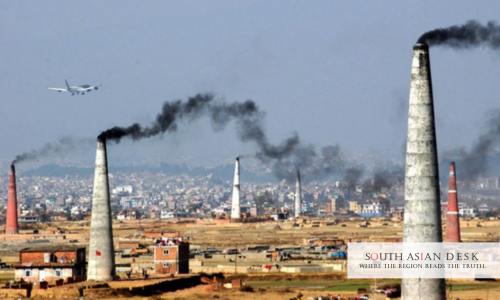
Nearly 1,200 brick kilns across Nepal began firing on 15 January 2026, prompting a smog alert. Experts warn of a decline in Kathmandu’s air quality due to low-grade coal emissions from these facilities. The seasonal operation exacerbates pollution levels in urban areas.
The pollution issue in Nepal‘s brick kilns highlights environmental challenges in South Asia. Given shared transboundary air quality concerns, Nepal’s situation affects neighbouring countries such as India and Bangladesh. Adequate controls could set precedents for regional pollution management and public health safeguards.
Smog Alert Nepal and Immediate Impacts
The Federation of Nepal Brick Industries confirmed that most kilns started operations on schedule. This follows agreements with the government and environmental agencies allowing firing from 15 January.
Shankar Bahadur Chand, former chairman of the federation, stated: “Most brick kilns in the country will start firing today. As per the agreements with the government and other environmental agencies, we are allowed to start firing from January 15.”
Nepal hosts 1,349 brick factories that produce 5.14 billion bricks annually. These consume 504000 tonnes of coal and substantial amounts of biomass, such as sawdust and wood.
In Kathmandu Valley, 89 kilns operate. They use over 56,100 tons of coal and 330 tonnes of other fuels each year, according to a Department of Environment study.
Brick kilns rank as the third largest source of suspended particulate matter and PM10 emissions in the Valley. PM10 particles measure less than 10 micrometres.
The industry emits 1.25 million tons of carbon dioxide each year. Low-grade coal emissions, primarily from Indian imports high in sulphur, release sulphur dioxide and other hazards.
Air quality monitors show a sharp decline in Kathmandu. Levels reach very unhealthy levels in the mornings, driven by these emissions.
Low-Grade Coal Emissions and Health Risks
Low-grade coal emissions pose severe threats. The World Bank report notes air pollution as Nepal’s top risk factor for death and disability, overtaking malnutrition and tobacco.
It reduces average life expectancy by 3.4 years. Annually, it causes 26000 premature deaths.
Pollution links to 75 percent of chronic obstructive pulmonary disease cases, 46 percent of strokes, 44 percent of ischemic heart disease, 41 percent of lower respiratory infections, 38 percent of lung cancer, 30 percent of neonatal issues, and 20 percent of diabetes.
Kathmandu Valley and the Tarai region are hotspots. No notable improvements occurred over the past decade.
Economic impacts include lost productivity, declines in tourism, and aviation disruptions. Costs exceed 6% of Nepal’s GDP each year.
Without interventions, PM2.5 concentrations could hit 52 micrograms per cubic metre in Kathmandu Valley by 2035, above WHO interim targets.
Bhupendra Das, an air quality expert, said: “Deteriorating air quality affects everyone’s health. As the issue is too serious and related to everyone’s health, authorities must take the issue seriously.”
He urged minimum coal standards, effective emission monitoring, and the adoption of briquettes over coal.
Chand added, “As brick factory owners and their family members are also citizens of Nepal, polluted air affects their health too. Had the concerned agencies enforced minimum standards for coal, factories would have followed them.”
The Department of Industry requested coal standards from the Nepal Bureau of Standards and Metrology a year ago. Drafts remain pending.
Background
Brick kilns have long contributed to pollution in Nepal. Operations run seasonally from November to May, aligning with dry weather for production.
The government promulgated emission standards for brick kilns in 2008. These include chimney height and emission limits.
A 2017 Department of Environment assessment of 30 kilns found an average suspended particulate matter of 326 milligrams per standard cubic metre for fixed-chimney types.
After the 2015 earthquake, many kilns adopted zigzag technology. This cut energy use by 20-30 percent and particulate emissions by 40 percent.
Despite advances, low-grade coal emissions persist due to lax enforcement.
The Kathmandu Valley Air Quality Management Action Plan 2076 aims to minimise industrial pollution. It promotes cleaner technologies and halts the registration of new kilns.
Brick kilns emit 4000 tons of particulate matter yearly in Kathmandu Valley, per the Department of Environment estimates.
They account for 9% of PM10 and 40% of black carbon in winter.
Health costs from respiratory illnesses alone reach USD 28 million annually in the Valley.
Workers face high exposure risks, including cancer and respiratory diseases.
What’s Next
Authorities must draft and enforce coal standards promptly. Monitoring mechanisms need strengthening.
The World Bank recommends multi-sectoral actions to meet PM2.5 targets by 2035.
Adopting briquettes and cleaner fuels could reduce emissions from low-grade coal.
Ongoing studies may guide relocations or technology upgrades.
The surge in pollution from Nepal’s brick kilns underscores the need for urgent regulatory action to curb smog alerts and reverse Kathmandu’s air quality decline.
Published in SouthAsianDesk, January 16th, 2026
Follow SouthAsianDesk on X, Instagram and Facebook for insights on business and current affairs from across South Asia.