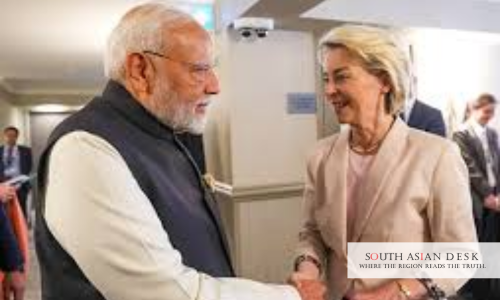
The European Union nears a landmark EU India trade deal with New Delhi, as stated by Commission President Ursula von der Leyen during her address at the World Economic Forum in Davos on Tuesday, January 20, 2026. The agreement aims to forge a market encompassing 2 billion people, representing nearly a quarter of global GDP. Von der Leyen plans to visit India next weekend for a summit where negotiations may conclude.
This development holds significance for South Asia. The EU India trade deal could enhance economic ties, boost trade volumes, and provide alternatives amid shifting global supply chains. Countries like Pakistan and Bangladesh may see indirect benefits through regional stability and increased investment flows.
India EU FTA Progress
Negotiations for the India EU FTA resumed in 2022 after a hiatus since 2013. The process, which began in 2007, has completed 16 rounds. Recent talks focused on trade barriers, investment protection, and geographical indications.
In a joint statement with Germany on January 12, 2026, India reiterated support for concluding the India EU FTA. Prime Minister Narendra Modi and Chancellor Friedrich Merz highlighted the pact as a key outcome for bilateral relations.
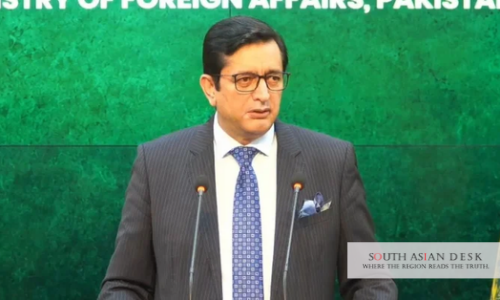
The Ministry of External Affairs spokesperson noted on January 16, 2026, that India EU FTA negotiations progress steadily. “These negotiations are progressing,” the official said during a weekly briefing.
Von der Leyen India Summit
Von der Leyen India engagement peaks with her upcoming trip. She will attend India’s Republic Day celebrations on January 26, 2026, as chief guest alongside other EU leaders. The India-EU summit follows on January 27.
Sources indicate the summit will announce the end of India EU FTA talks. A security and defence partnership agreement may also feature. The formal EU India trade deal signing could occur months later, post legal reviews including EU Parliament approval.
Von der Leyen described the pact as the mother of all deals India and Europe could achieve. “Some call it the mother of all deals India awaits,” she said in her speech. The agreement excludes agriculture, per reports from closed-door briefings.
Background
India-EU trade reached USD 120 billion in 2024-25. The EU ranks as India’s largest trading partner bloc. Key exports from India include textiles, pharmaceuticals, and engineering goods. Imports comprise machinery and chemicals.
Past hurdles in India EU FTA included tariffs on automobiles and dairy. Recent progress stems from mutual interest in diversifying from China. The EU seeks first-mover advantage in India’s growing market.
German Chancellor Merz, during his January 2026 visit, stressed the EU India trade deal eases burdens on India. India’s Commerce Minister Piyush Goyal met EU Trade Commissioner Maroš Šefčovič in early January. They reported good progress on the India EU FTA.
Goyal earlier termed the pact the mother of all deals India pursues. Negotiations address carbon taxes and sustainable trade.
Economic Impacts
The EU India trade deal promises reduced tariffs and streamlined regulations. It could add USD 100 billion to bilateral trade by 2030, per estimates from think tanks.
For South Asia, the mother of all deals India signs may spur similar pacts. Pakistan’s trade with EU under GSP+ stands at USD 8 billion annually. Bangladesh benefits from duty-free access.
Investments may flow into infrastructure and green energy. The agreement includes chapters on digital trade and intellectual property.
Geopolitical Context
The von der Leyen India push aligns with Europe’s de-risking strategy. Amid US tariff threats, the EU eyes India as a partner.
India seeks balanced trade amid global uncertainties. The India EU FTA complements deals with UK and Australia.
What’s Next
The von der Leyen India visit sets the stage for announcements. Post-summit, teams will finalise texts for the EU India trade deal.
Ratification timelines remain unclear. EU processes may take six months. India aims for swift implementation.
The mother of all deals India and EU craft could transform relations. Observers watch for impacts on WTO rules.
In conclusion, the impending EU India trade deal marks a pivotal step towards deeper integration.
Published in SouthAsianDesk, January 21st, 2026
Follow SouthAsianDesk on X, Instagram and Facebook for insights on business and current affairs from across South Asia.