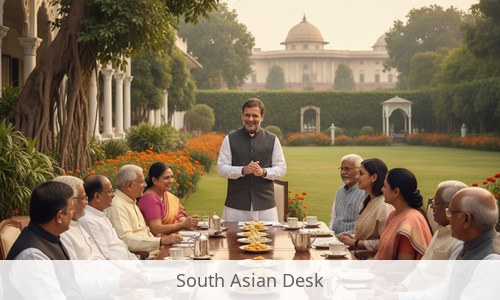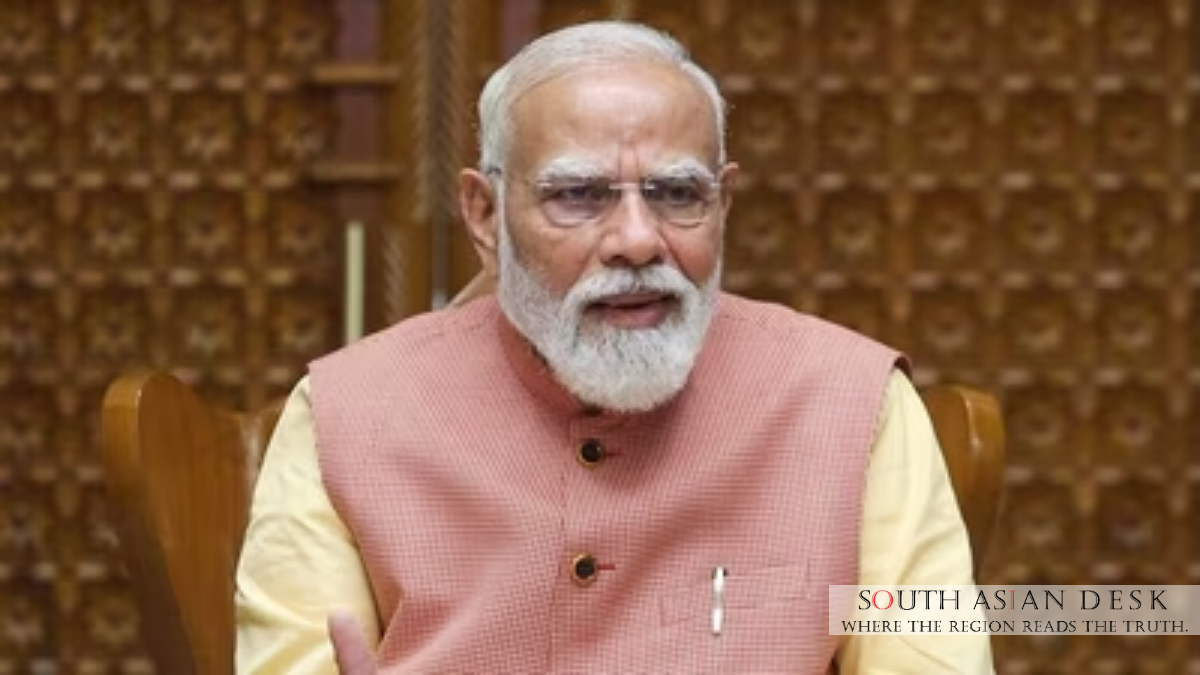
On May 23, 2026, Prime Minister Narendra Modi distributed over 51,000 appointment letters to recruits under the Center’s Rozgar Mela initiative. This event underscores India’s strategic focus on expanding global partnerships in technology, manufacturing, clean energy, and infrastructure, promising unprecedented employment opportunities for the nation’s youth.
Addressing the recruits via video conference, Modi emphasized the role of newly appointed government employees as ‘responsible partners’ in India’s development journey. He highlighted the vision of a ‘Viksit Bharat’ by 2047, urging the recruits to work with sensitivity and commitment to public service.
Modi’s recent five-nation tour, which included discussions with leaders from the Netherlands, Sweden, Norway, the UAE, and Italy, has paved the way for collaborations in semiconductors, artificial intelligence, green technology, and maritime cooperation. These partnerships are expected to generate vast opportunities for engineers, technicians, and researchers across India.
The Prime Minister also announced an agreement between Dutch semiconductor equipment maker ASML and the Tata Group, aiming to propel India into next-generation technologies. This initiative is set to create large-scale employment opportunities, particularly in clean energy and sustainable manufacturing sectors.
India’s investment in shipbuilding, aviation maintenance, and electronics manufacturing is expected to develop a comprehensive semiconductor supply chain. Modi anticipates the emergence of at least 10 major semiconductor units in the coming years, driven by the Production Linked Incentive (PLI) scheme.
Infrastructure development remains a cornerstone of India’s economic strategy, with significant expansions in railways, highways, airports, and digital networks over the past 12 years. These advancements are bridging the urban-rural divide, enhancing connectivity, and fostering local economies.
Modi highlighted the rapid growth of India’s start-up ecosystem, now boasting over 230,000 recognized start-ups. This growth is not confined to major cities, as Tier-2 and Tier-3 cities are becoming innovation hubs. The rise of women-led start-ups further underscores the inclusive nature of this economic transformation.
Concluding his address, Modi reiterated the government’s commitment to ‘Nagrik Devo Bhava,’ emphasizing citizens’ welfare as the core of governance. He expressed confidence that the newly appointed recruits will significantly contribute to India’s development journey.
Published in SouthAsianDesk, May 25, 2026
Follow SouthAsianDesk on X, Instagram and Facebook for insights on business and current affairs from across South Asia.