Rohingya refugees in Bangladesh will receive EUR 2 million in new support from Finland through UNHCR, the UN Refugee Agency, after the contribution was announced in Dhaka on Sunday, May 31, 2026, to sustain protection and life-saving assistance amid widening funding gaps.
Rohingya refugees to receive support through UNHCR
UNHCR said Finland’s EUR 2 million contribution would help sustain assistance and protection for Rohingya refugees in Bangladesh. The agency said the funds would also help address underfunded areas, including skills development and resilience-building programmes.
The Embassy of Finland in New Delhi also said on X that Finland had granted EUR 2 million in humanitarian assistance to UNHCR for Rohingya refugees in Bangladesh. Social media posts are being used here only to confirm the factual announcement by an official Finnish mission.
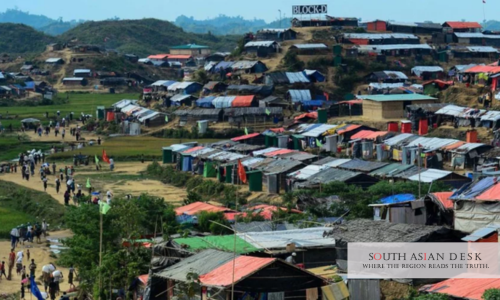
UNHCR said nearly 1.2 million stateless Rohingya continue to live in Bangladesh, almost a decade after fleeing targeted violence and persecution in Myanmar. Most remain dependent on humanitarian assistance because formal livelihood opportunities are limited in the camps.
According to UNHCR, only 23 percent of refugee households earned income through cash-for-work in 2025. The agency said 42 percent had access to temporary and unstable income sources, while 35 percent had no income source and relied fully on assistance.
UNHCR Representative in Bangladesh Ivo Freijsen described the response as entering a “fragile phase”, citing falling funding, worsening camp conditions, protection risks and continuing instability in Myanmar. Mari Ahmed, Chargée d’Affaires a.i. of the Embassy of Finland in New Delhi, said Finland “stands in solidarity” with Bangladesh and the Rohingya people.
Finland support targets skills and resilience
Finland’s support comes as humanitarian agencies warn that shrinking funding is affecting services for refugees and host communities. UNHCR said the most vulnerable groups include women and girls, persons with disabilities, older people and new arrivals since early 2024.
The agency said around 150,000 new arrivals since early 2024 remain without shelters because of limited space in already congested camps.
The contribution is expected to help UNHCR maintain protection activities while also supporting skills and resilience initiatives. These programmes are intended to reduce vulnerability, although Rohingya refugees’ access to formal work remains restricted.
For Bangladesh, which has carried the main responsibility for hosting Rohingya refugees since the 2017 mass displacement from Myanmar’s Rakhine State, donor contributions remain central to maintaining basic services in Cox’s Bazar and Bhasan Char.
Funding pressure on Rohingya response
The contribution follows the United Nations and humanitarian partners’ appeal for USD 710.5 million under the 2026 update of the Joint Response Plan for the Rohingya humanitarian crisis.
The appeal, prepared in close coordination with the Government of Bangladesh, is intended to reach up to 1.56 million people, including Rohingya refugees and Bangladeshi host communities. It covers needs in the Cox’s Bazar camps and on Bhasan Char.
UNHCR said the 2026 appeal is 26 percent lower than the 2025 plan and covers only the minimum required to sustain life-saving assistance. The agency said that, by mid-year, international support had left the appeal 60 percent funded.
The reduced appeal reflects a more constrained humanitarian environment, as aid agencies prioritise core services while facing competing crises globally. For host communities in Bangladesh, the response is also linked to local services, infrastructure, social cohesion and environmental pressures in areas around the camps.
South Asia impact of the Rohingya crisis
The Rohingya crisis remains a regional issue, not only a Bangladesh-Myanmar matter. Continued displacement affects Bangladesh’s border districts, humanitarian operations in the Bay of Bengal region and diplomatic engagement with Myanmar.
UNHCR has repeatedly linked conditions in Bangladesh to the absence of safe, voluntary, dignified and sustainable return to Myanmar. Without such conditions, refugees remain dependent on international assistance and Bangladesh remains under pressure to maintain services.
The crisis also intersects with regional migration concerns. In recent years, Rohingya refugees have undertaken dangerous sea journeys across the Bay of Bengal and Andaman Sea, often seeking safety or work in other parts of South and Southeast Asia. Humanitarian agencies have warned that declining support can deepen desperation among displaced communities.
For Finland, the latest allocation is part of a wider humanitarian policy that channels support through multilateral agencies. Finland’s Ministry for Foreign Affairs said earlier in 2026 that humanitarian needs were at record levels while global funding was declining, and that Finland would also ease the humanitarian situation in Myanmar and help Rohingya refugees in Bangladesh through UNHCR and pooled funding mechanisms.
Background
More than 700,000 Rohingya fled Myanmar’s Rakhine State to Bangladesh after a military crackdown in August 2017, joining earlier Rohingya refugee populations already in the country. Bangladesh now hosts Rohingya refugees mainly in camps in Cox’s Bazar and on Bhasan Char.
The Rohingya are largely stateless and have long faced restrictions in Myanmar. Repatriation efforts have not produced large-scale returns because refugees and humanitarian agencies continue to raise concerns about safety, rights, citizenship, freedom of movement and conditions in Rakhine State.
Finland has been a long-standing supporter of humanitarian action and multilateral responses for displaced people. UNHCR said Finland is also providing EUR 7 million in flexible core funding to UNHCR in 2026, allowing the agency to respond to emergencies and underfunded crises.
What’s next
Humanitarian agencies are expected to continue seeking funding for the 2026 Rohingya response, while Bangladesh, UNHCR and international partners maintain pressure for conditions that would allow voluntary, safe and dignified return to Myanmar. Rohingya refugees will remain dependent on sustained donor support unless durable solutions are achieved.
Published in SouthAsianDesk, June 1, 2026
Follow SouthAsianDesk on X, Instagram and Facebook for insights on business and current affairs from across South Asia.