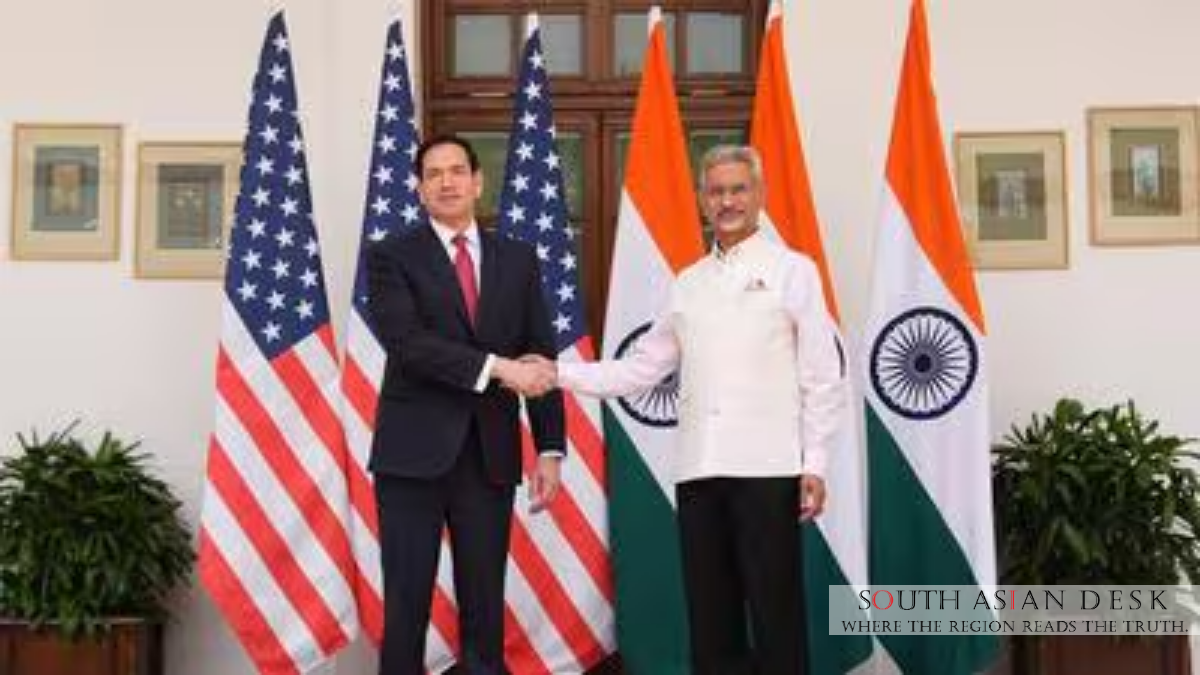
Forced labour tariff action proposed by the United States on Tuesday, June 2, 2026, could affect Indian exports as Washington pursues Section 301 duties during India-US talks on a trade framework aimed at lowering wider tariff barriers.
Forced labour tariff proposed against India
The United States has proposed an additional tariff on imports from India after finding that New Delhi had failed to impose and effectively enforce a prohibition on goods produced with forced labour.
The Office of the United States Trade Representative said on Tuesday, June 2, 2026, that it had completed findings in 60 Section 301 investigations involving economies accused of failing to take adequate action against trade in forced labour goods.
For India and most other economies covered by the findings, USTR proposed a 12.5 percent additional duty. A smaller group of economies would face a 10 percent additional duty. The measure has not yet been finalised and remains subject to public comments and hearings.
The proposed action comes during sensitive India-US trade discussions in New Delhi, where both sides are trying to finalise a framework agreement that could shape tariff concessions, market access and future trade rules between the two countries.
India’s Commerce and Industry Ministry said on Wednesday, June 3, 2026, that India remained engaged with the United States on Section 301 proceedings and on finalising a framework agreement. The ministry did not announce any retaliatory measure.
USTR cites forced labour import rules
USTR said the investigations examined whether trading partners had failed to prohibit imports of goods produced wholly or partly with forced labour, and whether such failures were unreasonable, discriminatory or burdensome to US commerce.
In its report, USTR said India had failed to impose and effectively enforce a forced labour import prohibition. It argued that economies without such controls could allow goods made with forced labour to enter markets, distort competition and undermine enforcement by countries that do restrict such imports.
The US trade agency said the failure to address forced labour imports put American workers and businesses at a disadvantage. US Trade Representative Jamieson Greer said in the USTR statement that the failure of major trading partners to address such imports was “unacceptable”, adding that American workers should not have to compete on an uneven playing field.
The proposed tariff would apply as an additional duty under Section 301 of the Trade Act of 1974, a US trade enforcement law that allows Washington to act against foreign policies or practices it considers unreasonable or burdensome to US commerce.
USTR also proposed a textile mechanism that could allow a limited volume of apparel and textile imports from certain economies to enter the United States at a reduced Section 301 tariff rate.
India says talks with US continue
India has said it is engaging with Washington on the Section 301 proceedings while also pursuing an interim trade framework. The government said the United States had launched two separate Section 301 investigations in March 2026, covering forced labour concerns and excess industrial capacity.
The issue now overlaps with broader trade negotiations. India and the United States announced a framework for a reciprocal trade arrangement on Saturday, February 7, 2026. Under that statement, India agreed to eliminate or reduce tariffs on all US industrial goods and several US food and agricultural products, while the United States said it would apply an 18 percent reciprocal tariff rate on Indian-origin goods under an earlier executive order.
The latest forced labour tariff proposal could complicate those talks because Indian negotiators are expected to seek relief from additional US duties as part of any interim arrangement.
Trade officials have not yet confirmed whether the Section 301 proposal will be treated separately from the bilateral trade framework or negotiated alongside it.
Background
The US initiated the forced labour Section 301 investigations on Thursday, March 12, 2026. The investigation focused on whether economies listed by USTR had failed to prevent imports of goods made wholly or partly with forced labour.
The United States already bars the import of goods produced with forced labour under its own customs law. US Customs and Border Protection describes forced labour as an unfair trade practice that undermines fair competition and says it enforces restrictions on such imports.
USTR’s latest approach goes further by targeting countries that, according to Washington, do not have comparable or effectively enforced import prohibitions. The US argument is that weak import controls abroad may allow forced labour goods to circulate through global supply chains, including through intermediate processing or trans-shipment.
India has domestic laws and constitutional protections against forced labour, but USTR’s criticism focuses on import controls and enforcement against goods produced abroad.
The issue is particularly sensitive for sectors with complex supply chains, including textiles, apparel, solar components, agricultural goods and intermediate industrial inputs.
What’s next
USTR has invited written comments on the proposed actions by Monday, July 6, 2026, and will hold hearings on Tuesday, July 7, 2026. Interested parties seeking to appear at the hearings must submit requests by Monday, June 22, 2026.
The final decision could determine whether Indian exporters face an additional 12.5 percent tariff on top of existing US duties, or whether negotiations, exemptions or product-specific mechanisms limit the impact.
For India, the immediate challenge is to preserve momentum in trade pact talks while addressing Washington’s forced labour tariff concerns before the proposal moves from consultation to implementation.
Published in SouthAsianDesk, June 3, 2026
Follow SouthAsianDesk on X, Instagram and Facebook for insights on business and current affairs from across South Asia.