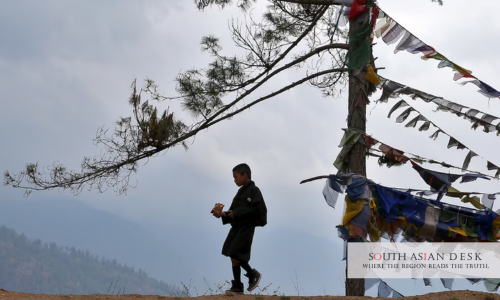
KATHMANDU — Bhutan is offering cash incentives for more babies have been announced by the government as the Himalayan kingdom seeks to reverse a steady decline in births and address concerns over an ageing population, workforce shortages, and increasing outward migration. The new policy marks one of the country’s most direct demographic interventions in recent years and reflects growing concern among policymakers about Bhutan’s long-term population sustainability.
The government has introduced a scheme that will provide families with a monthly payment of 10,000 ngultrums (approximately $105) for every third and subsequent child until the child reaches the age of three. The programme came into effect on June 4, 2026, and also covers eligible children under three who were born before the policy’s launch date. Officials say the initiative is designed to encourage larger families and help offset some of the financial pressures associated with raising children.
Bhutan, a landlocked nation of fewer than 800,000 people nestled between India and China, has long been known for measuring national progress through its Gross National Happiness framework rather than focusing solely on economic output. However, despite its unique development model, the country is increasingly confronting demographic realities that have become familiar across much of Asia, including declining fertility rates, an ageing population, and the migration of young workers overseas.
Bhutan’s birth rate decline prompts government action
Official figures reveal a significant drop in annual births over the past decade. Births declined from 11,001 in 2015 to 8,153 in 2024, representing a decrease of roughly 26 percent. During the same period, Bhutan’s fertility rate fell to nearly the replacement level of 2.1 children per woman, raising concerns that the population could begin shrinking if current trends continue.
Government officials have warned that declining birth rates combined with an ageing population could have far-reaching consequences for Bhutan’s economic and social future. A smaller working-age population could place pressure on public finances, healthcare systems, and social welfare programmes while reducing the labour force available to support economic growth.
Cabinet Secretary Kesang Deki stated that the incentive applies to every child after the second, meaning families would continue receiving support regardless of how many additional children they have. The government hopes the policy will remove some financial barriers to larger families while signalling official support for child-rearing.
Migration adding to Bhutan’s demographic challenges
Beyond declining fertility, Bhutan faces another major challenge: the growing migration of young people abroad. In recent years, increasing numbers of Bhutanese citizens have sought employment and educational opportunities overseas, particularly in Australia. This trend has accelerated concerns about the country’s future workforce and economic competitiveness.
The departure of younger citizens not only reduces the size of the labour force but also affects future birth rates, as many individuals spend their prime family-forming years outside the country. Economists and policymakers have increasingly linked migration patterns to Bhutan’s demographic outlook, arguing that retaining skilled workers is as important as encouraging higher birth rates.
Government statements accompanying the policy emphasised that the initiative reflects a commitment to supporting mothers, children, and families while ensuring the long-term sustainability of Bhutan’s population. Officials view demographic stability as essential for maintaining economic development and preserving community life in a country where many rural areas are already experiencing population pressures.
Part of a wider regional trend
Bhutan is not alone in confronting demographic challenges. Several Asian countries and regions have introduced policies aimed at encouraging childbirth as fertility rates continue to decline. Neighbouring India’s state of Sikkim, for example, introduced a range of family-friendly measures in 2023, including extended maternity leave, paternity leave, and support for fertility treatments.
Elsewhere in Asia, governments have experimented with financial incentives, childcare subsidies, housing support, and workplace reforms to encourage couples to have more children. South Korea, which has one of the world’s lowest fertility rates, has significantly expanded family support programmes and incentives in recent years as it seeks to reverse demographic decline.
While financial incentives can help ease the costs of raising children, demographic experts generally note that fertility decisions are influenced by a combination of economic opportunities, housing affordability, childcare availability, work-life balance, and broader social expectations. As a result, cash benefits are often most effective when combined with wider family support policies.
Balancing population growth and national wellbeing
Bhutan’s latest policy highlights the growing importance of demographic issues in South Asia and beyond. For a country internationally recognised for prioritising wellbeing through Gross National Happiness, the challenge now is to ensure that future generations continue to contribute to the nation’s social and economic fabric.
Whether the new incentive programme succeeds in boosting birth rates remains uncertain. However, the decision demonstrates that Bhutan’s government sees population sustainability as a strategic priority. As births continue to decline and migration reshapes communities, policymakers will be closely watching whether financial support for larger families can help reverse the trend and secure the kingdom’s long-term demographic future.
Published in SouthAsianDesk, June 6, 2026
Follow SouthAsianDesk on X, Instagram and Facebook for insights on business and current affairs from across South Asia.