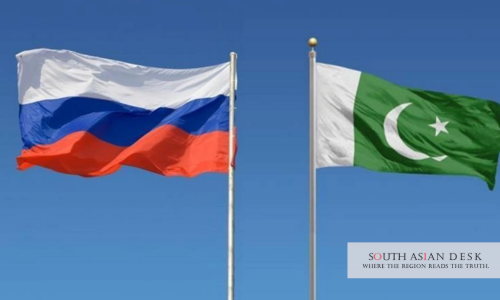
BISHKEK/ISLAMABAD — Pakistan and Russia formalised Pakistan-Russia cooperation pacts targeting illegal immigration and drug trafficking on Saturday, June 6, 2026, when Interior Minister Mohsin Naqvi and his Russian counterpart, Vladimir Kolokoltsev, signed the agreements on the sidelines of the Shanghai Cooperation Organisation (SCO) special meeting of Interior and Public Security Ministers in Bishkek, Kyrgyzstan.
Pakistan-Russia Cooperation Pacts: What Was Signed
The two interior ministers signed agreements aimed at enhancing cooperation in preventing illegal immigration and combating narcotics trafficking; two issues Pakistani officials have consistently described as interconnected threats to regional stability.
The signing took place at the conclusion of the three-day SCO Interior Ministers’ gathering, held from Thursday, June 4 to Saturday, June 6, in the Kyrgyz capital, which brought together the internal affairs and public security ministers of SCO member states.
The bilateral pact represents a deepening of ties that have been building steadily at the ministerial level. According to Pakistan’s Ministry of Interior on X, the signing ceremony was attended by both ministers and documented by the official delegation.
“Shared Threats Demand Shared Solutions”: Naqvi at the SCO Plenary
A day before the bilateral signing, on Friday, June 5, Naqvi addressed the full plenary of the SCO gathering, setting out Islamabad’s vision for collective regional security.
Naqvi reaffirmed Pakistan’s commitment to the “Shanghai spirit” and called for a joint strategy among SCO member states to counter terrorism, organised crime, drug trafficking, cybercrime, and terror financing. He said the region faced “serious and complex security challenges” that were interconnected, noting that criminal and terrorist networks were rapidly adapting to technological advancements, exploiting artificial intelligence, digital platforms, online networks, and cryptocurrency transactions to expand their reach.
“Shared threats demand shared solutions,” he said, urging participating countries to formulate a joint regional strategy to confront transnational crime and emerging security challenges.
Concluding his address, he told delegates: “Our challenges are common, so our efforts must also be collective and coordinated. The common goal of our joint efforts is a peaceful and secure SCO region.”
Drug Trafficking, Cybercrime, and Border Security
On narcotics trafficking, Naqvi warned that the illegal drug trade remained a major source of terror financing, calling for a coordinated joint strategy against drug trafficking networks, online criminal operations, and illicit financial flows facilitated through digital currencies. Pakistan’s Anti-Narcotics Force, he said, remained actively engaged in SCO-led counter-narcotics initiatives and stood ready to deepen cooperation with partner countries.
On cybersecurity, he urged member states to improve intelligence sharing, conduct joint threat assessments, and strengthen efforts to counter online radicalisation and cyber-enabled terrorism through the SCO-RATS framework.
On border security, Naqvi called for greater SCO cooperation on document fraud detection, watch-list coordination, and anti-human trafficking procedures, stating: “Border security is critical to regional security.” He added that disrupting terrorist financing networks required deeper regional cooperation, noting that Pakistan had strengthened its own anti-money laundering frameworks under its National Action Plan.
Pakistan’s interior minister also stated that Islamabad supports the initiative proposed by Kyrgyzstan, Kazakhstan, and Tajikistan to establish new centres to enhance cooperation among SCO member states.
Bilateral Meetings With Central Asian and Regional Counterparts
Beyond the Russia pact, Naqvi held separate meetings with his counterparts from Tajikistan, Uzbekistan, Kyrgyzstan, and Kazakhstan on the sidelines of the SCO gathering.
Naqvi also met Iranian Interior Minister Eskandar Momeni on the sidelines of the summit on June 5, where both sides discussed de-escalation efforts and exchanged views on regional developments and bilateral relations.
Background
The Pakistan-Russia security partnership has been consolidating steadily over the past year. In February 2025, Naqvi and Russian Ambassador Albert P. Khorev agreed to activate a counter-terrorism dialogue and strengthen collaboration in counter-terrorism and anti-narcotics efforts. The Russian envoy invited Pakistani officials to participate in anti-narcotics training programmes in Moscow and Siberia.
At the conclusion of the 10th Pakistan-Russia Intergovernmental Commission on Trade, Economic, Scientific and Technical Cooperation in November 2025, both sides signed three memoranda of understanding covering quality standards, anti-monopoly regulation, and media cooperation, reaffirming their commitment to a “broad, forward-looking partnership.”
The SCO has ten member states, including Pakistan, China, India, Iran, and Russia, with a combined territory of approximately 36 million square kilometres, a population of over 3.4 billion, and representing roughly 25 per cent of global GDP. Founded in Shanghai in 2001, the organisation’s core mandate includes border security, counter-terrorism, and regional cooperation.
What’s Next
Naqvi concluded his address to the SCO summit by inviting member states to participate in the SCO summit to be held in Islamabad in 2027. With the Pakistan-Russia cooperation pacts now formally signed and a series of bilateral engagements with Central Asian and regional counterparts concluded at Bishkek, Pakistani officials signalled that Islamabad intends to use the SCO framework as a central pillar of its expanding regional security architecture in the period ahead.
Published in SouthAsianDesk, June 6, 2026
Follow SouthAsianDesk on X, Instagram and Facebook for insights on business and current affairs from across South Asia.