

Islamabad | 13 June 2026
Pakistan says Iran-US peace deal mediation reached its most significant milestone yet on Friday, when Prime Minister Shehbaz Sharif publicly confirmed that a final agreed text had been reached and that Islamabad was working closely with both sides to finalise next steps. A Western source subsequently said the memorandum could be signed as early as Sunday.
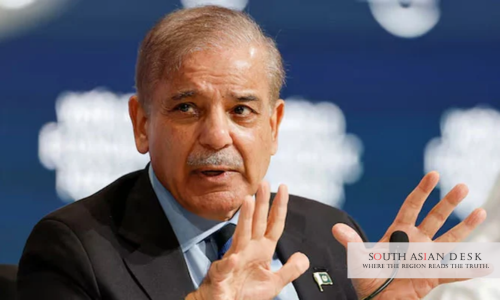
“We can confirm that a final, agreed-upon text of the peace deal has been reached,” Sharif wrote on X on the evening of 12 June, tagging both the US and Iranian presidents alongside other senior leaders from both countries. “Pakistan is now working closely with both sides to finalise the next steps. Peace has never been as close as it is now.”
The announcement came hours after Iranian Foreign Minister Abbas Araghchi had signalled the same trajectory, writing that the Islamabad Memorandum of Understanding had “never been closer” while urging media outlets to refrain from speculating about its contents until it was formally concluded.
Iran-US Peace Deal – Sharif Warns of Sabotage Campaign
In his X post, the Pakistani prime minister did not confine himself to announcing the breakthrough. He also put rivals on notice. “Amid ongoing intense mediation efforts by Pakistan, we are fully aware of an incessant misinformation campaign being waged by those who want to sabotage the peace deal,” Sharif wrote, before insisting that the noise would not distract Islamabad from the work of finalisation.
The remark reflected the fraught atmosphere surrounding the negotiations, in which multiple parties with conflicting interests have an incentive to shape or undermine whatever agreement emerges.
What the Deal Is Reported to Contain
Sanctions, Assets and the Strait of Hormuz
Versions of the memorandum text were provided to Reuters by Western, Pakistani and Iranian sources on Friday, and while minor differences existed between them, all pointed towards an agreement that would give Tehran much of what it has sought since the conflict began in February.
Under the terms described by those sources, the United States would move immediately to unfreeze billions of dollars in Iranian assets and waive sanctions on Iranian oil exports. In return, Iran would reopen the Strait of Hormuz, which Tehran shut after the US and Israel launched military strikes in late February. The reopening of the strait has been Washington’s most consistent stated objective throughout the war.
Discussion of Iran’s nuclear programme would be set aside for a 60-day period of broader settlement talks. The sources also indicated that the deal included a discussion of war reparations to Tehran and the dropping of longstanding US demands for curbs on Iran’s ballistic missile programme.
The US Position: Performance-Based, Not Cash Up Front
A senior US official offered a starkly different characterisation of the same agreement. The official said Iran’s stockpile of highly enriched uranium “will be destroyed and removed” and its nuclear programme dismantled under the deal, and that the arrangement was structured as a performance-based mechanism with no funds released until Iran meets its obligations.
Vice President JD Vance reinforced this framing on X. “First, the Iranians are not receiving any cash, and no funds are being released for simply signing a deal or attending a meeting,” Vance wrote. Economic benefits would flow to Tehran only upon demonstrated compliance, he said.
The gap between the two characterisations, one emphasising Iranian gains and the other emphasising American conditionalities, reflects the contested nature of the diplomatic endgame and suggests the public messaging from both governments is being shaped in part for domestic audiences.
Trump Disputes Leaks, Then Reposts Iranian FM
President Donald Trump addressed the leaked terms directly on Truth Social on Friday, rejecting the reporting without specifying which elements he regarded as inaccurate. “The terms that Iran leaked out to the Fake News have NOTHING to do with the terms that were agreed to, in writing,” Trump wrote.
The disclaimer was notable in itself as confirmation that some form of written agreement does exist. Shortly afterwards, Trump reposted Araghchi’s earlier message on his Truth Social account, the one in which the Iranian foreign minister had described a deal as never closer. The repost was widely read as an implicit endorsement of the general direction of travel, even as Trump disputed the specific terms in circulation.
CENTCOM separately confirmed that the naval blockade of Iranian ports in the Strait of Hormuz remained fully in effect as of Friday. US forces had redirected 139 compliant commercial ships and disabled nine non-compliant vessels since 13 April, the command said.
Pakistan Iran US Peace Deal: Signing Could Come Sunday in Geneva
A Western source told Reuters that, provided language on Lebanon could be resolved, the memorandum could be signed as soon as Sunday by US Vice President JD Vance and Iran’s parliament speaker Mohammad Baqer Qalibaf. Geneva has emerged as the most likely venue.
The formal exclusion of highly enriched uranium from the current text, as described by multiple sources, represents a significant departure from what Washington had previously demanded. None of the versions reviewed by Reuters included mention of it. A senior US official’s insistence that it would nonetheless be addressed underlines that the gap between the public positions of both governments and the actual text of the memorandum has not yet been fully closed, at least for public consumption.
The Lebanon Problem
The single unresolved question that Western, Iranian and Gulf sources all flagged was the ceasefire language on Lebanon. Iran has insisted throughout negotiations that any agreement must include a commitment by Israel to end its ongoing military campaign against Hezbollah. That demand cuts directly across what Israel is prepared to accept, and Washington has been caught between the two positions.
Israel, which jointly launched the war on Iran with the United States in February, has been excluded from the talks and Prime Minister Benjamin Netanyahu stated publicly that Israel would not be a party to the memorandum. Israel’s defence minister said his country would not withdraw from Lebanese territory. A senior Israeli official said Israel expected any deal to maintain the current Lebanon ceasefire architecture with Israeli freedom of action preserved in zones it controls.
Netanyahu has clashed repeatedly with Trump in recent weeks over US pressure to curb Israeli operations in Lebanon as the condition for reaching an accommodation with Tehran. The resolution, or otherwise, of that Lebanese dimension will determine whether Sunday’s reported signing window can hold.
How Pakistan Got Here
Pakistan has been the sole communication channel between the United States and Iran since late March 2026, weeks after the conflict erupted on 28 February. The architecture of Pakistan’s mediation role rests heavily on Army Chief Field Marshal Asim Munir, who has maintained direct lines to US Vice President JD Vance, Special Envoy Steve Witkoff and Iranian Foreign Minister Araghchi throughout the negotiations.
Initial face-to-face talks in Islamabad in April failed to produce an agreement, but kept both parties engaged and established the framework for the Islamabad Memorandum of Understanding that is now the vehicle for a final settlement. Pakistan’s position as a Muslim-majority country with long-standing ties to both Washington and Tehran, and without any direct stake in the military outcome, gave Islamabad a credibility that few other potential mediators could claim.
If a deal is signed this weekend, it will mark the most consequential diplomatic achievement of Shehbaz Sharif’s tenure and a significant moment for Pakistan’s standing in international affairs.
Published in SouthAsianDesk, June 13, 2026
Follow SouthAsianDesk on X, Instagram and Facebook for insights on business and current affairs from across South Asia.
