Fitch Ratings Says Bangladesh FY27 Revenue Collection Target Is the Nation’s Most Ambitious Since 1993
Bangladesh’s FY27 revenue collection target has drawn a pointed caution from Fitch Ratings, the international credit rating agency, which warned on 16 June 2026 that the government’s plans to sharply lift the revenue-to-GDP ratio carry significant execution risk rooted in long-standing structural weaknesses.
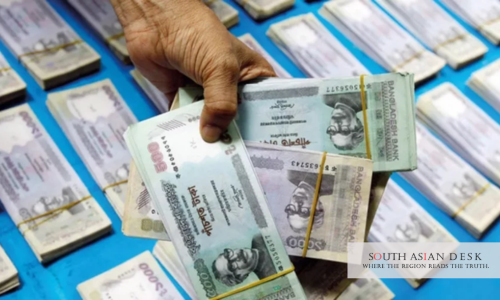
The proposed budget for Financial Year 2026-27, unveiled by Finance Minister Amir Khosru Mahmud Chowdhury, sets total revenue collection at Tk 6.95 lakh crore, equivalent to 10.2 percent of GDP, with Tk 6.04 lakh crore of that sum to be collected through the National Board of Revenue (NBR). If achieved, this would represent the highest revenue-to-GDP ratio Bangladesh has recorded since 1993, rising sharply from approximately 8 percent in the current fiscal year and 7.8 percent in FY25.
A Budget Built On Bold Revenue Assumptions
The scale of the challenge becomes clearer in context. In the last fiscal year, the NBR collected Tk 369,528 crore. Revenue for FY26 is expected to reach approximately Tk 400,000 crore. To hit the FY27 NBR target, collections must therefore increase by roughly Tk 200,000 crore in a single year, a near-50 percent jump that analysts and independent observers have described as formidable.
The FY27 budget also raises total expenditure by approximately 19 percent while simultaneously targeting 18 percent growth in revenue income. Fitch noted that even a modest shortfall on the revenue side would create substantial pressure on budget implementation, particularly given the government’s medium-term ambitions to lift the revenue-to-GDP ratio further, to 11 percent by FY30-31.
The agency identified the Bangladesh FY27 revenue collection target as the government’s most significant financial test in the coming year, stating that the credibility of the entire budget depends on whether revenue mobilisation can be substantially improved.
Structural Weaknesses And A History of Shortfalls
Fitch’s scepticism is grounded in Bangladesh’s track record. The agency observed that budget implementation in the country has historically fallen short of targets, a pattern evident in FY26 as much as in prior years. This creates a paradoxical form of fiscal stability: because both revenue and expenditure typically come in below projections, the headline deficit remains broadly in check even when ambitions go unmet.
Fitch kept its FY27 fiscal deficit forecast at 3.6 percent of GDP, consistent with the government’s own announced target. However, the agency was explicit that this alignment reflects not optimism but an expectation that both revenue collection and public spending will fall short of budget projections in roughly equal measure.
Structural weaknesses in tax administration are a central concern. Non-performing loans in the banking sector have risen sharply to an estimated 30.6 percent [VERIFY], while weak private-sector credit growth continues to suppress the tax base. The agency noted that reform initiatives including efforts to simplify the tax process, reduce exemptions, ease VAT compliance for small and medium enterprises, and expand non-tax income from state-owned enterprises have historically not delivered the intended results due to weak implementation capacity.
Fitch And The Government Are Far Apart On Growth
One of the most striking divergences in Fitch’s assessment concerns economic growth. The government is targeting GDP growth of 6.5 percent in FY27 and has set medium-term ambitions of 8.5 percent growth, total investment reaching 40 percent of GDP, foreign direct investment rising to 2.7 percent of GDP, and inflation falling to 5 percent.
Fitch forecasts growth of only 3.5 percent for FY27, almost half the government’s expectation. The agency cited continued fragility in the banking sector, weak private-sector credit growth, shortcomings in the policy framework, and a volatile external environment as factors weighing on investment and output. Bangladesh’s growth had already decelerated to an estimated 3.7 percent in FY26.
The IMF, in its January 2026 Article IV consultation, projected a somewhat more moderate recovery, forecasting 4.7 percent growth in FY26 and FY27, but conditioned that outlook on the bold implementation of fiscal and financial sector reforms.
IMF Program Completion Now In Doubt
Fitch also raised concerns about Bangladesh’s engagement with the International Monetary Fund. The country has requested a new IMF program, but Fitch assessed that the final review of the current $5.5 billion arrangement, which runs through to January 2027, is now less likely to be completed successfully. That program has served as an anchor for the government’s fiscal reform agenda, including the central target of raising the tax-to-GDP ratio to 10 percent through administrative improvements and base-broadening measures.
A failure to complete the review would raise questions about reform momentum continuity and could affect Bangladesh’s access to concessional external financing at a time when external liquidity buffers remain thin.
Positive Signals Within The Budget
Fitch was not without praise for specific elements of the FY27 budget. The agency highlighted the reduction in withholding tax on machinery rental payments to non-residents from 15 percent to 7.5 percent as a positive step for investment promotion. It also cited the continuation of a 2.5 percent cash incentive on expatriate remittances, ongoing infrastructure investment, special incentives for public-private partnership projects, and expanded duty-free benefits aimed at export diversification.
Bangladesh’s apex trade body, the Federation of Bangladesh Chambers of Commerce and Industry (FBCCI), described the budget as ambitious but achievable, provided it is underpinned by a business-friendly tax regime, economic stability, sustained investment, and comprehensive reforms at the NBR. The FBCCI also welcomed a Tk 60,000 crore Stimulus Package 2026 and a Tk 2,000 crore allocation for SME development.
Reform Delivery Remains the Defining Question
Fitch concluded that the pace and quality of reform implementation will ultimately determine whether the government’s fiscal and economic goals are realised. Bangladesh’s structurally low revenue intake has long been identified as a key credit weakness, and the gap between official projections and independent forecasts signals that the Bangladesh FY27 revenue collection target, while historically significant if met, rests on assumptions that past performance makes difficult to validate.
The medium-term trajectory the government has outlined is not without logic: expanding the tax net through greater use of Business Identification Numbers and Taxpayer Identification Numbers, lifting FDI from an estimated 0.4 percent of GDP in FY25, and improving banking sector governance all address genuine structural constraints. Whether they can be delivered at the pace and scale the budget requires is the question on which the credibility of the entire fiscal plan now turns.
Published in SouthAsianDesk, June 17, 2026
Follow SouthAsianDesk on X, Instagram and Facebook for insights on business and current affairs from across South Asia.