Islamabad, Wednesday, June 17, 2026 — Norway won 4-1. Iraq were heavily beaten in their first World Cup match in 40 years. Erling Haaland scored twice on his World Cup debut and barely seemed to be trying. By any measure of football, the evening in Foxborough, Massachusetts was not one to remember for the Arab side or their supporters. But for more than 250 million Pakistanis, the Zidane Iqbal’s Pakistan World Cup moment had finally arrived — and none of those things mattered in the slightest.
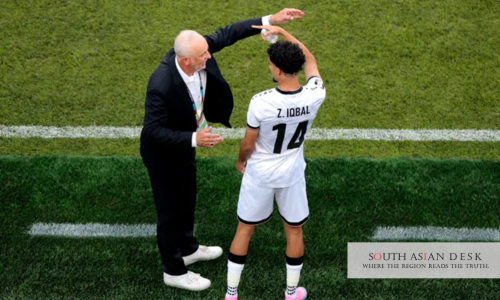
When Zidane Iqbal crossed the touchline for Iraq at Boston Stadium in the 59th minute on Tuesday, history was made. He became the first player of Pakistani heritage to appear in a FIFA World Cup. Pakistan’s national team has never qualified for the tournament and sits 198th in FIFA’s world rankings.
Zidane Iqbal – Born Between Three Nations
Zidane Ammar Iqbal was born on April 27, 2003, in Manchester, England, to a Pakistani father and an Iraqi mother. His father Aamar is from the city of Sahiwal in Punjab, while his mother Ayat was born in southern Iraq. Growing up in Manchester, Iqbal was eligible to represent England, Pakistan, or Iraq.
The decision he eventually made was not a calculated one. Iraq found him the way many things happen now: through social media. A large Instagram page tracking Iraqis around the world contacted him to ask whether rumours about his heritage were true. Word eventually reached the Iraq Football Association, which pursued him through a series of video calls with Iqbal and his parents.
Asked why he chose Iraq, Iqbal said: “All the love and support from the fans in Iraq and across the world and how hard the FA tried to bring me. When someone shows so much love, it’s only right that you feel it.” He had never visited the country before receiving an under-23 call-up in 2021. The culture shock, he admitted, was real. But he kept returning.
From Old Trafford to the World Cup via Utrecht
Iqbal joined Manchester United’s academy at the age of eight and spent 12 years at the club. In December 2021, at 18, he became the first British South Asian player in nearly two decades to appear for United in the UEFA Champions League. Regular first-team football never followed. He eventually moved to FC Utrecht in the Dutch Eredivisie for approximately EUR 1 million (USD 1.1 million).
His performances during Iraq’s gruelling 21-match qualification campaign, including a winning goal against Indonesia, kept him central to coach Graham Arnold’s plans throughout the process.
What Pakistan Missed
The Pakistan Football Federation monitored his progress, but it was never truly a contest. Ali Ahsan, editor of FootballPakistan.com, said the structural gap between the two football systems was simply too wide. “We are struggling to attract players from bigger clubs, due to our ranking and the lack of a professional set-up. The PFF still has no technical director or dedicated national team recruitment staff,” Ahsan said.
“For Zidane, he picked Iraq to be able to play major tournaments, which he probably wouldn’t have gotten with Pakistan,” Ahsan added. “Had he chosen Pakistan, he could have had a big impact on raising Pakistani football’s profile internationally. He was still at United at the time. He could have started a serious conversation about how football needs to be improved, inspired kids to take it more seriously. Iraq is already a well-established team with a dedicated history, structure and fanbase.”
It is a frank assessment, and not a comfortable one. Pakistan’s football governance remains fragmented, underfunded, and unable to compete with better-organised national federations when it comes to recruiting diaspora talent. Iqbal’s choice was entirely rational. That does not make it any less significant for what the country lost, or for what it still managed to witness.
A Moment That Belongs to Everyone
Iqbal himself seemed conscious of what the moment carried beyond the ninety minutes. “I hope there are children — whether Asian, Arab, whatever you are — who watch that and think they can do it,” he told The Athletic. “It’s definitely possible. And if I’ve done it, why can’t they?”
Iraq next face France on Monday before taking on Senegal in their final Group I match on June 26. Few expect them to advance from the group stage. But few expected them to be in the World Cup at all.
The Zidane Iqbal Pakistan World Cup story is not straightforward. He plays for Iraq. He grew up in Manchester. His father’s homeland never got the player it might have shaped. And yet on Tuesday night in Foxborough, something shifted for Pakistan and its relationship with the world’s most-watched sporting event. A young man whose name carries echoes of one of the greatest footballers of all time walked onto a World Cup pitch, and for a country that has never once been on that stage, the complicated pride of it was entirely real.
Published in SouthAsianDesk, June 18, 2026
Follow SouthAsianDesk on X, Instagram and Facebook for insights on business and current affairs from across South Asia.