

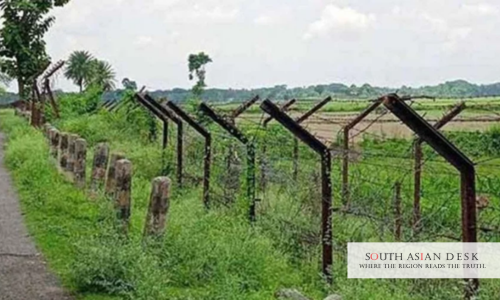
Dhaka, Wednesday, June 17, 2026 — Human Rights Watch has accused Indian authorities of forcibly expelling Bengali Muslim residents from West Bengal into Bangladesh without basic due process, leaving dozens of families stranded in the narrow strip of no man’s land between the two countries. The New York-based rights organisation published its findings on Wednesday, documenting a pattern of nocturnal pushbacks along the India-Bangladesh border that it says has intensified since the Bharatiya Janata Party won West Bengal’s state elections in March.
Indian Border Security Force actions, combined with Border Guard Bangladesh efforts to block those expelled from entering, have left dozens of families stranded at the “zero line” between the two countries. Bangladeshi border guards have reported that since June 1, 2026, they have foiled 21 attempts by the BSF to push more than 200 people, including children, into Bangladesh’s border districts.
“Indian authorities are cruelly dumping families into Bangladesh or leaving them stranded at the border, ignoring their basic human rights,” said Meenakshi Ganguly, Deputy Asia Director at Human Rights Watch. “The government should stop unlawfully expelling people, ensure procedural safeguards, engage with Bangladeshi authorities to verify citizenship, and end this dismaying animosity toward Muslims.”
A 75-Hour Standoff in Panchagarh
Human Rights Watch interviewed nine people who witnessed Indian border security troops bring groups of people to the border at night and push them through cuts in the barbed wire fencing into Bangladeshi territory. In several cases, Indian border guards eventually allowed people to return after Bangladesh border forces denied them entry.
In Panchagarh, a northern district of Bangladesh, witnesses described a 75-hour standoff after the BSF attempted to push 10 people, including children, into Bangladesh on June 5. Rubel Hossen, a 35-year-old Bangladeshi villager, told HRW that the group had advanced approximately 50 feet inside Bangladeshi territory before local residents alerted the border guards, after which the group retreated to an embankment in no man’s land.
On the first night, the stranded group was exposed to severe lightning and heavy rain, with Indian border guards supplying only dry food on the second day. “What I witnessed appeared to be a war-like standoff with large deployments of BSF and BGB,” Hossen said. “Repeated flag meetings between the two forces failed, until the BSF finally escorted the group back to the Indian side.”
At dawn on June 6, Indian border guards pushed six members of two Bengali Muslim families, including three men, two women and a child, toward the Tetulbaria border in Bangladesh. On June 8, Bangladeshi border guards reported that the BSF took back 11 people, including a pregnant mother and her child, after they were stranded for nearly 48 hours at the zero line in Thakurgaon district.
ndia Unlawfully Expelling Bengali Muslims To Bangladesh – Voter Lists, Citizenship and the BJP’s “Detect, Delete, Deport” Drive
West Bengal Chief Minister Suvendu Adhikari, who took office after the BJP won the state’s March elections, said his government’s “detect, delete and deport” policy had resulted in the detention of hundreds of alleged illegal immigrants. Just ahead of those March elections, India’s election commission carried out a hurried and controversial revision of voter lists that dropped over nine million names, triggering threats of detention and deportation among Bengali-speaking communities.
A union council member from Panchagarh Sadar told HRW he had met a family from Siliguri, West Bengal, who said they held Aadhaar cards, India’s biometric identity document. Despite this, since they were not included in the revised voter list, police had detained them and handed them to border security, who then attempted to push them into Bangladesh. The oldest member of the family had voted four times. The family was eventually allowed to return to India after being stranded at the border for three days.
A flawed citizenship verification process in Assam in 2019 had already left over 1.9 million people stateless, with thousands of Bengali-speaking residents held in detention centres and many expelled without lawful authority. BJP Chief Minister Himanta Biswa Sarma has repeatedly described Bengali-speaking Muslims as “illegal immigrants.”
India’s Position and Bangladesh’s Refusal
Indian authorities maintain that the individuals being deported are undocumented migrants living in the country illegally, and officials have offered to assist those willing to leave voluntarily. The Indian government has not publicly responded to the specific allegations in the HRW statement published on Wednesday.
Bangladeshi authorities have maintained that they will not accept any individuals pushed across the border outside established legal procedures and verification mechanisms. HRW urged Indian authorities to ensure due process, including access to information, legal representation and appeal mechanisms for individuals facing deportation.
A Deteriorating Bilateral Relationship
The India Bangladesh border expulsions are unfolding against a backdrop of sharply deteriorating ties between the two countries. Bangladesh-India relations cooled significantly after the mass uprising of 2024 toppled Dhaka’s pro-New Delhi government. India also ramped up operations against alleged undocumented migrants following an attack in April in Indian-administered Kashmir that killed 26 people, mostly Hindu tourists, after which a nationwide security drive resulted in thousands of detentions, with many of those held being subsequently pushed across the border.
“India should end these brutal expulsions, and both governments should ensure that border management never again comes at the cost of basic human dignity,” Ganguly said.
The allegations, if borne out, raise serious questions under both Indian domestic law and international human rights standards, which prohibit collective expulsion, require individual assessment before deportation, and demand that persons at risk of statelessness or refoulement receive adequate procedural protection before being removed from any territory in which they have resided.
Published in SouthAsianDesk, June 18, 2026
Follow SouthAsianDesk on X, Instagram and Facebook for insights on business and current affairs from across South Asia.
