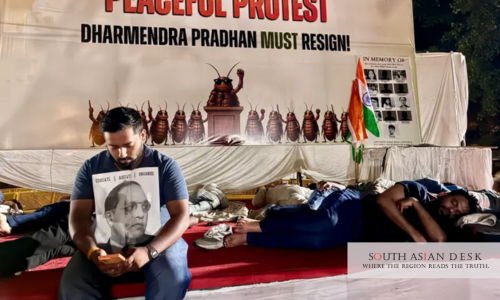
Cockroach Janta Party protest leaders in New Delhi are waiting for a possible cabinet reshuffle before deciding their next move, as the youth-led movement continues to demand the resignation of Education Minister Dharmendra Pradhan over a leaked national medical entrance examination.
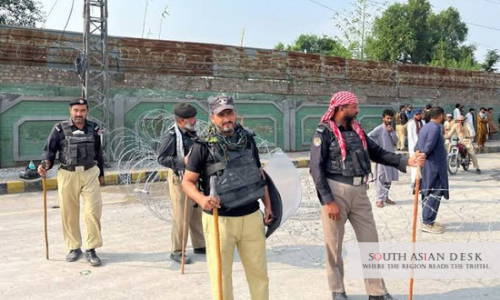
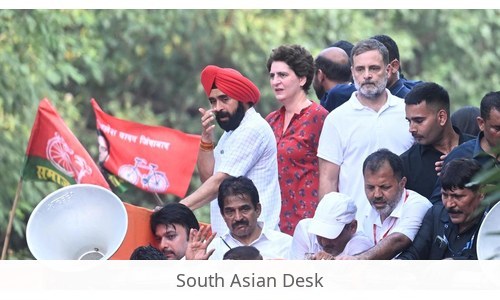
The sit-in at Jantar Mantar has now become one of the most visible youth protests against Prime Minister Narendra Modi’s government in recent months. What began as a sharp, online, humour-driven movement has moved onto the streets, drawing students, job-seekers, young professionals and activists angered by repeated examination failures and the broader insecurity facing India’s youth.
According to Reuters, sources say the Indian government is weighing significant cabinet changes, while Indian media has reported that Pradhan could be moved from the education portfolio. The Cockroach Janta Party, or CJP, has said it is waiting for the government’s decision before announcing its next course of action.
The government has not confirmed that Pradhan will be removed or shifted. Pradhan, his ministry and the government’s chief spokesperson did not immediately respond to Reuters’ requests for comment.
Cockroach Janta Party Protest Enters a Critical Stage
The Cockroach Janta Party protest is centred on the cancellation of a national medical college entrance examination after question papers were leaked. The exam was taken by around 2.3 million aspirants, making the controversy deeply personal for families across India.
For students, the leak was not just an administrative failure. It threatened months, and often years, of preparation for one of the country’s most competitive routes into higher education. The government later held the examination again under tighter security, including the use of military aircraft to transport exam papers. Authorities also temporarily blocked Telegram, saying the platform had been used to spread leaked material.
These measures may have helped secure the retest, but they did not end public anger. For many young Indians, the episode reinforced a deeper belief that the examination system is unreliable, stressful and vulnerable to manipulation.
CJP has turned that frustration into a political message: accountability must come from the top.
Why Dharmendra Pradhan Is Facing Pressure
The demand for Dharmendra Pradhan’s resignation has become the central slogan of the protest. CJP argues that the education minister should take responsibility for repeated exam-related failures, including paper leaks and irregularities that have affected students across the country.
Pradhan has been one of the senior figures in Modi’s cabinet, and any move involving his portfolio would carry political weight. If he is shifted, protesters may claim it as evidence that their pressure campaign has worked. If he remains in place, CJP may intensify its demonstrations.
That is why the expected cabinet reshuffle matters. It has turned the protest into a waiting game. CJP founder Abhijeet Dipke has indicated that the group will decide its next step once the government makes its decision.
Sonam Wangchuk Hunger Strike Gives Protest Wider Attention
The protest gained further visibility after social activist Sonam Wangchuk joined the sit-in and began a hunger strike in support of the demand for Pradhan’s resignation.
Wangchuk is a prominent government critic and has previously been associated with protests demanding statehood for Ladakh. His presence has given the movement a more serious national profile, moving it beyond online satire and student mobilisation.
Reuters reported that Wangchuk said he was prepared to continue his fast for six weeks unless the government acted earlier. His involvement increases the moral pressure on the authorities, particularly if his health deteriorates while the protest continues.
The hunger strike also changes the tone of the movement. CJP’s language has often been ironic, meme-driven and deliberately provocative, but Wangchuk’s participation gives the protest a more traditional civil-resistance character.
From Online Satire to Street Politics
The Cockroach Janta Party rose rapidly on social media after launching in May. Reuters reported that it gained millions of Instagram followers within days, drawing attention from students and young Indians frustrated by unemployment, inflation, examination failures and a sense that youth issues are ignored in mainstream politics.
The group’s name itself is part of its political identity. CJP has embraced the image of the cockroach as a symbol of survival, resilience and defiance. Its supporters use humour and self-mockery to speak about serious concerns, describing themselves as unemployed, chronically online and politically ignored.
That mix of satire and anger has helped the group stand out in India’s crowded political environment. But the current protest shows that CJP is trying to move beyond online popularity. The challenge now is whether it can convert social media reach into sustained political organisation.
India Youth Unemployment Shapes the Mood
The protest is not only about one examination. It reflects a wider youth crisis.
Government data cited by Reuters shows India’s unemployment rate was 3.1% in 2025 for people aged 15 and above, but nearly 10% among those aged 15 to 29. In urban areas, the youth unemployment rate was even higher at 13.6%.
These figures help explain why CJP’s message has resonated. India has one of the world’s largest youth populations, but many young people face intense competition for limited jobs, costly education, expensive coaching systems and high-stakes entrance examinations.
For such students, a paper leak is not a minor scandal. It can mean lost time, wasted money and damaged trust in public institutions. That emotional context is what gives the CJP protest its force.
BJP Pushes Back Against CJP
The ruling Bharatiya Janata Party has strongly criticised the movement. Reuters reported that BJP leader Nitin Nabin described such groups as “virus and cockroach parties” and accused them of weakening the country. He also said BJP workers could “teach them a lesson.”
That language reflects how seriously the ruling party appears to view the youth movement. A meme-based group with a deliberately absurd name might once have been dismissed as online noise, but its ability to gather followers and sustain protests has made it politically harder to ignore.
CJP’s rise also comes at a sensitive time for Modi’s government. Exam controversies affect millions of families, and youth unemployment remains one of the most difficult issues for any government to answer convincingly.
What Happens Next?
The next phase of the Cockroach Janta Party protest depends heavily on the expected cabinet reshuffle. If Pradhan is removed from the education ministry, CJP may claim partial victory and shift its attention to broader examination reforms. If he stays, the protest could continue or expand.
However, the movement also faces real tests. Sustaining a protest requires organisation, discipline and clear objectives. Online popularity can bring visibility, but street politics demands endurance. CJP will need to show whether it can build a durable youth platform beyond one minister and one exam scandal.
For now, the protest has already achieved one thing: it has forced national attention onto student anger, paper leaks and youth insecurity. Whether or not the cabinet reshuffle changes Pradhan’s position, the Cockroach Janta Party has shown that India’s young voters and aspirants are willing to use humour, protest and digital mobilisation to demand accountability.
The government’s next move will determine whether the movement pauses, escalates or becomes a more lasting force in Indian politics.
Published in SouthAsianDesk, July 1, 2026
Follow SouthAsianDesk on X, Instagram and Facebook for insights on business and current affairs from across South Asia.