E20 petrol India policy has become a growing public flashpoint after the government moved to calm anger over mandatory ethanol-blended fuel, following controversy around an “experiment” remark reportedly made during a Supreme Court hearing.
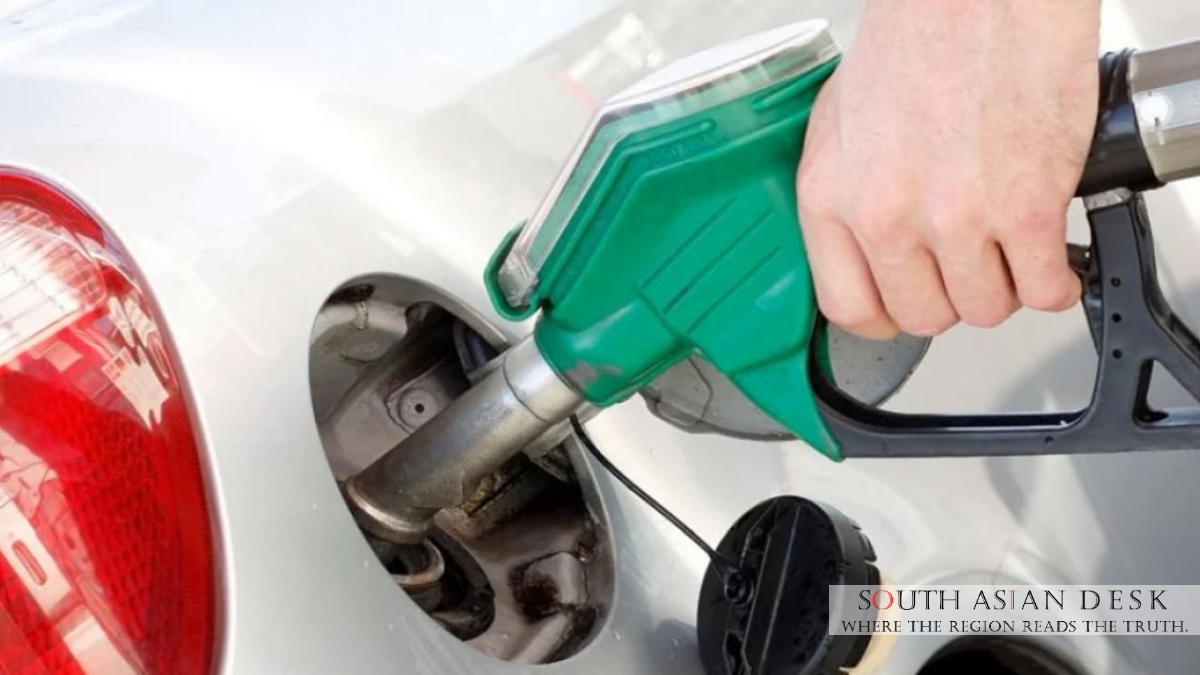
The fuel, known as E20, contains 20 percent ethanol blended with petrol. India has promoted ethanol blending as part of a wider push to reduce crude oil imports, support farmers, cut emissions and increase domestic biofuel production. But the policy is now facing sharper public scrutiny, with motorists complaining about lower mileage, vehicle performance concerns and the lack of consumer choice at petrol pumps.
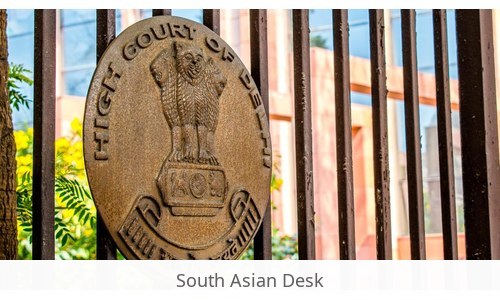
The controversy intensified after Attorney General R. Venkataramani was reported as saying during court proceedings that the E20 programme was an “experiment” and that its results would become clearer next year. The Attorney General’s office later rejected that interpretation, saying the reports were false and did not reflect the government’s submissions.
That clarification has not fully settled the issue. Videos and reports around the hearing spread widely online, fuelling criticism that the government rolled out E20 without enough public consultation or clear communication for vehicle owners.
E20 Petrol India Policy Faces Consumer Anger
E20 petrol India policy is facing backlash because fuel is not an optional purchase for most motorists. When a blend becomes standard at pumps, drivers of older cars and motorcycles may feel they have little choice but to use it, even if they are unsure whether their vehicles are fully compatible.
Many motorists have complained that E20 reduces fuel efficiency. This concern is not entirely imaginary. Ethanol has a lower energy density than petrol, which means some vehicles may record lower mileage compared with unblended petrol or lower ethanol blends. The government has also previously acknowledged that vehicles running on E20 may experience a slight decrease in fuel efficiency compared with gasoline.
The public frustration is therefore less about ethanol as a concept and more about rollout, transparency and choice. Consumers want to know whether their vehicles are safe, whether warranties remain valid, whether older engines require part replacements, and why E20 is sold without a clear price benefit despite ethanol being domestically produced.
The government says the ethanol blending programme is scientifically validated and closely monitored. It has also said no widespread engine failure or vehicle breakdown has been reported due to ethanol blending. But for many motorists, the issue is not limited to catastrophic failure. It is also about mileage, maintenance cost, performance and long-term wear.
Ethanol Fuel Experiment Remark Deepens Trust Gap
The ethanol fuel experiment remark became politically damaging because it appeared to confirm a fear already spreading among vehicle owners: that ordinary motorists were being used to test a nationwide fuel shift.
The government has strongly denied that this was its position. According to the Attorney General’s office, the Supreme Court hearing concerned ethanol allocation issues and not an admission that the E20 programme itself was experimental.
Still, the controversy exposed a communication problem. E20 was introduced as a national policy backed by energy-security and environmental arguments. Yet many consumers feel they were not given enough practical information before the fuel became widely available.
That gap has allowed social media claims, opposition criticism and genuine consumer anxiety to merge into a larger backlash. Planned protests and public campaigns against the fuel show that the issue has moved beyond technical policy circles and entered everyday politics.
Why India Is Pushing Ethanol Blended Fuel
India ethanol blended fuel policy is driven by several objectives. The government wants to reduce dependence on imported crude oil, save foreign exchange, support sugarcane and grain-based ethanol producers, improve farmer incomes and lower emissions from transport fuel.
Official figures show the scale of the shift. The government says ethanol blending has risen from around 1.5 percent in 2014 to 20 percent today. It has also said the programme has helped save foreign exchange, substitute crude oil imports, reduce carbon dioxide emissions and generate large payments to farmers.
For a country with a huge fuel import bill, the appeal is obvious. Every litre of ethanol blended into petrol reduces the volume of fossil fuel required. It also creates a domestic market for ethanol made from sugarcane by-products and food grains.
The policy also fits into India’s broader biofuel strategy. The National Policy on Biofuels originally targeted 20 percent ethanol blending by 2030, but the target was later advanced to the 2025-26 ethanol supply year. That accelerated timeline is now part of the public debate.
E20 Mileage Concerns Remain Central
E20 mileage concerns are at the heart of public anger. Even if E20 is safe for compatible engines, lower mileage can make motorists feel they are paying the same petrol price for less usable distance.
This is where the policy faces a credibility challenge. Environmental and national economic benefits may be real, but individual consumers judge fuel through daily experience: how far the vehicle runs, how smoothly it performs, and how much maintenance costs.
If mileage falls and fuel prices do not reflect that difference, motorists may feel they are bearing the cost of a national policy without direct compensation. That is especially sensitive in a country where fuel prices are politically charged and household transport costs matter.
The government has highlighted that E20-compatible vehicles can perform well and that newer vehicles are being designed for higher ethanol blends. But India has a large stock of older two-wheelers and cars. For these owners, the question is not whether new vehicles are ready, but whether existing vehicles are protected.
Vehicle Compatibility E20 Questions Persist
Vehicle compatibility E20 questions are particularly important because India’s vehicle fleet is mixed. Newer vehicles may be designed or tuned for E20, but older models were often developed around lower ethanol blends.
Official material has stated that material compatibility with E20-fuelled engines was achieved from April 2023, and that the government fixed a target for E20-tuned vehicles from April 2025. That timeline matters because many vehicles currently on the road were purchased before those dates.
The government has said E20 does not affect the validity of vehicle insurance and that no widespread breakdowns attributable to ethanol blending have been reported. It has also pushed back against claims about engine damage and water-related fears, saying misleading images and videos are being circulated online.
Even so, clearer consumer guidance is needed. Vehicle owners need make-and-model level information on whether their car or motorcycle is E20-compatible, whether older vehicles require inspections or part changes, and whether manufacturers will honour warranty claims where E20 is the only available fuel.
Without that clarity, reassurance can sound too general.
India Fuel Policy Needs Better Public Communication
India fuel policy has often been shaped by national goals: import substitution, price stability, energy transition and environmental commitments. E20 sits at the intersection of all these aims. But the backlash shows that technical policy cannot succeed without consumer confidence.
The government’s strongest argument is that ethanol blending supports farmers, lowers crude import dependence and contributes to emissions reduction. These are substantial policy objectives. However, the public’s strongest counterargument is also practical: people should not be forced into a fuel shift without transparent data, pump-level choice and clear vehicle guidance.
A more convincing approach would involve publishing independent testing data, clearer compatibility advisories from manufacturers, transparent fuel economy comparisons, and a phased plan for older vehicles. If E20 is safe and beneficial, the government’s case would be stronger with more consumer-facing evidence rather than broad denials of public concern.
The absence of choice at pumps is another concern. In countries where higher ethanol blends are widely used, consumers often have access to different fuel grades or flex-fuel vehicles. In India, many drivers argue that E20 has become unavoidable before the vehicle ecosystem has fully caught up.
E85 Is a Separate Issue From E20
Part of the confusion also comes from discussion around higher ethanol blends such as E85. E85 contains 80 to 85 percent ethanol and is meant for flex-fuel vehicles, not ordinary petrol vehicles. The government has separately promoted E85 for specially designed vehicles and has said it will be priced lower than conventional petrol.
That distinction matters. E20 is now the central mainstream fuel issue for ordinary motorists. E85 is a future-facing flex-fuel product that requires compatible vehicles. Mixing up the two can create unnecessary panic, but it can also raise fair questions about whether India is moving towards higher blends faster than consumers and vehicle owners can adapt.
For the moment, the public debate is firmly about E20: its safety, mileage impact, pricing and compatibility with existing vehicles.
E20 Fuel Backlash Becomes Political
The E20 fuel backlash has now become political, with opposition figures criticising the rollout and accusing the government of forcing consumers into a policy without proper consultation. Public anger has been sharpened by the “experiment” controversy, even though the government has denied that the programme was described that way.
The politics are not surprising. Fuel policy affects nearly every household, business and commuter. Any perception that petrol has become less efficient or riskier for engines can quickly become a wider trust issue.
For the government, the challenge is to separate misinformation from legitimate concern. Some viral claims may be exaggerated or misleading. But consumer anxiety over mileage, compatibility and choice cannot simply be dismissed as misinformation. Those concerns need detailed answers.
E20 Petrol India Debate Is Really About Trust
The E20 petrol India debate is not only about ethanol. It is about whether citizens trust the state to manage a major fuel transition carefully.
On paper, ethanol blending has clear benefits: lower crude imports, support for farmers, cleaner combustion and domestic energy production. In practice, the policy affects millions of vehicles, many of which were bought before E20 became the standard fuel.
That is why the government’s response must go beyond rebuttals. It needs transparency, technical data, manufacturer-backed guidance and practical relief for motorists who face genuine issues.
If E20 is to remain central to India’s fuel strategy, public confidence will matter as much as policy ambition. A cleaner fuel transition cannot be built only through mandates. It also needs consumers to believe that their vehicles, wallets and choices have been taken seriously.
Published in SouthAsianDesk, July 4, 2026
Follow SouthAsianDesk on X, Instagram and Facebook for insights on business and current affairs from across South Asia.