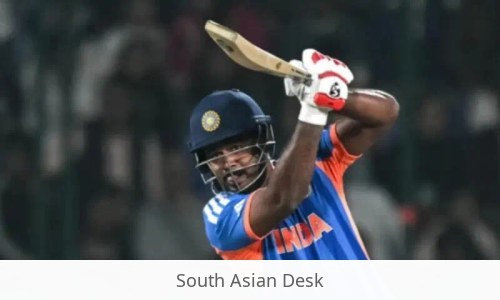
Sanju Samson exclusion: India has left out wicket-keeper/batter Sanju Samson from its T20 International squad for the upcoming series against Zimbabwe, as reported by Dawn. Samson, who played a crucial role in India’s T20 World Cup victory in March 2026, scoring match-winning half-centuries in the last three matches, has been omitted from the squad. Vaibhav Sooryavanshi has been selected to replace him, as noted by Dawn.
Sanju Samson exclusion: Impact of Samson’s Exclusion
Samson’s significant contributions during the T20 World Cup raised expectations for his continued role in the team. His exclusion may affect his position in the team moving forward, particularly as emerging talents like Sooryavanshi gain prominence. The decision highlights the competitive nature of team selection in Indian cricket, where performance in major tournaments can influence future opportunities. This dynamic is not new; Indian cricket has long operated under a meritocratic framework, where consistent performance in high-stakes matches often determines a player’s place in the squad. Samson’s omission, despite his recent form, underscores the challenges faced by even established players in maintaining a spot in the national team. His exclusion also raises questions about the balance between rewarding past achievements and prioritizing current form, a debate that has persisted in Indian cricket for years.
Rise of Vaibhav Sooryavanshi
Sooryavanshi’s selection indicates a shift towards new talent in Indian cricket. His inclusion suggests that the team management is looking to integrate younger players who have shown promise in domestic and international competitions. This move could signal a broader strategy to develop emerging stars while maintaining a balance between experience and youth. Sooryavanshi, who has been a consistent performer in the Indian Premier League (IPL) and domestic T20 tournaments, brings a fresh dynamic to the squad. His selection reflects the Indian Cricket Board’s (ICB) ongoing efforts to nurture young talent, a strategy that has seen several players like Ishan Kishan and Tilak Varma rise through the ranks in recent years. However, the pressure on Sooryavanshi to deliver under the spotlight will be immense, given the high expectations set by Samson’s previous performances.
Injury Impact on Team Selection
Shivam Dube has replaced the injured Nitish Kumar Reddy in the ODI squad for the England series, as reported by ESPNcricinfo. The role of injuries in shaping the current squad dynamics is evident, with players like Dube stepping in to fill gaps created by unforeseen circumstances. This underscores the importance of depth in the squad to handle such situations effectively. Injuries have long been a critical factor in cricket team selections, and the ICB’s ability to manage such challenges is a testament to the robustness of its player development pipeline. The inclusion of Dube, who has demonstrated reliability in both T20 and ODI formats, highlights the need for versatile players who can adapt to different roles within the team. This approach ensures that the squad remains competitive even when key players are unavailable due to injury or other commitments.
The Sanju Samson exclusion and the inclusion of Sooryavanshi and Dube reflect the ICB’s strategic priorities in building a squad capable of competing at the highest level. While Samson’s omission may be seen as a setback for his career, it also creates an opportunity for younger players to prove their mettle on the international stage. The balance between experience and youth remains a central theme in Indian cricket, as the ICB seeks to maintain its dominance in global tournaments while fostering the next generation of talent. As the Zimbabwe series approaches, the focus will be on how these new selections perform under pressure and whether they can replicate the success of the T20 World Cup campaign, following the Sanju Samson exclusion.
Published in SouthAsianDesk, July 8, 2026.
Follow SouthAsianDesk on X, Instagram and Facebook for insights on business and current affairs from across South Asia.
Image: i.dawn.com