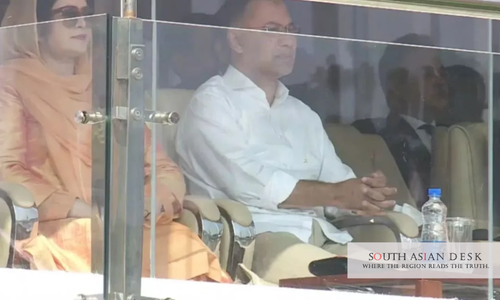
National Revolution and Solidarity Day Bangladesh was marked on Saturday, November 7, with a special display at the Army Stadium in Dhaka, attended by Prime Minister Tarique Rahman and senior government and military officials. The programme, held in the capital’s Banani area, featured thousands of cadets and members of Bangladesh Scouts as part of the country’s observance of the historic occasion.
Organised under the direction of the Ministry of Defence and supervised by the Armed Forces, the event brought together representatives from the country’s military, political and diplomatic communities. Approximately 3,000 cadets from the Bangladesh National Cadet Corps (BNCC) and 500 members of Bangladesh Scouts participated in the special display.
The programme was attended by the chiefs of the Army and Air Force, members of the Cabinet, Members of Parliament, senior government officials, foreign diplomats and ambassadors. Nucleus Dhaka served as the event management partner.
The gathering formed part of nationwide programmes organised to commemorate November 7, a date associated with a significant period of political and military upheaval in Bangladesh’s history.
National Revolution and Solidarity Day Bangladesh Marked at Army Stadium
The special display at the Army Stadium was among the central events organised in Dhaka to observe National Revolution and Solidarity Day. The participation of thousands of cadets and scouts formed a major part of the programme, highlighting the involvement of youth organisations in the national observance.
Prime Minister Tarique Rahman attended the event alongside senior representatives of the government and the Armed Forces. The presence of the military leadership, parliamentarians and foreign diplomatic representatives also gave the programme a prominent official character.
The Ministry of Defence organised the event under the supervision of the Armed Forces, while the Bangladesh National Cadet Corps and Bangladesh Scouts contributed participants to the display.
The BNCC is a youth organisation that provides cadet training and encourages discipline, leadership and civic responsibility among students. Bangladesh Scouts similarly promotes community service, personal development and participation in social activities. Their involvement brought together two major youth organisations for the national commemoration.
The participation of 3,000 BNCC cadets and 500 scouts made the display a substantial component of this year’s celebrations. The event also provided an opportunity for representatives of different institutions to participate in a shared national programme.
Why Bangladesh Observes National Revolution and Solidarity Day on November 7
National Revolution and Solidarity Day commemorates the events of November 7, 1975, when soldiers and civilians became involved in an uprising during a period of political instability and successive military interventions in Bangladesh.
The events unfolded following the assassination of President Sheikh Mujibur Rahman on August 15, 1975, which plunged the country into a period of political uncertainty. Subsequent developments within the military establishment further intensified tensions, culminating in a series of coups and counter-coups.
On November 3, 1975, Brigadier Khaled Mosharraf led a military coup that resulted in the removal of then Army Chief Ziaur Rahman from his position and his confinement. Four days later, an uprising involving soldiers and civilians led to Ziaur Rahman’s release and his emergence as a central figure in the country’s political and military affairs.
The events of November 7 subsequently became known as the Sipahi-Janata Revolution, referring to the participation of soldiers and civilians. The day acquired particular significance in the political history of Bangladesh and became associated with themes of national sovereignty, solidarity and political change.
However, its historical interpretation has not been uniform. Different political groups and historical perspectives attach different meanings to the events of 1975. While the Bangladesh Nationalist Party (BNP) commemorates November 7 as National Revolution and Solidarity Day, other political groups have historically observed or interpreted the date differently.
Tarique Rahman Government Organises Nationwide November 7 Celebrations
This year’s observance included a broader programme of activities across Bangladesh. The government announced nationwide commemorative events ahead of November 7, with arrangements involving government institutions, the Armed Forces and various cultural organisations.
According to an announcement by the Bangladesh Sangbad Sangstha (BSS), the programmes were approved at a high-level meeting held on October 28 under the Ministry of Home Affairs. The government planned activities across districts and administrative divisions to mark the occasion.
The national programme included the hoisting of the national flag at government and private buildings, as well as at Bangladesh’s diplomatic missions abroad. Major roads and road islands were also scheduled to be decorated with national flags.
Cultural and commemorative activities formed another part of the observance. These included patriotic music programmes, discussions on the historical significance of November 7, documentary screenings and exhibition football matches at district and upazila levels.
The Armed Forces also arranged special programmes, including flag-hoisting ceremonies and other commemorative activities. The display at Dhaka’s Army Stadium was one of the principal events organised under military supervision.
The nationwide arrangements reflected the government’s decision to give the occasion a prominent place in this year’s national calendar.
November 7 and Its Significance in Bangladesh’s Political History
The commemoration of November 7 comes amid continuing political debate over the interpretation of Bangladesh’s post-independence history. The events of 1975 remain an important reference point in discussions about the relationship between the military, political institutions and civilian authority.
For the BNP, the day is closely associated with the political legacy of Ziaur Rahman, who later became president and founded the party. The party’s historical narrative emphasises the participation of soldiers and civilians in the events and their significance for national independence and sovereignty.
Other political interpretations place greater emphasis on the military upheaval and the violence and instability surrounding the period. The different perspectives illustrate how November 7 continues to carry political significance beyond its historical commemoration.
This year’s programme at the Army Stadium brought together government representatives, military officials, youth organisations and members of the diplomatic community to mark the occasion.
With Prime Minister Tarique Rahman attending the special display, the November 7 observance also represented a prominent public event under his government. The participation of thousands of cadets and scouts provided a central feature of the celebrations, while the wider nationwide programme reflected the government’s efforts to commemorate a defining and contested chapter in Bangladesh’s political history.
Follow SouthAsianDesk on X, Instagram and Facebook for insights on business and current affairs from across South Asia.
Read More: