OIC women empowerment conference opens in Islamabad today, bringing together ministers, senior officials, representatives of OIC institutions, international organisations and development partners for two days of talks on advancing women’s rights across member states.
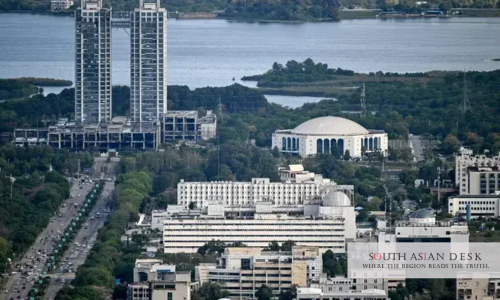
Pakistan is hosting the 9th Ministerial Conference on Women of the Organisation of Islamic Cooperation on July 12 and 13 at the Jinnah Convention Centre. The conference is being organised by the Ministry of Human Rights under the theme: “Socio-Economic and Political Empowerment of Women in the OIC Countries: Challenges and Way Forward.”
The meeting will focus on policy coordination, exchange of best practices and practical measures to strengthen women’s participation in social, economic and political life across OIC countries. Delegations began arriving in Islamabad on Saturday, with senior Pakistani officials receiving participants at Islamabad International Airport.
OIC women empowerment conference to focus on rights and participation
OIC women empowerment conference proceedings will be chaired by Federal Minister for Law, Justice and Human Rights Azam Nazeer Tarar on behalf of Pakistan.
As host and chair, Pakistan is expected to lead discussions among member states on how to build consensus around women’s empowerment within the OIC framework. The conference will review progress, identify gaps and consider ways to strengthen cooperation among countries facing different but often overlapping challenges in education, employment, political representation, legal protection and access to public life.
The meeting is significant because women’s empowerment remains a central development issue across many OIC countries. While some member states have made progress in education, workforce participation and legal reform, others continue to face major gaps in women’s economic opportunity, political inclusion and protection from discrimination or violence.
The Islamabad conference will therefore be watched for whether it produces practical commitments rather than broad statements. The key test will be whether member states can translate dialogue into stronger national policies and regional cooperation.
Delegations from OIC member states arrive in Islamabad
The Organisation of Islamic Cooperation has 57 member states and is the second-largest intergovernmental organisation after the United Nations.
Officials said representatives from OIC member countries are expected to participate in the Islamabad meeting. The conference will bring together ministers responsible for women and family affairs, senior government officials, OIC institutions and international development partners.
Among the participants named by Pakistan’s human rights ministry are Saudi Arabia’s Family Affairs Council Secretary General Dr Maimoonah Khalil Alkhalil, Egypt’s National Council for Women President Amal Ammar, Bangladesh’s Women and Children Affairs Minister Abu Zafar Md Zahid Hossain and Iraq’s Vice President for Women and Family Affairs Dr Zainab Al-Mulla Al-Sultani.
Other expected participants include Libya’s Minister of State for Women’s Affairs Grebe Randa, her Yemeni counterpart Dr Ahed Mohammed Jassous, Nigeria’s Women Affairs Minister Imaan Sulaiman-Ibrahim, Somalia’s Family and Human Rights Development Minister Khadija Makhzoumi, and Mauritania’s Social Affairs Ministry Secretary General Hamoudi Cheikhna Ali.
Pakistan frames meeting as commitment to women’s rights
Pakistan has described the conference as part of its commitment to OIC objectives and to advancing the rights, dignity and empowerment of women.
Deputy Prime Minister and Foreign Minister Ishaq Dar welcomed delegates in a message on X and wished them productive discussions during their stay in Islamabad. The government has presented the meeting as an opportunity to strengthen cooperation among Muslim-majority and OIC member countries on women’s development.
Hosting the conference also gives Pakistan a chance to present itself as an active participant in multilateral discussions on gender equality. Islamabad has previously hosted major OIC events, and the latest ministerial meeting adds a social development and human rights dimension to its OIC diplomacy.
However, the meeting also places Pakistan’s own gender equality record under scrutiny. Pakistan ranked last among 148 countries in the World Economic Forum’s Global Gender Gap Report 2025, with 56.7 percent gender parity. Labour market disparities also remain severe, with women in wage employment earning significantly less than men.
That domestic context makes the conference important for Pakistan not only as a diplomatic event, but also as a moment to signal whether it intends to pursue more effective reforms at home.
Socio-economic empowerment central to agenda
Socio-economic empowerment of women is expected to be one of the main areas of discussion.
Across many OIC countries, women face barriers to education, formal employment, entrepreneurship, property rights, financial inclusion and digital access. These barriers limit household income, reduce national productivity and weaken inclusive growth.
The Islamabad conference is expected to examine how countries can improve women’s access to skills, finance, markets, decent work and leadership opportunities. Economic empowerment is particularly important because women’s participation in the workforce remains low in many Muslim-majority societies despite improvements in education.
Practical areas for cooperation could include vocational training, women-led small businesses, social protection, childcare support, equal pay policies, workplace safety, access to credit and digital literacy.
The challenge is to ensure that women’s empowerment is not treated only as a welfare issue. It is also an economic policy issue. Countries that exclude women from productive participation lose a major source of growth, innovation and social resilience.
Political empowerment also on the table
The conference theme also places political empowerment of women at the centre of the agenda.
Political empowerment includes women’s participation in parliaments, local government, public administration, policymaking bodies, peacebuilding processes and community leadership. Many OIC countries have introduced quotas or legal reforms to increase women’s representation, but representation alone does not always translate into meaningful influence.
The Islamabad meeting could provide a platform for countries to compare models for increasing women’s participation in public decision-making. These may include reserved seats, political party reforms, leadership training, campaign financing support and protection against harassment in public life.
Women’s political participation is closely linked to broader development outcomes. When women are represented in decision-making, policies are more likely to address education, healthcare, family welfare, labour rights and protection from violence.
The conference can therefore help connect political empowerment with social and economic reform rather than treating these areas separately.
Regional cooperation can support reform
The OIC framework gives member states a platform to share experiences while respecting different national contexts.
Some countries may bring experience in women’s education and professional participation. Others may focus on family policy, social welfare, legal reforms or political inclusion. International organisations and development partners can support these efforts through technical advice, data systems, funding and programme design.
A useful outcome from the Islamabad conference would be a stronger emphasis on measurable implementation. Broad commitments are important, but progress depends on national strategies, budget allocations, monitoring systems and legal safeguards.
Member states could also benefit from better data collection on women’s education, employment, unpaid care work, political representation, violence prevention and access to justice. Without reliable data, governments cannot properly measure whether policies are working.
Pakistan’s domestic reform record will be watched
Pakistan’s role as host will bring attention to its own commitments on women’s rights.
The country has introduced several legal and institutional measures over the years, including laws on harassment at the workplace, women’s protection, political representation and human rights institutions. Women have also played visible roles in politics, civil society, media, law, education and business.
Yet major gaps remain. Women’s labour force participation remains low, wage inequality persists, girls’ education continues to face regional disparities, and gender-based violence remains a serious concern. Rural women, informal workers, minority women and women with disabilities often face additional barriers.
The conference gives Pakistan an opportunity to align diplomatic messaging with domestic reform. If Islamabad uses the platform to highlight concrete steps on women’s economic inclusion, workplace protection, education access and political participation, the meeting could carry greater credibility.
Conference expected to seek practical pathways
The two-day meeting is expected to focus on identifying practical pathways for improving women’s socio-economic and political empowerment across OIC countries.
Those pathways may include policy cooperation, capacity building, knowledge exchange and stronger coordination between governments, OIC institutions and development partners. The conference may also help shape the direction of future OIC work on women’s issues.
For many participants, the key challenge will be balancing shared principles with local realities. OIC countries differ widely in income levels, legal systems, social structures and political contexts. A single model is unlikely to apply everywhere.
However, the broad goals are common: improving women’s access to education, work, leadership, safety, health, justice and public decision-making.
Islamabad meeting could shape future OIC agenda
The OIC women empowerment conference in Islamabad comes at a time when women’s rights and development outcomes are increasingly tied to economic resilience, social stability and international credibility.
For Pakistan, the conference offers a diplomatic platform and a domestic policy test. For the OIC, it offers a chance to move from general commitments to more focused cooperation among member states.
The success of the meeting will depend on whether it produces actionable recommendations and stronger follow-up mechanisms. The issues being discussed are not symbolic. Women’s access to education, employment, safety and political participation directly affects national development.
As delegations gather in Islamabad, the central question is whether the conference can help create a more practical agenda for women’s empowerment across OIC countries. If the discussions lead to clearer commitments and stronger implementation, the meeting could become more than a routine ministerial gathering.
It could become a useful step towards making women’s socio-economic and political participation a stronger priority across the Muslim world.
Published in SouthAsianDesk, July 12, 2026
Follow SouthAsianDesk on X, Instagram and Facebook for insights on business and current affairs from across South Asia.