The India forced labour import ban has moved from proposal to policy, with the Ministry of Commerce and Industry formally amending the country’s foreign trade rules to prohibit the import of goods produced wholly or in part through forced labour. The notification, dated 13 July 2026, inserts a new provision into India’s trade framework and is scheduled to take effect 30 days after publication in the Official Gazette.
The change comes at a sensitive moment for New Delhi’s trade relationship with Washington. The United States has proposed additional tariffs of up to 12.5 per cent on imports from roughly 60 economies, including India, over allegations that these countries have not done enough to prevent the entry of goods linked to forced labour. Most Indian exports to the US currently face a 10 per cent tariff, and officials in New Delhi appear keen to avoid the steeper duties under consideration.
What The New Provision Says
The Directorate General of Foreign Trade (DGFT) has inserted a new paragraph, numbered 2.20B, into the Foreign Trade Policy, 2023. The provision empowers the central government to prohibit, by notification, the import of goods manufactured or produced, wholly or in part, through the use of forced labour. Officials have indicated that the definition of forced labour applied under the new rule draws on the International Labour Organization’s Forced Labour Convention, giving the measure a recognised international benchmark rather than a purely domestic standard.
Under the amended policy, India’s foreign trade authorities will be responsible for examining whether specific imported goods have been produced using forced labour. Where sufficient evidence is found following an enquiry, the DGFT may recommend that particular products be barred from entry. The detailed procedure for conducting such enquiries is expected to be set out separately in the Handbook of Procedures, 2023, meaning the practical mechanics of enforcement are still being finalised.
Importantly, trade analysts have been careful to note that the notification does not itself constitute an immediate ban on any specific category of goods. Rather, it creates the legal architecture through which future prohibitions can be imposed once an investigation establishes that forced labour was involved in a product’s manufacture. How rigorously this framework is applied, and which goods eventually fall under scrutiny, will determine its real world impact.
India Forced Labour Import Ban – The US Pressure Behind The Move
The timing of the amendment is difficult to separate from Washington’s ongoing trade posture. The Office of the United States Trade Representative has proposed tariffs ranging between 10 and 12.5 per cent on dozens of trading partners as part of a wider push against goods tied to forced labour, with particular scrutiny falling on products such as cotton, textiles, solar panel polysilicon, seafood, metals, batteries and electronics, many of which are viewed as vulnerable when linked to sourcing from China’s Xinjiang region.
Countries that have already introduced their own domestic prohibitions on forced labour imports, including the European Union and Pakistan, have reportedly been offered a comparatively lower proposed tariff rate of 10 per cent. This has left India facing a clear incentive to demonstrate equivalent regulatory action. Trade experts have suggested that by strengthening its own legal framework in line with international standards, India may improve its position in ongoing tariff negotiations and future market access discussions with Washington, even though the proposed US measures remain subject to a public comment period before any final decision is made.
Commentators have also pointed to the practical difficulty of enforcement. Even major economies such as the United States and the European Union continue to import substantial volumes of goods from regions flagged for forced labour risk, underlining how challenging it can be to translate a legal prohibition into consistent, evidence based trade restrictions.
What It Means For Importers
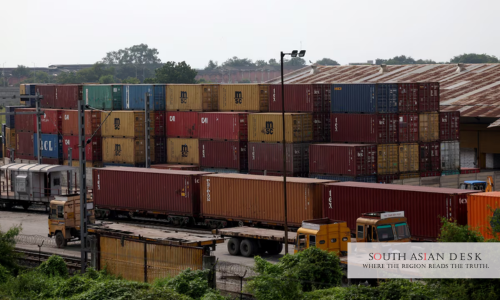
For businesses that rely on imported raw materials or components, the amendment signals that supply chain due diligence is likely to matter more in the coming months. While no specific goods have yet been named for prohibition, importers dealing in sectors already flagged internationally as high risk, including textiles, electronics and solar components, would be well advised to review their sourcing arrangements ahead of any DGFT enquiry.
The India forced labour import ban is, at this stage, a framework rather than a finished enforcement regime. Its ultimate significance will depend on how actively Indian authorities investigate supply chains, the standard of evidence required to establish a forced labour link, and whether the measure is used sparingly or applied more broadly across sectors already under international scrutiny.
Published in SouthAsianDesk, July 15, 2026
Follow SouthAsianDesk on X, Instagram and Facebook for insights on business and current affairs from across South Asia.